

 English
 中文简体
中文简体

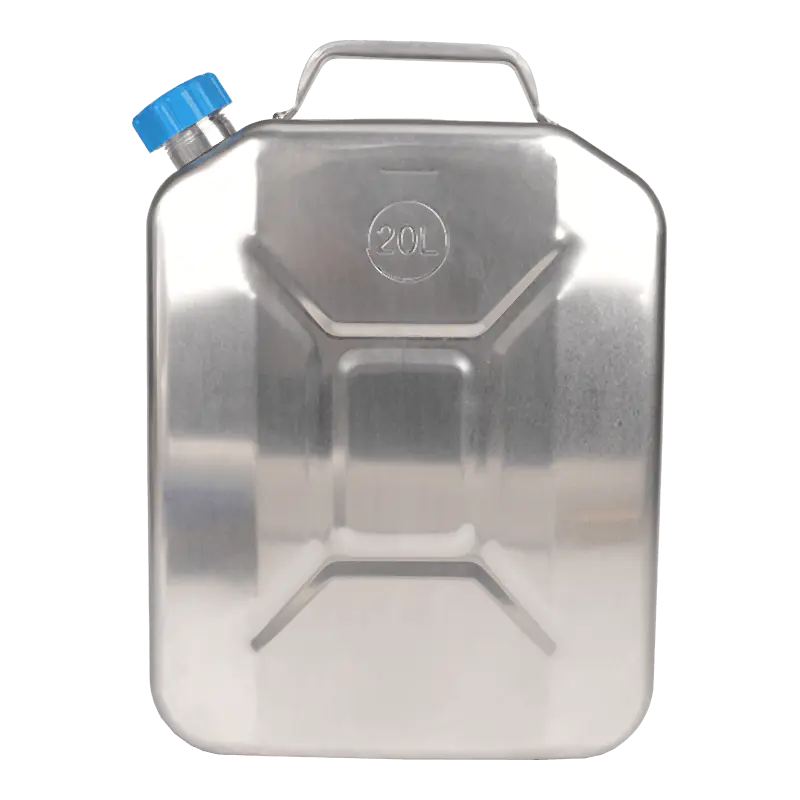
Aluminum Oil Jerry Can Suppliers
Yangzhou Qionghua
Tools Co., Ltd.
Founded in 1993, Our company is a China Aluminum Oil Jerry Can Manufacturers and Aluminum oil barrel Suppliers . Yangzhou Qionghua Tools Co.,Ltd is one of the leading manufacturers of lubricating, automotive and hand tools in China.
With more than 30000 square meters workshop, our factory can meet the capacity of our customers worldwide and has been the supplier for big European chain stores and industrial companies for about 30 years.
Our high quality service and low price are highly appreciated by most of our customers.
Aluminum oil barrel Industry knowledge
How Does an Aluminum Oil Barrel Perform in High-Temperature or Harsh Environments?
Why aluminum oil barrels are widely discussed in industrial settings
In many industrial environments, oil storage and transfer are not simple tasks. Lubricants may be exposed to heat, vibration, dust, moisture, or chemical contact. This is why aluminum oil barrels have become a frequent topic among maintenance teams, workshop managers, and purchasing departments. Companies like Yangzhou Qionghua Tools Co., Ltd, founded in 1993 and supplying European chain stores and industrial customers for decades, have seen firsthand how users evaluate oil containers not just by price, but by how they behave in real working conditions.
Basic structure of an aluminum oil barrel
An aluminum oil barrel is typically made from aluminum alloy sheets that are formed, welded, and sealed to create a lightweight yet rigid container. Compared with steel or plastic alternatives, aluminum offers a balance between mechanical strength and corrosion resistance. The barrel body, seams, and fittings are designed to handle repeated use, frequent movement, and exposure to industrial fluids. In harsh environments, these structural details play a major role in long-term performance.
Performance under high-temperature conditions
High-temperature environments are common in workshops, factories, and heavy equipment sites. Aluminum oil barrels handle heat differently than plastic containers. Aluminum does not soften or deform easily at temperatures typically found near engines, compressors, or industrial machinery. It maintains its shape and structural integrity, which reduces the risk of leaks caused by warping.
Another factor is heat dissipation. Aluminum transfers heat more efficiently than plastic, which helps prevent localized overheating of the oil inside the barrel. This does not mean the oil stays cool, but it does help avoid extreme temperature concentration in one area of the container. For users who store lubricants near operating equipment, this behavior is often seen as a practical advantage.
Behavior in cold and rapidly changing temperatures
Harsh environments are not always hot. In outdoor or unheated facilities, temperatures can fluctuate significantly. Aluminum oil barrels tend to handle thermal expansion and contraction in a predictable way. They are less likely to crack compared to some plastics that become brittle in cold conditions. This stability is important for long-term storage and transport across different climate zones.
Resistance to corrosion and chemical exposure
One of the main concerns in harsh environments is corrosion. Aluminum naturally forms a thin oxide layer that protects the surface from further oxidation. This makes aluminum oil barrels suitable for humid environments, coastal areas, or workshops where water and oil may come into contact. While aluminum can react with certain chemicals, most industrial lubricants are compatible with aluminum containers.
For manufacturers serving international markets, including long-term industrial clients in Europe, corrosion resistance reduces after-sales issues and improves product reliability in diverse operating conditions.
Mechanical stress and daily handling
In real-world use, oil barrels are rarely stationary. They are lifted, moved, bumped, and sometimes dropped. Aluminum oil barrels are lighter than steel alternatives, which reduces handling fatigue and lowers the risk of workplace injuries. At the same time, aluminum provides sufficient rigidity to resist dents that could affect sealing surfaces or threaded openings.
In harsh environments where equipment vibration is constant, such as near engines or production lines, aluminum barrels tend to maintain joint integrity better than containers made from softer materials.
Comparison with other common oil barrel materials
| Material | Heat Resistance | Corrosion Behavior | Weight | Typical Use Environment |
|---|---|---|---|---|
| Aluminum | Stable under industrial heat | Naturally corrosion resistant | Light | Workshops, factories, outdoor use |
| Steel | Handles high heat | Requires coatings | Heavy | Fixed installations |
| Plastic | Limited at high temperatures | Good for mild chemicals | Very light | Indoor, low-heat environments |
Impact of harsh environments on sealing and leakage risk
Sealing performance is a major concern when oil barrels are used in demanding conditions. Aluminum oil barrels usually feature threaded caps or sealed openings that rely on precise machining. In high-temperature or dusty environments, these seals must remain stable. Aluminum does not deform easily under moderate heat, which helps maintain consistent sealing pressure.
However, the quality of manufacturing plays a large role. Companies with long-term production experience and large-scale workshops, such as those operating over 30000 square meters, are better positioned to control tolerances and ensure consistent sealing performance.
Maintenance and service life considerations
In harsh environments, maintenance frequency matters. Aluminum oil barrels are relatively easy to clean, as oil residue does not strongly adhere to the surface. This reduces contamination risk when switching lubricant types. Over time, surface scratches may appear, but these usually do not affect structural integrity or performance.
Service life depends on usage patterns. In industrial settings where barrels are reused frequently, aluminum often offers a longer usable lifespan than plastic, especially when exposed to heat or mechanical stress.
Environmental and recycling aspects
Another point increasingly discussed by industrial buyers is sustainability. Aluminum is highly recyclable, and recycled aluminum retains similar material properties. For manufacturers supplying large industrial clients and chain stores, this aligns with environmental requirements and long-term supply strategies. In harsh environments where containers may eventually be damaged, recyclability adds practical value.
What users should pay attention to in harsh environments
While aluminum oil barrels perform reliably in many challenging conditions, users should still consider proper selection. Wall thickness, welding quality, and fitting design all influence performance. In extremely high-temperature applications or environments with aggressive chemicals, compatibility checks are still necessary. Choosing barrels from experienced manufacturers with stable production capacity helps reduce risk.
How manufacturer experience influences real-world performance
Long-term manufacturing experience matters when it comes to harsh environments. Since 1993, Yangzhou Qionghua Tools Co., Ltd has supplied lubricating and automotive tools to global customers, including industrial companies with strict usage conditions. Feedback from these users often shapes design improvements, material choices, and testing standards.
This connection between manufacturing experience and real-world performance is especially relevant for aluminum oil barrels, where small design details can affect behavior under heat, vibration, and environmental stress.
FAQ
Q: How does an aluminum oil barrel perform in long-term industrial use?
A: In long-term industrial use, an aluminum oil barrel is valued for its stable structure and resistance to daily wear. Based on feedback from industrial customers served by Yangzhou Qionghua Tools Co., Ltd over many years, aluminum barrels tend to maintain their shape and sealing performance even after repeated filling, transport, and cleaning. This makes them suitable for workshops and factories where tools and containers are used continuously rather than occasionally.
Q: Is an aluminum oil barrel suitable for high-temperature workshop environments?
A: Aluminum oil barrels are commonly used in environments where temperatures fluctuate due to nearby machinery or engines. Aluminum does not soften under typical workshop heat and helps distribute heat more evenly across the container surface. This behavior reduces the risk of deformation that could affect sealing, which is why many automotive and industrial users prefer aluminum over plastic in warmer conditions.
Q: How does an aluminum oil barrel compare with steel barrels in daily handling?
A: Compared with steel barrels, aluminum oil barrels are lighter and easier to handle, which reduces physical strain for workers during frequent movement. At the same time, they still provide enough rigidity to withstand bumps and vibration. For manufacturers supplying large European chain stores and industrial clients, this balance between weight and strength is often a key purchasing factor.
Q: What should buyers pay attention to when choosing an aluminum oil barrel supplier?
A: Buyers should look beyond material alone and consider production experience, workshop scale, and quality control processes. A manufacturer with a long operating history and large production capacity, such as a factory with over 30000 square meters of workshop space, is more likely to ensure consistent wall thickness, reliable welding, and stable sealing performance across large orders.
Q: Can aluminum oil barrels handle frequent cleaning and oil changes?
A: Yes, aluminum oil barrels are relatively easy to clean because oil residues do not strongly adhere to the surface. This is useful in maintenance environments where different lubricants are used. Over time, surface marks may appear, but these usually do not affect usability or safety, making aluminum barrels suitable for repeated cleaning cycles.
Q: Are aluminum oil barrels suitable for international logistics and export markets?
A: Aluminum oil barrels are often chosen for export because they combine durability with lower weight, which helps reduce transportation costs. Manufacturers with long-term experience supplying overseas markets understand packaging, handling, and compliance requirements, making aluminum barrels a practical option for global distribution.
Q: How does recycling factor into the choice of aluminum oil barrels?
A: Aluminum is widely recyclable, and recycled aluminum retains stable material properties. For industrial companies and chain stores that consider sustainability in procurement, aluminum oil barrels offer an advantage. When a barrel reaches the end of its service life, it can be recycled rather than discarded, aligning with long-term environmental goals.

+86-13912130779
Visit Our LocationYanjiang Development Zone, Yangzhou City, JiangSu, China
 OUR Product
USEFUL LINKS
USEFUL LINKS
OUR Product
USEFUL LINKS
USEFUL LINKS
©Copyright: Yangzhou Qionghua Tools Co., Ltd. All rights reserved

