

 English
 中文简体
中文简体

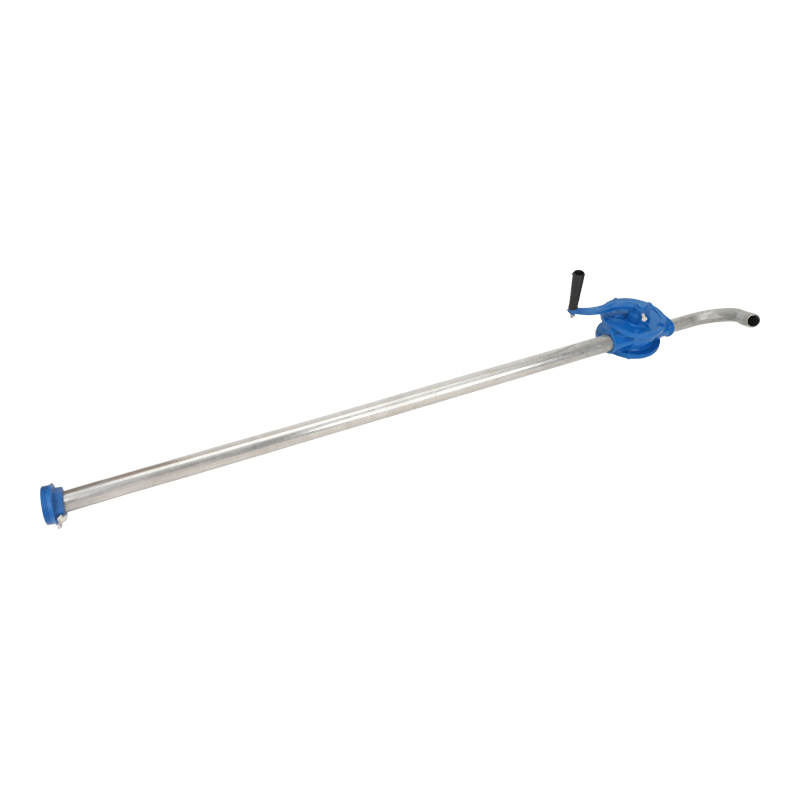
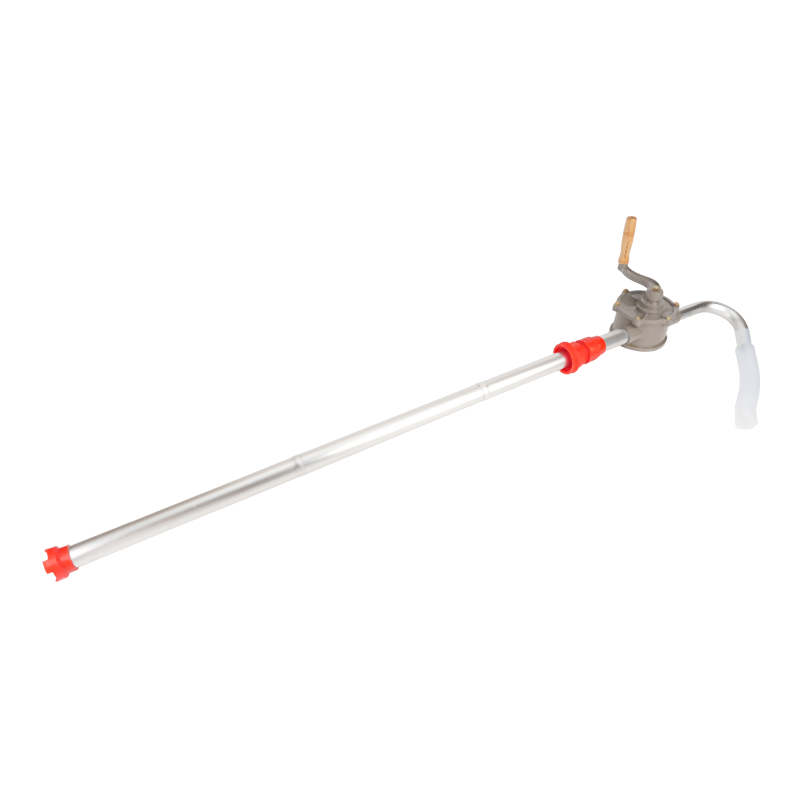
Rotary Pump for barrels Suppliers

Yangzhou Qionghua
Tools Co., Ltd.
Founded in 1993, Our company is a China Rotary Pump for barrels Manufacturers and Rotary Pump for barrels Suppliers . Yangzhou Qionghua Tools Co.,Ltd is one of the leading manufacturers of lubricating, automotive and hand tools in China.
With more than 30000 square meters workshop, our factory can meet the capacity of our customers worldwide and has been the supplier for big European chain stores and industrial companies for about 30 years.
Our high quality service and low price are highly appreciated by most of our customers.
Rotary Pump for barrels Industry knowledge
The Essential Role of the Rotary Pump for Barrels in Modern Industry
In modern industrial fluid management, the efficient and safe transfer of liquids from large containers is a core challenge. The Rotary Pump for barrels has become a standard piece of equipment in warehouses, factories, and farms worldwide as a classic positive displacement manual tool. This device was originally designed to replace primitive and dangerous gravity pouring methods, thereby minimizing chemical splashes, liquid waste, and physical strain on operators.
As a manufacturer with deep industry heritage, Yangzhou Qionghua Tools Co.,Ltd, founded in 1993, has always been committed to the research and development of lubricating, automotive, and hand tools. We understand that a high-quality Rotary Pump for barrels is more than a simple suction device; it is a critical link ensuring the continuity of production processes. In our modern workshop of more than 30,000 square meters, we utilize advanced manufacturing processes to ensure every pump leaving the factory meets international industrial standards.
The core advantage of the Rotary Pump for barrels lies in its continuous flow characteristic. Unlike traditional piston pumps that produce intermittent flow through reciprocating motion, a rotary pump generates a smooth, uninterrupted stream of liquid through the continuous clockwise rotation of the handle. This feature is essential for scenarios requiring precise filling or large-scale liquid transfer.
Founded in 1993, Yangzhou Qionghua Tools Co.,Ltd is one of the leading manufacturers of lubricating, automotive, and hand tools in China. With more than 30,000 square meters workshop, our factory can meet the capacity of our customers worldwide and has been the supplier for big European chain stores and industrial companies for about 30 years. Our high quality service and low price are highly appreciated by most of our customers.
Why Choose a Rotary Design?
In the field of fluid transfer, the Rotary Pump for barrels offers significant mechanical advantages over traditional reciprocating piston pumps. Piston pumps rely on up-and-down movement to generate pressure, which leads to discontinuous output and increases the physical burden on the operator's shoulders and back. In contrast, the Rotary Pump for barrels utilizes circular motion logic, generating constant centrifugal force and displacement through continuous handle rotation.
This continuous flow feature brings multiple benefits:
Flow Stability: Operators can easily control the output volume, avoiding splashes caused by pressure fluctuations, which is particularly important when handling expensive lubricants or corrosive chemicals.
Physical Efficiency: Since rotary motion is more ergonomic than reciprocating motion, using a Rotary Pump for barrels can significantly reduce fatigue during long hours of operation.
Wide Applicability: Whether it is light fuel or high-viscosity machine oil, the Rotary Pump for barrels achieves smooth transmission through its precise internal rotor structure.
How a Rotary Pump for Barrels Works: The Mechanics of Displacement
Understanding the working principle of the Rotary Pump for barrels helps operators better utilize its performance and perform preventive maintenance. These pumps operate based on the Positive Displacement principle, with an internal mechanical structure consisting of an eccentrically mounted rotor and several movable vanes.
When the user drives the rotor to rotate within the pump chamber via the handle, centrifugal force pushes the vanes outward, keeping them tight against the inner wall of the pump casing. As the rotor turns, the volume of the sealed space on the inlet side gradually increases, creating a partial vacuum. This vacuum pressure lifts the liquid from the barrel through the suction tube into the pump chamber. As the rotation continues, the liquid trapped between the vanes is pushed toward the discharge port. Due to the shrinking volume on the outlet side, the liquid is forced out.
In the design standards of Yangzhou Qionghua Tools Co.,Ltd, the internal tolerances of the Rotary Pump for barrels are controlled within extremely small ranges. This precision machining ensures that even when handling low-viscosity liquids like diesel or kerosene, it maintains high vacuum levels for rapid self-priming.
Eccentric Rotor and Vane Mechanism
Inside the pump casing of the Rotary Pump for barrels, the rotor is not mounted at the center but is slightly offset to one side. The rotor has several radial slots containing vanes that slide freely. As the operator turns the handle, centrifugal force pushes the vanes out to maintain a seal against the housing.
Suction Phase
As the handle turns, the volume of the sealed chamber formed between the vanes and the pump casing increases at the inlet. According to physical laws, the increase in volume leads to a decrease in internal pressure, creating a vacuum. This suction pulls the liquid up the suction tube and into the Rotary Pump for barrels.
Transfer and Discharge Phase
Liquid trapped between adjacent vanes rotates with the rotor. Because the rotor is eccentrically mounted, the space between the vanes and the casing shrinks rapidly as the liquid moves to the discharge side. This forced reduction in volume creates mechanical pressure, pushing the liquid smoothly out of the spout.
Performance Comparison: Rotary vs. Piston Pumps
| Performance Indicator | Rotary Pump for barrels | Piston Pump |
| Output Type | Continuous, Smooth Flow | Intermittent, Pulsed Flow |
| Flow Control | Very Easy (Proportional to speed) | Difficult (Prone to splashing) |
| High Viscosity Performance | Excellent | Strenuous Operation |
| Physical Wear | Low (Distributed friction) | High (Intense seal friction) |
| Maintenance Frequency | Low | High |
Primary Components of a Standard Rotary Pump for Barrels
A high-quality Rotary Pump for barrels is composed of several precision-coordinated components. Yangzhou Qionghua Tools Co.,Ltd has continuously optimized the durability of these core parts over 30 years.
Pump Body and Housing
The pump body is the skeleton of the Rotary Pump for barrels, bearing all internal pressure and mechanical stress. We use high-density casting technology to ensure minimal cylindrical error of the inner walls.
Cast Iron Body: Extremely high wear resistance and structural strength, suitable for heavy industrial lubrication tasks.
Aluminum Alloy Body: Lightweight with natural rust resistance, ideal for fuel transfer and mobile operations.
Precision Rotor and Vane Assembly
This is the power source of the Rotary Pump for barrels. Rotors are usually made of high-strength alloys, while vane materials vary by application. At Yangzhou Qionghua Tools Co.,Ltd, vanes are machined to micron-level sliding precision to ensure a tight vacuum seal during rotation.
Bung Adapter
This component secures the Rotary Pump for barrels to the standard barrel. It usually features a 2-inch industrial thread, compatible with global 55-gallon (205L) metal or plastic drums. It ensures stability and prevents wobbling or leakage during high-speed operation.
Suction Tube System
To adapt to different container depths, the suction tube of the Rotary Pump for barrels is usually designed as multi-stage or telescopic.
Sectional: A common 3-piece design connected by threads, allowing length adjustment based on barrel height.
Telescopic: More flexible adjustment to accurately reach the bottom of the container.
Discharge Spout
The classic gooseneck design is not just for aesthetics; it prevents excessive dripping after operation ceases. Some Rotary Pump for barrels models allow for hose adapter attachments for long-distance filling.
Ergonomic Handle
As a manual tool, the lever arm length directly affects the user experience. Yangzhou Qionghua Tools Co.,Ltd designs handles with dynamics in mind, allowing operators to drive high-viscosity liquids with minimal torque.
Material Matters: Choosing the Right Build for Your Rotary Pump for Barrels
When selecting a Rotary Pump for barrels, material compatibility is the top priority. Yangzhou Qionghua Tools Co.,Ltd has conducted continuous research on various materials for 30 years within its 30,000 square meter production base.
Cast Iron: The Industrial Foundation
Features: Extremely high wear resistance and structural strength for heavy mechanical torque.
Suitable Fluids: Non-corrosive self-lubricating liquids like engine oil, diesel, and hydraulic oil.
Aluminum Alloy: Lightweight and Fuel Safety
Features: Excellent weight-to-strength ratio and rust resistance. Aluminum is non-sparking, significantly reducing fire risks when handling fuels.
Suitable Fluids: Gasoline, kerosene, and light oils.
Polypropylene and Plastic: Acid and Alkali Expert
Features: High chemical inertness, resistant to most acids and bases.
Suitable Fluids: Weak acids, strong bases, water-based solutions, and urea solutions.
Stainless Steel: Premium and Hygienic
Features: Extremely high corrosion resistance and high-temperature performance with a smooth, easy-to-clean surface.
Suitable Fluids: Strong chemical solvents, alcohols, and food-grade liquids.
| Dimension | Cast Iron | Aluminum | Polypropylene | Stainless Steel |
| PH Range | 7 - 9 | 6 - 8 | 1 - 14 | 2 - 12 |
| Wear Resistance | Extremely High | Moderate | Low | Extremely High |
| Rust Resistance | Low | High | Extremely High | Extremely High |
| Relative Cost | Low | Medium | Medium | High |
Diverse Applications: Where the Rotary Pump for Barrels Shines
Automotive and Transport
Used to extract engine oil, transmission fluid, and antifreeze from large drums. The stable flow rate ensures precise filling. Yangzhou Qionghua Tools Co.,Ltd pumps easily handle high-viscosity gear oils like SAE 90 or 140.
Agriculture and Field Operations
Farmers often need to refuel tractors in the field. Aluminum Rotary Pump for barrels models are ideal due to their light weight. In agrochemical centers, polypropylene models are used to safely dispense liquid fertilizers and herbicides.
Industrial Manufacturing
Metalworking shops frequently replenish cutting fluids for machine tools. Stainless steel Rotary Pump for barrels models provided by Yangzhou Qionghua Tools Co.,Ltd offer high safety margins when handling volatile or corrosive solvents.
| Industry | Recommended Material | Key Focus | Typical Viscosity |
| Auto Repair | Cast Iron | Torque Efficiency | 50 - 500 cSt |
| Agri-Fuel | Aluminum | Flow per turn | 1 - 20 cSt |
| Agri-Chemical | Polypropylene | PH Resistance | 1 - 100 cSt |
| Manufacturing | Stainless Steel | Durability | 1 - 300 cSt |
Installation Guide: Setting Up Your Rotary Pump for Barrels
Proper installation of the Rotary Pump for barrels is a prerequisite for efficient operation. At Yangzhou Qionghua Tools Co.,Ltd, every interface is precision-tapped.
Preparation
Ensure the kit is complete with the pump head, suction tube, bung adapter, and handle. Use seal tape on suction tube threads for airtightness.
Suction Tube Assembly
Tighten the sectional suction tube clockwise. Ensure the bottom is 2-3 cm above the barrel floor to prevent sucking in sediment.
Securing the Bung Adapter
Slide the adapter onto the suction tube and screw it into the 2-inch opening of the drum.
Connecting the Pump
Connect the top of the suction tube to the inlet of the Rotary Pump for barrels. Align the spout to a convenient direction and lock the bung adapter.
Testing and Priming
Attach the handle. For high-viscosity oils, pour a small amount of liquid into the discharge spout to prime the Rotary Pump for barrels and establish an initial vacuum.
| Feature | Sectional Tube | Telescopic Tube |
| Standard Material | Steel or Plastic | Aluminum or Stainless |
| Max Depth | Fixed stages (~1000mm) | Adjustable (~1050mm) |
| Airtightness | Simple joints | Fewer connection points |
| Typical Use | Standard drums | Custom containers |
Maintenance and Safety Protocols
Yangzhou Qionghua Tools Co.,Ltd products are built for durability, but regular maintenance is key in harsh industrial environments.
Maintenance Tips
Post-Use Flushing: Always flush the Rotary Pump for barrels after handling chemicals to prevent crystallization or corrosion.
Lubrication: Regularly apply grease to the handle bearings. For metal pumps in storage, drop light oil into the inlet to prevent rust.
Seal Inspection: If the Rotary Pump for barrels leaks at the handle, replace the O-rings. Engineering data suggests inspection every 6 to 12 months.
Safety Protocols
Static Protection: When pumping gasoline with a Rotary Pump for barrels, use a metal pump and ensure it is properly grounded.
Personal Protective Equipment: Always wear chemical-resistant gloves and goggles.
Physical Stability: Ensure the barrel is on flat ground to prevent tipping during rotation.
| Fluid Type | Main Risk | Recommended Material | Safety Advice |
| Flammable Solvents | Static Sparks | Aluminum / Stainless | Must be grounded |
| Acids / Alkalis | Chemical Burns | Polypropylene | Wear eye protection |
| Heavy Lubricants | Physical Torque | Cast Iron / Steel | Ensure bung is locked |
Troubleshooting Common Issues with the Rotary Pump for Barrels
Based on decades of testing at the 30,000 square meter Yangzhou Qionghua Tools Co.,Ltd workshop, we have identified common troubleshooting steps.
No Suction
Check all threaded connections on the suction tube for air leaks. Even a tiny gap can break the vacuum required for the Rotary Pump for barrels to function.
Heavy Rotation
Check if the liquid viscosity is beyond the design limit. If handling chemicals that crystallize, residue may have hardened inside the pump chamber.
Reduced Flow
Check the filter at the end of the suction tube for debris or sediment from the bottom of the barrel. Inspect internal vanes for wear.
| Symptom | Probable Cause | Remedy | Difficulty |
| No Suction | Air leak at inlet | Re-seal threads | Very Low |
| Heavy Rotation | Crystallization/Rust | Flush with solvent | Medium |
| Handle Leakage | Seal failure | Replace O-ring | Low |
| Intermittent Flow | High viscosity | Slow down rotation | Low |
Frequently Asked Questions
Can I use one Rotary Pump for barrels for different liquids?
We strongly recommend dedicated pumps for each liquid type. If you must switch, flush the Rotary Pump for barrels thoroughly to prevent dangerous chemical reactions between residues.
Does the pump have a maximum suction lift?
Manual Rotary Pump for barrels models typically have a suction lift of 1 to 1.5 meters, designed specifically for standard 200L drums.
Why does the handle feel heavy in winter?
This is usually due to increased liquid viscosity at low temperatures. Ensure the Rotary Pump for barrels is stored in a dry area and allow high-viscosity fluids to warm if possible.

+86-13912130779
Visit Our LocationYanjiang Development Zone, Yangzhou City, JiangSu, China
 OUR Product
USEFUL LINKS
USEFUL LINKS
OUR Product
USEFUL LINKS
USEFUL LINKS
©Copyright: Yangzhou Qionghua Tools Co., Ltd. All rights reserved

