English
 中文简体
中文简体

Proper lubrication is the lifeblood of any mechanical system. Whether you are maintaining a multi-million dollar industrial assembly line, a family SUV, or a backyard lawnmower, the goal remains the same: reducing friction and preventing wear. At the heart of this essential maintenance task is the hand-operated grease gun.
Introduction to Hand-Operated Grease Guns
A hand-operated grease gun is a handheld tool designed to apply lubricant through a grease fitting (often called a "Zerk") to a specific point on a piece of machinery. Its primary function is to deliver grease under pressure to internal components—like bearings, joints, and bushings—that are otherwise difficult to reach.
The Importance of Proper Lubrication
Without adequate lubrication, metal-on-metal contact creates intense heat and friction. This leads to:
- Premature Component Failure: Parts wear down faster, leading to costly replacements.
- Reduced Efficiency: Machines must work harder to overcome friction, consuming more energy.
- Corrosion and Contamination: Grease doesn't just lubricate; it acts as a seal, keeping out dust, water, and debris that can destroy precision parts.
Why Choose a Hand-Operated Grease Gun?
While pneumatic (air-powered) and battery-operated models are available, the manual grease gun remains a staple in workshops and toolboxes for several reasons:
- Precision and Feel: Manual operation allows the user to "feel" the resistance of the grease entering the fitting. This helps prevent over-greasing, which can damage seals.
- Portability: No hoses, air compressors, or batteries are required. You can take it to the furthest corner of a farm field or into a tight crawlspace without worrying about a power source.
- Cost-Effectiveness: Hand-operated models are significantly more affordable than their powered counterparts, making them the ideal choice for DIYers and professionals alike who need a reliable tool without a heavy investment.
- Reliability: With fewer mechanical or electronic parts to fail, a well-maintained manual grease gun can last a lifetime.
Understanding the Components of a Hand-Operated Grease Gun
To the untrained eye, a hand-operated grease gun might look like a simple metal tube with a handle. However, it is a precision-engineered pressure vessel designed to move high-viscosity lubricant against significant backpressure. Understanding the anatomy of your grease gun is the first step in mastering its use and performing effective grease gun maintenance.
Every component plays a critical role in the physics of lubrication. If one part fails or is improperly seated, the tool can lose prime, leak, or fail to deliver the necessary PSI to clear a clogged fitting.
The Barrel (The Reservoir)
The barrel is the main body of the grease gun. Usually constructed from heavy-duty steel, aluminum, or high-impact composite materials, it serves as the reservoir for your lubricant.
- Function: It houses the grease cartridge or holds bulk grease. The interior surface must be perfectly smooth to allow the internal plunger to move without resistance.
- Key Detail: Many professional models, like those from Lincoln Lubrication or Alemite, feature knurled surfaces on the barrel to provide a non-slip grip, even when your hands are covered in oil.
The Head Assembly and Piston
The head is the "engine room" of the tool. When you pump the handle, you are moving a small piston inside this assembly.
The Piston: As the handle is squeezed, the piston moves forward, sealing off the intake from the barrel and forcing the grease out through the discharge port.
The Check Valve: Inside the head is a small ball-and-spring check valve. This ensures that grease moves in only one direction—out toward the nozzle—and prevents backflow into the barrel.
The Handle (Lever vs. Pistol Grip)
The handle is the primary interface between the user and the tool. Its design dictates the mechanical advantage and the ease of use.
- Lever Handle: Long handles provide maximum leverage, allowing for higher pressure outputs (often up to 10,000 PSI).
- Pistol Grip: Designed for one-handed operation, the pistol grip is ideal for tight spaces where you need your other hand to hold the hose or steady yourself.
The Follower Rod and Spring
Located at the rear of the barrel, the follower rod and its heavy-duty internal spring are responsible for keeping the grease "primed."
- Function: The spring exerts constant forward pressure on a rubber follower plate. This plate pushes the grease toward the head assembly, ensuring that the piston always has a fresh supply of lubricant to grab.
- The T-Handle: The rod terminates in a T-handle or finger loop, which you pull back and lock when loading a new cartridge.
The Grease Fitting (Coupler)
The coupler is the small attachment at the end of the hose or pipe that snaps onto the grease fittings (Zerks) of your machinery.
- The Connection: Most standard couplers feature three or four hardened steel "jaws" that grip the head of the fitting.
- Upgrades: High-end accessories like the LockNLube coupler have revolutionized this component by using a thumb-activated lever to lock onto the fitting, ensuring a leak-proof seal even under extreme pressure.
The Extension (Hose or Rigid Pipe)
This component connects the head assembly to the coupler.
- Rigid Pipes: Best for open areas where you can apply direct pressure to the fitting.
- Flexible Hoses: Essential for reaching recessed or awkwardly angled fittings common in automotive maintenance and industrial machinery.
How These Components Work Together
The operation of a manual grease gun is a cycle of suction and pressure. When the handle is in the open position, the follower spring pushes grease into the head's chamber. As you squeeze the handle, the piston slides forward, creating high pressure that overcomes the resistance of the check valve.
The grease is then forced through the nozzle and into the coupler. Because the coupler is locked onto the Zerk fitting, the pressure forces the tiny ball-check inside the fitting to open, allowing the grease to flow into the bearing or joint. When you release the handle, the internal check valve closes, the piston retracts, and the vacuum created pulls more grease from the barrel into the chamber, ready for the next stroke.
Why Component Quality Matters
When choosing between brands like Lumax, Plews & Edelmann, or GreaseTek, the quality of these internal components is what separates a "throwaway" tool from a professional-grade instrument. A high-quality piston will have tighter tolerances, meaning less "bypass" (where grease leaks past the piston instead of out the nozzle). Similarly, a thick-walled barrel prevents denting, which can jam the follower rod and render the gun useless.
Pro Tip: Always check the "air bleeder valve" (if equipped) on the head assembly. This small screw or button allows you to release trapped air pockets—the number one cause of a grease gun losing its prime.
Types of Hand-Operated Grease Guns
While all manual grease guns serve the same fundamental purpose—delivering lubricant under pressure—the mechanical design of the tool dictates how much pressure it can generate, how easy it is to use in cramped quarters, and how quickly it can complete a job. When browsing brands like Lincoln Lubrication, Alemite, or Lumax, you will primarily encounter two dominant designs: the Pistol Grip and the Lever Action. Understanding the nuances between these and other specialized types is essential for matching the tool to your specific lubrication needs.
Pistol Grip Grease Guns
The pistol grip model is the most popular choice for DIY mechanics and those performing general automotive maintenance. It is characterized by a handle that you squeeze against the barrel, much like a spray bottle or a caulking gun.
- Advantages: Ergonomics and One-Handed Operation: The standout feature of the pistol grip is that it can be operated with one hand. This is a game-changer when you are working under a vehicle or on a ladder; it leaves your other hand free to guide the nozzle onto a hidden grease fitting or to hold a flashlight. Brands like GreaseTek and the Lumax LX-1152 are frequently cited for their comfortable, ergonomic designs that reduce hand fatigue during repetitive tasks.
- Disadvantages: Pressure Constraints: Because you are relying on the grip strength of a single hand, pistol grip guns generally produce lower PSI (Pounds per Square Inch) than lever-action models. While they are perfectly adequate for 90% of household and automotive tasks, they may struggle to "bust" through a clogged or rusted grease fitting that has been neglected for years.
Lever Grease Guns
The lever grease gun is the "old reliable" of the industrial and agricultural world. It features a long metallic arm that pulls away from the barrel to prime the pump and pushes back toward it to discharge the grease.
- Advantages: High Pressure and High Volume: The long lever provides massive mechanical advantage. By using two hands (one to hold the barrel and one to pump the lever), you can generate significantly higher pressure—often upwards of 10,000 PSI. This makes it the tool of choice for heavy-duty industrial machinery or construction equipment where the grease must be forced into large, heavy-load bearings. Models like the Lincoln Lubrication 1134 or the Legacy Professional are built specifically for these high-demand environments.
- Disadvantages: Two-Handed Requirement: The main drawback is that it almost always requires two hands to operate. If you have a nozzle that won’t stay on the fitting, using a lever gun becomes a frustrating two-person job unless you upgrade to a locking coupler like the LockNLube.
Palm-Grip (Mini) Grease Guns
Sometimes referred to as "push-type" grease guns, these are compact tools designed for very small-scale applications.
- Uses: These are commonly used for lubricating chainsaws, lawnmowers, or small power tools.
- Design: Instead of a trigger or lever, you simply press the back of the gun (the "palm") to force a small amount of grease out. They are highly portable and fit easily into a small tool kit, though they have a very limited grease capacity.
Suction Guns
While they look identical to grease guns, suction guns are technically a different category, though often discussed together.
- Function: They are used for adding or removing non-corrosive liquids (like gear oil or transmission fluid) from gearboxes, differentials, and oil sumps. They do not use a piston to create high pressure; instead, they use a simple plunger to draw fluid in and push it back out.
Comparison at a Glance: Pistol vs. Lever
| Feature | Pistol Grip | Lever Action |
| Operation | One-handed | Two-handed |
| Max Pressure | Moderate (~5,000 - 7,000 PSI) | High (~10,000+ PSI) |
| Best For | Tight spaces, DIY, Automotive | Heavy machinery, Agriculture, Clogged fittings |
| Speed | Faster for light tasks | Slower but more powerful |
| Ease of Use | Very High | Moderate (requires more physical effort) |
Choosing Based on Application
When selecting between these types, consider your environment. If you are a farmer maintaining John Deere tractors, a Lever Grease Gun is likely your best bet due to the sheer volume of grease required and the need to clear field debris from fittings. Conversely, if you are a hobbyist working on a classic car restoration, a Pistol Grip Grease Gun provides the finesse and maneuverability needed to reach tight chassis components without a struggle.
Regardless of the type you choose, ensure the build quality includes a sturdy piston and a reliable barrel seal. A well-designed pistol grip from a reputable brand can often outperform a cheaply made lever gun, making the brand and material choice just as important as the mechanism itself.
How to Choose the Right Hand-Operated Grease Gun
Selecting the right hand-operated grease gun is about more than just picking the first shiny tool you see on the shelf. Because lubrication is the single most important factor in the longevity of your equipment, your choice of delivery tool should be a calculated decision. Whether you are maintaining a fleet of John Deere tractors or simply greasing the hinges on a garage door, matching the tool’s specifications to your application is vital.
Pressure Requirements: The PSI Factor
The most technical aspect of choosing a grease gun is the maximum PSI (Pounds per Square Inch) it can generate.
Low to Moderate Pressure (3,000 – 5,000 PSI): Standard for most automotive and light household applications. Most pistol-grip models fall into this range.
High Pressure (7,000 – 10,000+ PSI): Required for heavy-duty industrial machinery or agricultural equipment. High pressure is often necessary to "break" through a grease fitting that has become blocked by hardened grease or dirt. If you frequently encounter stubborn fittings, a lever-action gun from a brand like Alemite or Lincoln Lubrication is the superior choice.
Grease Capacity and Loading Methods
How often do you plan to use the gun? This dictates the capacity and loading style you need.
- Cartridge Loading: The most common and cleanest method. Most standard guns take a 14-oz cartridge. It’s a "drop-in and go" system that minimizes the risk of introducing contaminants into the grease.
- Bulk Filling: If you use a massive amount of grease, buying it in 5-gallon pails is more economical. Ensure the gun you choose has a "bulk loader fitting" or a design that allows for suction loading directly from a container.
- Suction Loading: This involves pulling the follower rod back while the head is submerged in grease, drawing the lubricant into the barrel. It is messy but effective if cartridges are unavailable.
Material and Build Quality
A grease gun is a pressure vessel, and its construction determines its lifespan.
- Steel: Heavy and durable. Ideal for the rough conditions of construction sites.
- Aluminum: Lightweight and corrosion-resistant. Excellent for marine environments or for users who want to minimize hand fatigue during long maintenance sessions.
- Composite/High-Impact Plastics: Some modern guns use high-tech polymers. These are extremely light and won’t dent, but ensure they are rated for the pressure you require.
- Check the Finish: Look for powder coating or knurled surfaces. These features provide a better grip when your hands are slick with lubrication.
Nozzle Type and Hose Length
The "business end" of the grease gun determines how much frustration you will face during a job.
- Rigid Pipe: Great for easily accessible fittings where you can apply "push" pressure to keep the coupler seated.
- Flexible Hose: A must-have for reaching recessed or strangely angled fittings. Most experts recommend a hose length of 12 to 18 inches.
- The Coupler: Look for a high-quality 4-jaw coupler. If the stock coupler is prone to leaking, consider upgrading to a LockNLube accessory, which clamps onto the fitting and stays there hands-free.
Ergonomics and Ease of Use
If you have smaller hands or suffer from arthritis, a pistol grip grease gun is generally easier to manage. However, if you need to move a large volume of grease quickly, the mechanical advantage of a long lever grease gun will actually save you effort in the long run. Look for handles with rubberized grips (like those found on GreaseTek or Lumax models) to prevent slipping and blisters.
Application: Matching Tool to Task
- Automotive: A pistol grip with a flexible hose is usually the best "all-arounder."
- Agriculture/Construction: A heavy-duty lever gun is essential for the high-volume, high-pressure demands of large bearings.
- Small Engine/Hobbyist: A mini "palm-grip" gun is perfect for chainsaws or bicycle maintenance.
Budget vs. Value
While you can find a generic grease gun for under $20, it is often a "buy it once, buy it right" situation. Professional-grade tools from Plews & Edelmann or Lincoln Lubrication may cost more upfront, but they offer replaceable parts (pistons, springs, and seals). A cheap gun that leaks or loses prime constantly will cost you more in wasted grease and frustration than the $20 you saved on the purchase price.
Summary Checklist for Buyers
| Feature | Recommendation |
| Occasional DIY | Pistol grip, 14-oz cartridge, 5,000 PSI |
| Professional/Farm | Lever action, bulk/cartridge combo, 10,000 PSI |
| Hard-to-reach Zerks | Flexible 18" hose + Locking Coupler |
| Heavy Use | Steel barrel with knurled grip |
By carefully evaluating these factors, you ensure that your hand-operated grease gun remains a reliable partner in your maintenance routine rather than a source of mess and stress.
How to Use a Hand-Operated Grease Gun
Using a hand-operated grease gun effectively is a skill that blends mechanical technique with a bit of "feel." While the process may seem straightforward, improper use can lead to "airlocks," messy leaks, or—worst of all—damaged machinery seals. Whether you are using a pistol grip grease gun for your car or a heavy-duty lever grease gun for farm equipment, following a standardized process ensures the lubricant actually reaches the internal bearings where it is needed most.
Step 1: Loading the Grease
Before you can lubricate anything, you must load the barrel. Most users prefer the 14-oz cartridge method for its cleanliness.
- 1. Prepare the Gun: Unscrew the head assembly from the barrel.
- 2. Retract the Rod: Pull the follower rod (the T-handle) all the way back until it locks into place. This compresses the internal spring.
- 3. Insert the Cartridge: Remove the plastic cap from the grease cartridge. Insert the open end into the barrel first. Then, remove the metal pull-tab (soda-can style) from the end facing out.
- 4. Reassemble: Screw the head assembly back onto the barrel, but leave it slightly loose—about two full turns from being tight. This allows trapped air to escape during the priming phase.
Step 2: Priming the Grease Gun
The most common frustration with manual grease guns is a "lost prime," where the gun pumps air instead of grease.
- 1. Release the Rod: Disengage the follower rod from its locking notch and push it firmly into the barrel. This forces the grease upward toward the piston.
- 2. Bleed the Air: Many high-quality models from brands like Lincoln Lubrication or Alemite feature an air bleeder valve. Press this button or loosen the screw to let air hiss out. If your gun doesn't have one, the "loose head" method mentioned in Step 1 serves the same purpose.
- 3. Pump the Handle: Squeeze the handle repeatedly until a steady stream of grease flows consistently from the nozzle. Once the grease is flowing without air bubbles, fully tighten the head assembly.
Step 3: Prepping the Grease Fitting (Zerk)
Never apply grease to a dirty fitting.
- The Golden Rule: Use a clean rag to wipe the grease fitting before connecting the gun. If you skip this, the high pressure of the grease gun will force sand, grit, and road salt directly into your bearings, acting like sandpaper and causing rapid wear.
- Inspection: Check if the fitting is damaged or clogged. If the tiny ball-check in the center is missing or stuck open, replace the fitting before proceeding.
Step 4: Connecting and Pumping
The Connection: Push the coupler straight onto the fitting. You should feel it "snap" into place. If you are using a LockNLube coupler, depress the thumb lever, clip it on, and release.
The Pump: Operate the handle with smooth, steady strokes.
- Pistol Grip: Squeeze with one hand.
- Lever Action: Use both hands to provide a full stroke.
The "Feel": Pay attention to the resistance. If the handle is too easy to push, you may have an airlock. If it is impossible to move, the fitting or the internal gallery is likely clogged, and forcing it could burst the hose or flip the seal.
Step 5: Knowing How Much Grease is Enough
Over-greasing is just as dangerous as under-greasing.
- Watch the Seals: In many applications (like U-joints), you pump until you see a tiny bit of fresh grease begin to "purge" or peek out from the seal.
- Closed Systems: In some bearings (like those on electric motors), purging can blow out the seal. In these cases, follow the manufacturer’s specifications—often expressed as "3 pumps every 50 hours of operation."
Step 6: Disconnecting
Once finished, tilting the coupler at an angle and "snapping" it off the fitting is usually more effective than pulling straight back. This breaks the vacuum and releases the jaws of the coupler more easily. Wipe the fitting clean one last time to prevent it from attracting new dirt.
Pro-Tips for Smooth Operation
- Avoid Air Pockets: When loading bulk grease via suction, move the barrel around to ensure there are no hollow voids.
- Temperature Matters: In cold weather, grease thickens. Keeping your grease gun in a warm area before use makes the manual pumping process significantly easier.
- Safety First: Hand-operated guns can generate thousands of PSI. Never point the nozzle at your skin; high-pressure grease can cause "injection injuries," which are serious medical emergencies.
Maintaining Your Hand-Operated Grease Gun
A high-quality hand-operated grease gun is an investment in your machinery’s future. While these tools are built to withstand the rigors of shops and jobsites, they are not "set and forget" instruments. Regular upkeep ensures that the tool delivers the exact PSI required and keeps the lubricant free from life-shortening contaminants.
Routine Cleaning and Storage
The biggest enemy of any lubrication system is contamination. A single grain of sand introduced into a bearing can cause catastrophic failure.
- Wipe Down After Use: Always wipe the barrel, handle, and nozzle with a clean rag after every session. Grease is a magnet for dust and grit; if the tool is dirty, that dirt will eventually find its way into your grease supply.
- Protect the Coupler: When not in use, cover the coupler with a plastic cap or wrap it in a clean cloth. This prevents debris from entering the discharge port.
- Proper Storage: Store your grease gun horizontally in a cool, dry place. Storing a gun vertically (hanging by the handle or nozzle) can cause the oil to separate from the thickener in the grease (a process known as "bleeding"), leading to a messy puddle on your floor and "dry" grease inside the barrel.
Troubleshooting Common Issues
Even the best tools occasionally run into performance hiccups. Understanding how to fix them will save you from unnecessary replacements.
- Dealing with Airlocks: If you are pumping the handle but nothing is coming out, you likely have an air pocket trapped between the piston and the grease. Use the air bleeder valve or slightly unscrew the head assembly while pushing the follower rod forward to "burp" the air out.
- Leaking at the Coupler: If grease is oozing out around the fitting rather than going into it, the jaws inside the coupler may be worn or clogged with old, hardened grease. You can often unscrew the tip of the coupler, clean the internal jaws and spring with a solvent, and reassemble. If it continues to leak, it’s time for a replacement.
- The Handle is Stuck: If the handle won't budge, do not force it. You likely have a "frozen" Zerk fitting or a clog in the internal check valve. Disconnect the hose and try pumping; if grease flows, the blockage is in the machine's fitting. If it still won't pump, the internal piston or check-ball is likely seized.
Replacing Worn Parts
One of the advantages of choosing brands like Lumax, Plews & Edelmann, or GreaseTek is the availability of replacement parts.
- Hose Integrity: Inspect the flexible hose regularly for cracks, kinks, or bulges. High-pressure hoses can burst if the outer casing is compromised, which is a significant safety hazard.
- The Follower Seal: Over years of use, the rubber follower plate inside the barrel can wear down or become brittle. If you see grease leaking behind the follower (toward the T-handle), the seal needs to be replaced to maintain proper pressure.
- Spring Tension: If the gun consistently loses prime, the large spring behind the follower may have lost its tension. Replacing the spring can breathe new life into an old tool.
Managing Grease Separation
If you leave a grease gun sitting for several months, you may notice a thin, oily liquid leaking from the tool. As mentioned, this is oil separating from the grease base.
The Fix: If the separation is minor, simply pump out the "oily" bit until the thick grease returns. If the grease inside the barrel has become hard or waxy, you must scoop it out, clean the barrel with a degreaser, and start fresh with a new cartridge.
Longevity Tips for Professionals
- Use One Gun per Grease Type: To avoid cross-contamination of different grease chemistries (which can react and harden), label your guns. Use one specifically for "High-Temp Red" and another for "Marine Grade," for example.
- Check the Plunger Alignment: Occasionally, the follower rod can become bent. A bent rod prevents the spring from applying even pressure, leading to frequent airlocks. Straighten the rod or replace it to ensure smooth operation.
Summary of Maintenance Tasks
| Frequency | Task |
| After Every Use | Wipe the nozzle and coupler; check for leaks. |
| Monthly | Inspect hose for cracks; check air bleeder valve functionality. |
| Annually | Deep clean the barrel; check the follower seal and spring. |
| When Changing Cartridges | Inspect the head assembly for hardened grease buildup. |
By dedicating just a few minutes to grease gun maintenance each month, you ensure that your tool is always ready for the job. A well-cared-for manual grease gun isn't just a tool; it's a reliable insurance policy for every machine in your care.
Common Applications of Hand-Operated Grease Guns
The versatility of the hand-operated grease gun makes it a ubiquitous tool across nearly every sector involving mechanical movement. While automated systems exist for large-scale factories, the manual grease gun remains the go-to solution for targeted, mobile, and precision lubrication. Because it allows the operator to control the exact volume and pressure of the lubricant, it is indispensable for protecting high-value assets in diverse environments.
Automotive Maintenance
For the professional mechanic and the "shade-tree" DIYer alike, the pistol grip grease gun is a standard piece of equipment for vehicle upkeep.
- Chassis and Suspension: Modern cars have many "lubed-for-life" parts, but trucks, SUVs, and classic cars still feature grease fittings on ball joints, tie-rod ends, and control arms. Proper greasing prevents the "squeaks" and "groans" that signal metal-on-metal wear.
- Drivetrain: Universal joints (U-joints) on the driveshaft require frequent greasing to handle the high rotational torque of the engine.
- Wheel Bearings: While many are sealed, older trailers and vehicles require manual packing and greasing of the bearings to prevent overheating and catastrophic wheel failure during highway travel.
Agricultural Equipment
In the world of farming, dust and debris are constant threats. Brands like John Deere design their machinery with dozens of Zerks to ensure that grit doesn't stay inside moving parts.
- Tractors and Harvesters: These machines operate in high-torque, low-speed conditions where thick grease is the only thing preventing the pivot points from seizing.
- Implements: Balers, plows, and seeders have numerous rotating shafts and chains that must be lubricated daily during the peak of the season. Because fields are often far from a power source, the portability of a manual grease gun is a major advantage for farmers.
Industrial Machinery
Factories and manufacturing plants rely on manual lubrication for maintenance tasks where an automated system is impractical or too expensive to install.
- Conveyor Systems: Thousands of rollers move products through a plant; each roller contains a small bearing that requires periodic greasing to keep the line moving efficiently.
- Electric Motors: Larger industrial motors often have grease ports for their internal bearings. Here, precision is key—using a manual gun allows the technician to count the "strokes" to ensure they don't over-grease and damage the motor's windings.
- Pumps and Fans: HVAC systems and fluid pumps in industrial settings use grease to maintain the integrity of their mechanical seals.
Construction Equipment
Construction sites are perhaps the most punishing environments for machinery. Excavators, loaders, and cranes are constantly exposed to mud, water, and heavy vibrations.
- Pivot Pins and Bushings: The massive arms of an excavator rely on a thin film of grease to move tons of earth. Without daily lubrication using a high-pressure lever grease gun, these pins can "gall" or weld themselves to the bushings.
- Tracks and Rollers: The undercarriage of tracked vehicles requires heavy-duty grease to keep the tensioners and rollers moving despite being submerged in mud.
Marine and Boating
Saltwater is incredibly corrosive, making lubrication a matter of safety rather than just maintenance.
- Outboard Motors: Marine-grade grease is applied to the tilt/trim mechanisms and the steering links to ensure the motor doesn't seize up in the middle of the water.
- Boat Trailers: Trailer wheel bearings are frequently submerged in water during boat launching. Manual greasing with water-resistant lubricant is essential to displace moisture and prevent rust.
Household and Light Commercial Use
You don’t need to be a heavy equipment operator to find a use for a hand-operated grease gun.
- Garage Doors: Applying a small amount of grease to the tracks and rollers ensures quiet, smooth operation and extends the life of the garage door opener motor.
- Lawn and Garden: Riding mowers and snowblowers have several grease points on the mower deck and axle pivots that are often overlooked by homeowners.
- Security Gates: Heavy sliding or swinging gates at commercial properties require greasing of the hinges and gear racks to prevent the motor from burning out.
Application Summary Table
| Industry | Common Grease Points | Recommended Tool Type |
| Automotive | Ball joints, U-joints, Tie-rods | Pistol Grip (for maneuverability) |
| Agriculture | PTO shafts, Kingpins, Bearings | Lever Action (for high volume) |
| Industrial | Conveyor rollers, Electric motors | Lever Action (for precision/pressure) |
| Marine | Steering cables, Trailer hubs | Pistol Grip (corrosion-resistant) |
| Home/DIY | Mower decks, Garage door tracks | Mini/Palm Grip (for small tasks) |
Regardless of the application, the goal is always the same: creating a barrier against friction and contaminants. By choosing the right tool for these tasks, you ensure that your equipment—no matter the size—operates at peak performance for years to come.
Alternatives to Hand-Operated Grease Guns
While the hand-operated grease gun is a masterpiece of simple engineering and reliability, it isn't always the fastest or most efficient tool for every job. In high-volume industrial settings, or for technicians tasked with lubricating dozens of machines a day, the physical toll of manual pumping can lead to fatigue and "corner-cutting." To address these challenges, several powered and specialized alternatives have been developed.
Battery-Operated (Cordless) Grease Guns
In recent years, cordless grease guns have become the gold standard for professional mechanics and large-scale farmers. Powered by rechargeable lithium-ion batteries, these tools do the heavy lifting for you.
- How They Work: A high-torque electric motor drives the internal piston, delivering a consistent flow of grease with the pull of a trigger. Leading brands like Milwaukee (M18 system) and DeWalt (20V MAX) have perfected this technology.
- Advantages:
- Speed: You can empty a 14-oz cartridge in a fraction of the time it takes with a manual gun.
- High Pressure: These units can consistently output 8,000 to 10,000 PSI, making them excellent for clearing blocked grease fittings.
- Precision: Many models, such as the Milwaukee 2646-20, feature a pre-set dial that allows you to dispense a specific amount of grease per trigger pull.
- Disadvantages: They are significantly more expensive and heavier than manual models. You also have to manage battery life; a dead battery in the middle of a field can stall your maintenance schedule.
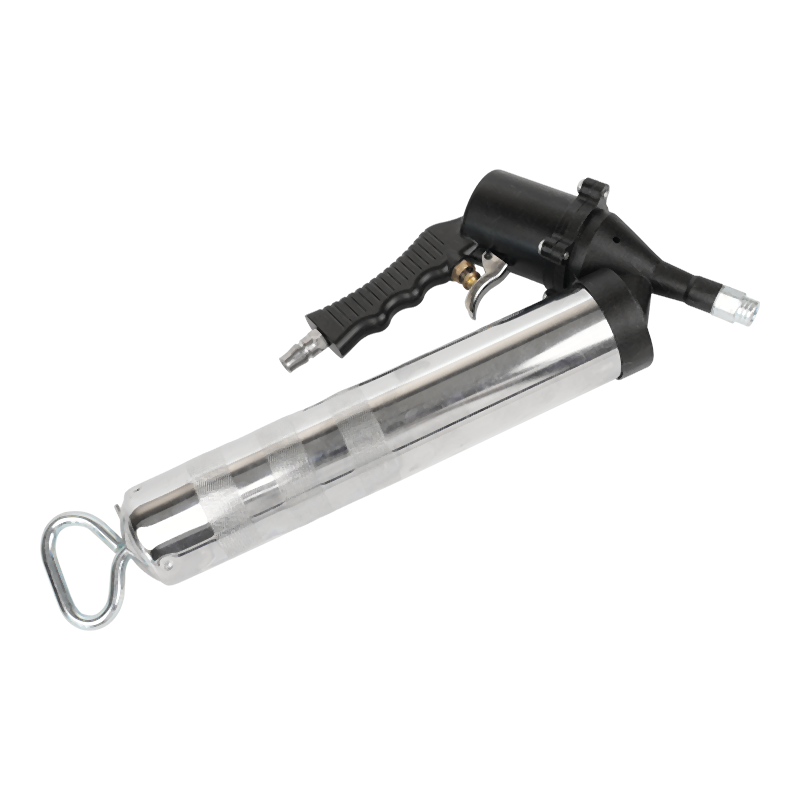
Pneumatic (Air-Powered) Grease Guns
Pneumatic grease guns are staples in professional automotive shops and manufacturing plants where a compressed air supply is readily available at every workstation.
- How They Work: They use compressed air to drive the grease pump. They come in two varieties: "Single Shot" (one pulse of grease per trigger pull) and "Continuous Flow" (grease flows as long as the trigger is held).
- Advantages:
- Endless Power: There are no batteries to charge. As long as the compressor is running, the gun is ready.
- Lightweight: Because they lack a heavy motor and battery, they are often lighter than cordless models, reducing operator fatigue.
- Disadvantages: The "umbilical cord" (air hose) limits your mobility. You cannot easily use these for agricultural equipment in a field or for roadside repairs.
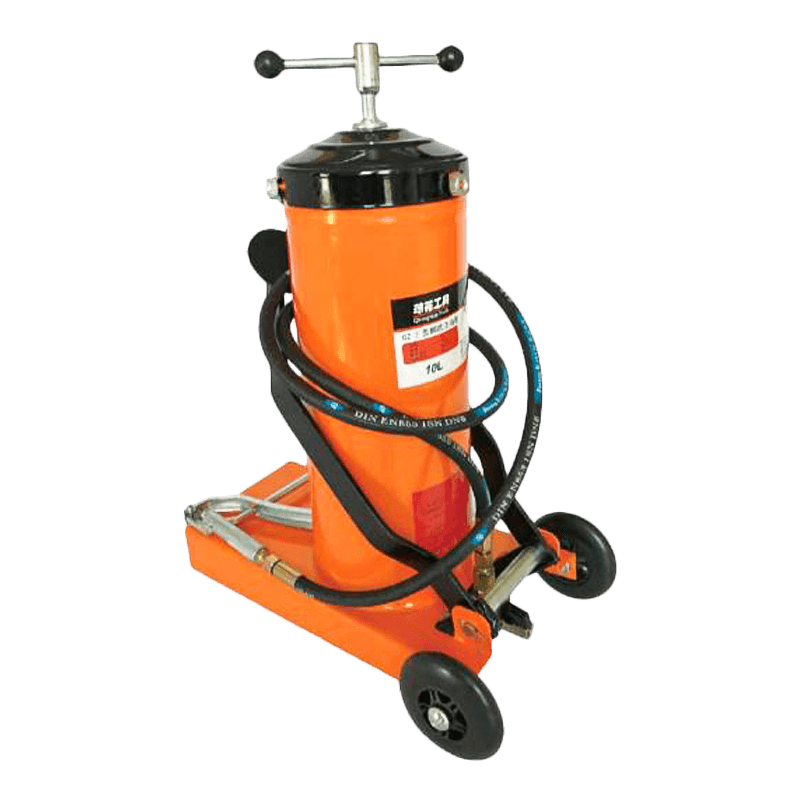
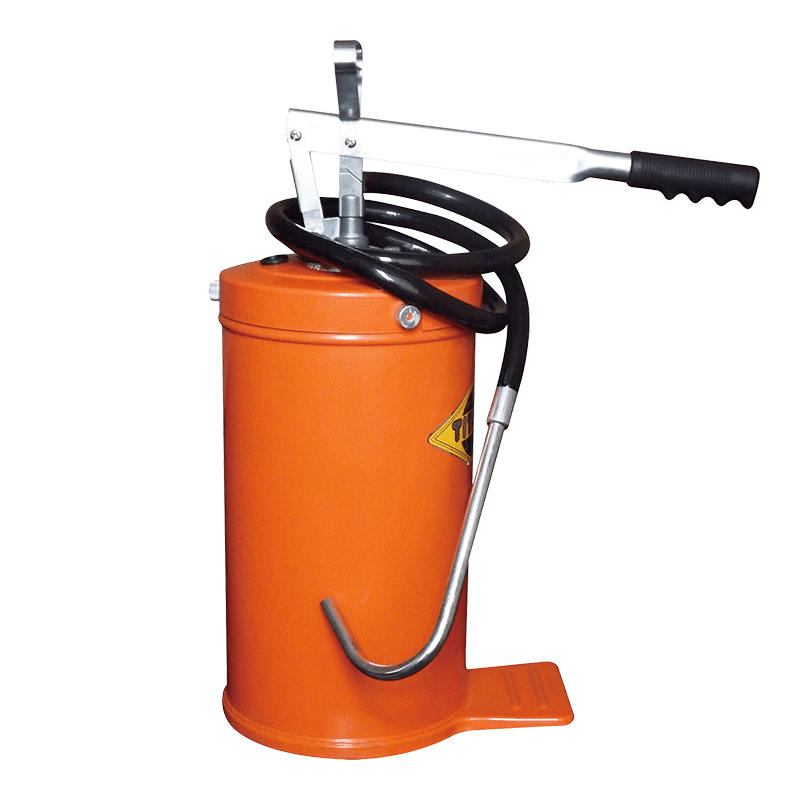
Manual Grease Pumps (Bucket Pumps)
When a standard 14-oz cartridge isn't enough, a manual grease pump is the answer. These are designed to sit directly on top of a 25-lb to 50-lb pail of grease.
- How They Work: A large, floor-standing lever is pumped by hand (or foot), sending grease through a long, high-pressure hose to a handheld control valve.
- Advantages:
- High Volume: Ideal for filling large reservoirs or greasing the "fifth wheel" on semi-trucks.
- Economy: Buying grease in bulk pails is much cheaper than buying individual cartridges.
- Disadvantages: They are bulky and not meant for precision work in tight spaces. They are also prone to contamination if the pail lid isn't sealed perfectly.
Automatic Lubrication Systems (Auto-Lubers)
The ultimate alternative to a handheld tool is the automatic lubrication system, often found on high-end construction equipment and industrial machinery.
- How They Work: A central pump and reservoir are permanently mounted on the machine. A timer or controller automatically sends small amounts of grease to every Zerk fitting on the machine at set intervals while it is operating.
- Advantages: It eliminates human error and ensures the machine is lubricated while in motion (which is often the most effective time to lubricate bearings).
- Disadvantages: They are incredibly expensive to install and require their own maintenance to ensure the complex network of lines doesn't clog or break.
Comparison of Alternatives
| Tool Type | Power Source | Best For | Main Drawback |
| Manual Gun | Human Power | DIY, Small tasks, Precision | Physical effort required |
| Cordless Gun | Battery | Mobile pros, Farmers | High cost and weight |
| Pneumatic Gun | Compressed Air | Auto shops, Factories | Tied to an air hose |
| Bucket Pump | Human Power | High-volume greasing | Not portable |
| Auto-Luber | Machine Power | Heavy Construction | Extremely high setup cost |
Which Should You Choose?
The hand-operated grease gun remains the most versatile and reliable choice for most users because of its "always ready" nature. However, if your daily routine involves greasing more than 10–15 fittings, your joints (and your schedule) will likely benefit from a battery-operated or pneumatic alternative.
For most, the best strategy is a hybrid approach: keep a high-quality manual grease gun from Alemite or Lincoln for precision and "feel," and supplement it with a powered tool for the heavy-duty, high-volume sessions.