English
 中文简体


A buyer in Rotterdam asks for "one barrel" of hydraulic oil and gets a quote for 208 liters. A trader in Houston says "one barrel" and means 159 liters. Both are correct inside their own conventions, and the 49-liter gap between them is the reason this question keeps resurfacing in purchasing, logistics and maintenance planning.
The number you need is 42 US gallons, which equals 158.987 liters. That is the figure behind every crude oil price quoted in dollars per barrel, every tanker manifest and every production statistic published by energy agencies and oil ministries. If you remember only one thing from this article, remember 42. Then remember the second half of the story: the steel drum standing in your workshop is almost never that size.
The sections below explain where the 42-gallon figure comes from, how it converts into liters, tonnes and cubic meters, where other industries use completely different barrels, and how the arithmetic changes the drums, pumps and grease guns you actually order.
The Direct Answer: 42 US Gallons per Barrel of Oil
One barrel of crude oil contains exactly 42 US gallons. In metric terms that is 158.987 liters, normally rounded to 159 liters for planning work. The same volume equals 34.97 imperial gallons, 168 US quarts, 5.615 cubic feet or 0.159 cubic meters. For a typical light crude around 35 API gravity, that barrel weighs roughly 135 kilograms.
| Unit | Equivalent for one barrel of oil |
|---|---|
| US gallons | 42 |
| Liters | 158.987 (round to 159) |
| Imperial gallons (UK) | 34.97 |
| US quarts | 168 |
| Cubic feet | 5.615 |
| Cubic meters | 0.159 |
| Barrels in one cubic meter | 6.29 |
| Approximate weight of 35 API crude | 135 kilograms (298 lb) |
Two clarifications save a lot of trouble later. First, 42 US gallons is a unit of measurement, not a container specification. Almost no crude oil travels in a 42-gallon barrel today. Pipelines, tankers and storage terminals measure in barrels and convert to cubic meters or tonnes for accounting. The physical drums you buy for lubricants follow different conventions entirely, usually 55 US gallons, which is 208 liters.
Second, a gallon is not a gallon. The US gallon is 3.785 liters. The imperial gallon is 4.546 liters, roughly 20 percent larger. That single difference turns a 42-gallon barrel into 159 liters in Houston and 191 liters in a document written to imperial measure. When a supplier quotes "gallons", confirm the system before you confirm the price.
It also helps to know the inverse: how much a barrel is not. A 42-gallon barrel is 6.3 percent smaller than a 55-gallon drum, and 31 percent smaller than the 55-gallon figure many people mistakenly attach to crude oil. In contract terms that gap is worth real money, which is why custody transfer documents always state the unit and the reference temperature.
Why the Oil Industry Settled on 42 Gallons
Before the Pennsylvania oil boom, a barrel was a general-purpose wooden container. Coopers built them anywhere from 30 to 50 gallons depending on the cargo: fish, whiskey, flour, molasses. When Edwin Drake's well started producing in 1859, oil was hauled in whatever barrels could be bought, and the most available size in the region was the 40-gallon whiskey barrel.
Forty gallons on the cooper's bench did not mean forty gallons at the destination. Wood shrank, seams leaked, and crude oil in a wooden barrel was never a precise delivery. Sellers began filling a 40-gallon barrel with about two extra gallons of slack to cover loss in transit and to satisfy buyers who wanted a guaranteed delivered quantity. The result was a working standard of 42 gallons.
In 1872 the Petroleum Producers Association adopted 42 US gallons at 60°F as the trade standard, and the American Petroleum Institute later formalized it. Once pipelines and railroad tank cars arrived, the unit became an accounting device rather than a physical container, and it has not moved since. The 42-gallon barrel survived because it was already written into contracts, freight rates and refinery yields by the time anyone had a reason to change it.
Why the Abbreviation Is bbl
The double letter is widely explained as "blue barrel", referring to the painted barrels associated with one dominant early refiner. It is a neat story, but no firm documentary record confirms it, so treat it as folklore rather than fact. A more mundane explanation is that scribes doubled the first letter to prevent "bl" from being misread in handwritten shipping documents. In practice, "bbl" means barrel and "bbl/d" means barrels per day, regardless of which origin story you prefer.
Why the Reference Temperature Is 60°F
Oil expands when it warms. The volumetric expansion of typical crude runs about 0.07 to 0.09 percent per degree Celsius, which for a single barrel is small but not negligible. Across a 30°C swing, a 42-gallon barrel measures about one gallon more or less. On a one-million-barrel cargo that is roughly a million gallons of apparent volume, so contracts fix a reference temperature, usually 60°F (15.6°C), and adjust the measured volume back to it. If you ever wonder why terminal staff are so particular about tank temperature, this is the reason.
Barrel, Drum and Keg: The Terms Buyers Mix Up
The word barrel means different things in different trades, and the confusion is not academic. Ordering a barrel of beer, a barrel of whiskey, a barrel of lubricant and a barrel of crude oil will get you four different volumes, one of which is not even a barrel in the strict sense.
A drum is a container. A barrel, in petroleum, is a unit. That distinction alone resolves most of the arguments that break out over purchase orders. In lubricants and workshop supplies, the physical container you receive is almost always described by its nominal capacity: 5L, 10L, 20L, 60L, 200L or 208L. Industry still slips into "barrel" language for 200-liter containers, but no one in the supply chain believes they are buying 42 gallons of grease.
| Term | Industry | Volume |
|---|---|---|
| Oil barrel | Petroleum (US/API) | 42 US gallons, 158.99 L |
| Imperial barrel | Legacy UK petroleum documents | 36 imperial gallons, 163.66 L, about 43.2 US gallons |
| Beer barrel | US brewing | 31 US gallons, 117.35 L |
| Beer barrel | UK brewing | 36 imperial gallons, 163.66 L |
| Whiskey barrel | Bourbon and spirits | 53 US gallons, about 200.6 L |
| Steel drum | Industrial packaging (US) | 55 US gallons, 208.2 L |
| Steel drum | Industrial packaging (Europe) | 200 L nominal, about 52.8 US gallons |
| Grease keg | Lubricants | Sold by weight, commonly 120 lb (about 54 kg) |
Note the grease keg row. Bulk grease is sold by mass, not volume, so a 120 lb keg does not convert cleanly into gallons without knowing the density of the specific grease, which varies from about 0.85 to 0.95 kg/L depending on thickener and base oil. Anyone converting a keg into gallons and back into cartridges is building an estimate on top of an assumption.
Converting Barrels into Tonnes, Liters and Cubic Meters Without Errors
Crude is bought in barrels, sold in barrels and taxed in barrels, but freight, storage and some national statistics use tonnes or cubic meters. The bridge between them is density, and density varies by field. This is where a fixed conversion factor quietly loses money.
Specific gravity in the oil industry is expressed as API gravity, calculated as 141.5 divided by the sum of 131.5 and the API number. Light crude around 35 to 40 API floats at a specific gravity of roughly 0.83 to 0.85, while heavy crude around 10 API sits close to 1.0, which means it is barely lighter than water. The lighter the crude, the more barrels fit into a tonne, because a tonne is a fixed mass.
| API gravity | Approximate specific gravity | Barrels per metric tonne | Liters per metric tonne |
|---|---|---|---|
| 10 (very heavy) | 1.000 | 6.29 | 999 |
| 20 (heavy) | 0.934 | 6.73 | 1,071 |
| 30 (medium) | 0.876 | 7.18 | 1,141 |
| 40 (light) | 0.825 | 7.62 | 1,212 |
Cubic meters are simpler because they describe volume only. One cubic meter holds 6.29 barrels. A tank gauged at 10,000 cubic meters therefore holds about 62,898 barrels, and the conversion does not care what grade of crude is inside, only that the temperature correction has been applied.
Refinery yields add one more layer. A US refinery processing a 42-gallon barrel of crude produces roughly 45 gallons of finished products, including gasoline, distillate, jet fuel and other streams. This refinery gain is a volume effect caused by processing, not a creation of mass, and it explains why product volumes reported by refiners exceed the crude volumes they bought.
Production rates have their own arithmetic. A field flowing 1,000 barrels per day moves about 50,000 tonnes of medium crude per year, using the 7.3 barrels per tonne figure. That single line of maths connects a wellhead flow rate to a shipping schedule, and it is the kind of estimate that should be recalculated whenever the crude grade or the destination changes.
From Barrel Maths to Workshop Reality: Drums, Pumps and Guns
For anyone maintaining equipment rather than trading cargo, the 42-gallon barrel is background knowledge. What matters is how the numbers map onto containers you can lift, store and pump from. A workshop consuming 20 liters of hydraulic oil a week gets about ten weeks from a 208-liter drum, eight weeks from a 159-liter equivalent, and roughly one week from a 20-liter container. Those three answers produce three different reorder points, three different storage footprints and three different handling risks.
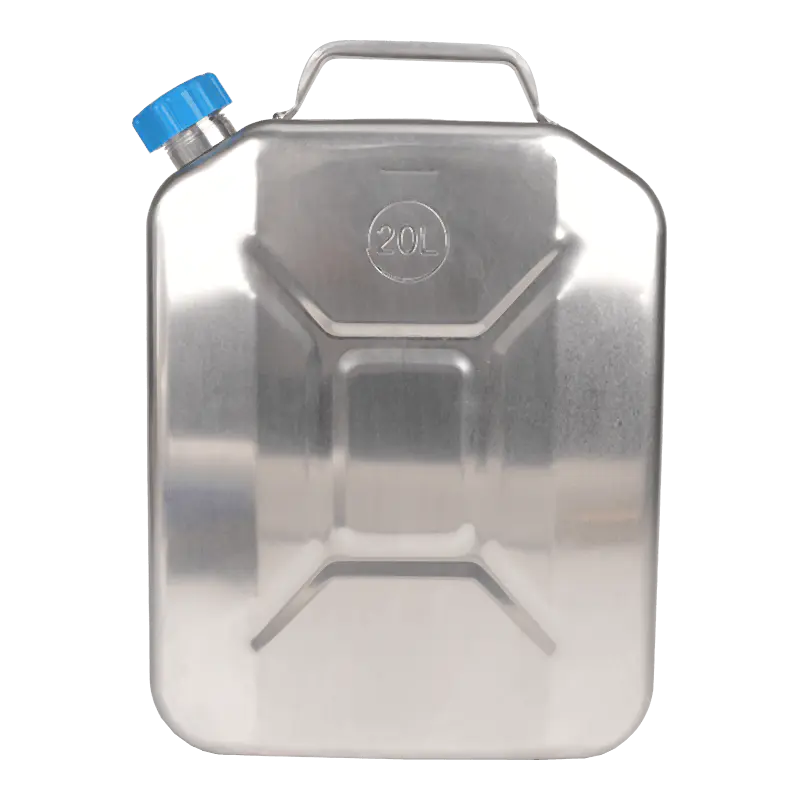
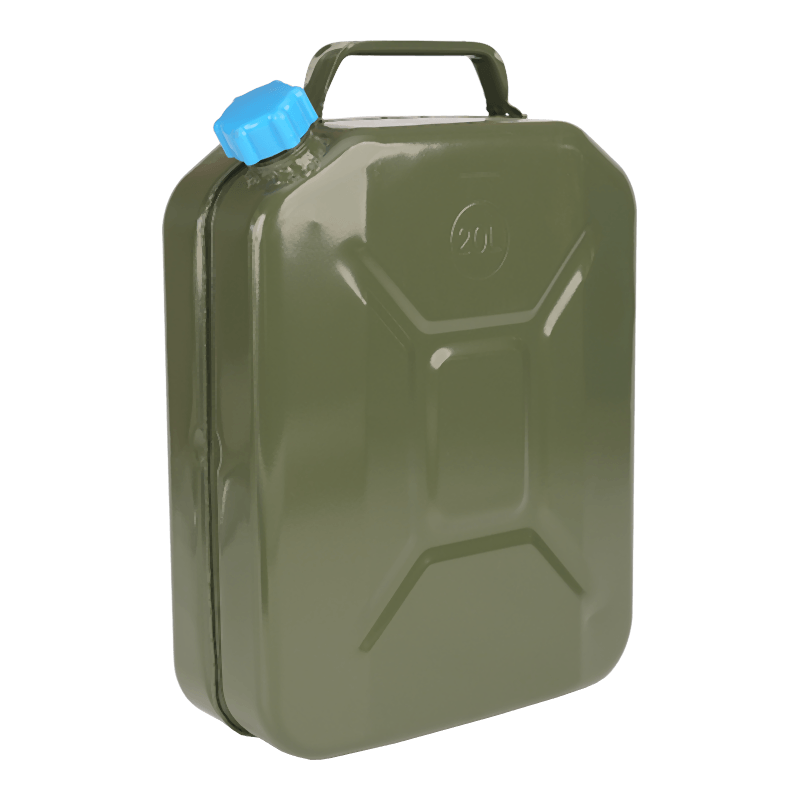
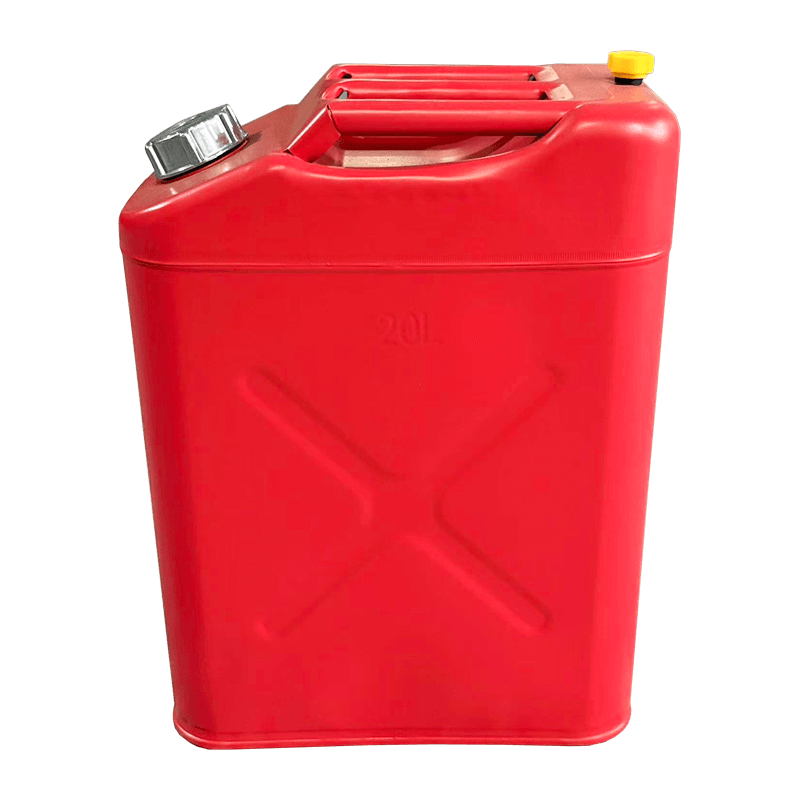
Portable containers handle the small-volume end of that range. A 10-liter or 20-liter container with a secure cap and integrated handle can be carried to a machine, filled from a larger drum and returned, which reduces the distance oil travels inside an open container. For mobile technicians and field service vans, this is usually the difference between a tidy job and a spill in a customer's yard.
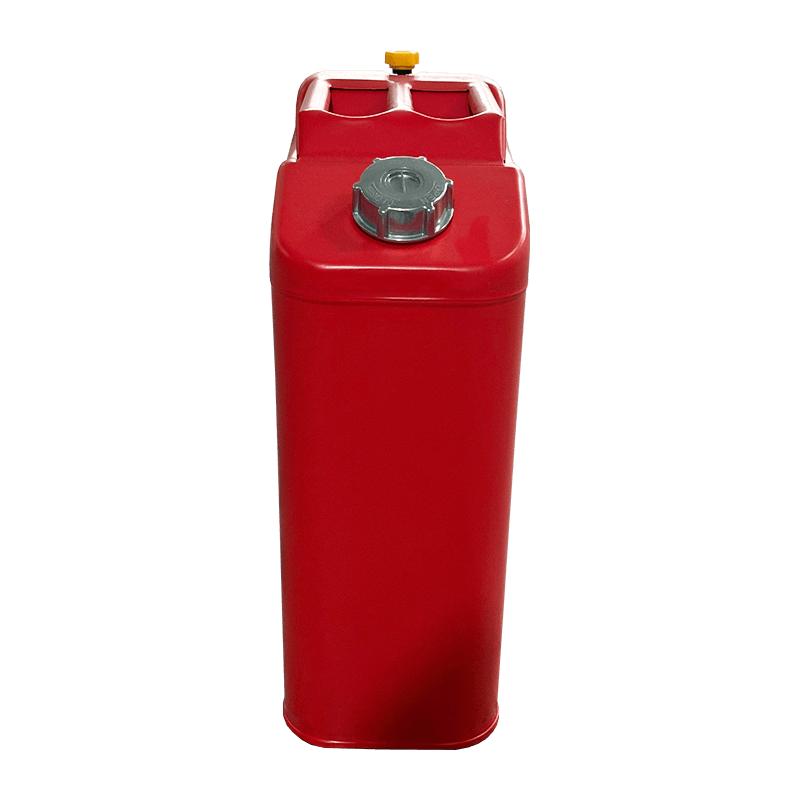 10L and 20L Matte Red Oil Drums with Aluminum CapsPortable 10L or 20L oil drums with aluminum caps and a matte red finish, suited to carrying smaller oil volumes to machines.View Product →
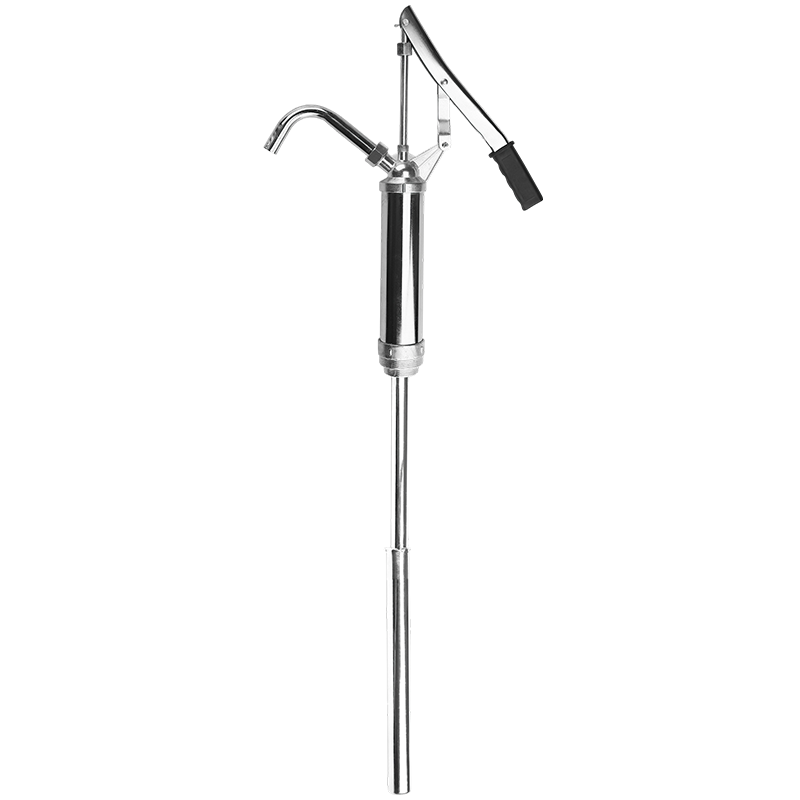
Drum-to-container transfer needs hardware that matches the drum opening. Most 200-liter and 208-liter industrial drums use a 2-inch bung for the main opening and a 3/4-inch bung for venting, so a rotary pump designed for one thread will not seal on the other. A cast iron rotary pump suits lubricating oils and gear oils in a fixed workshop position where durability matters more than weight, while aluminum bodies make more sense when the pump has to be moved between drums.
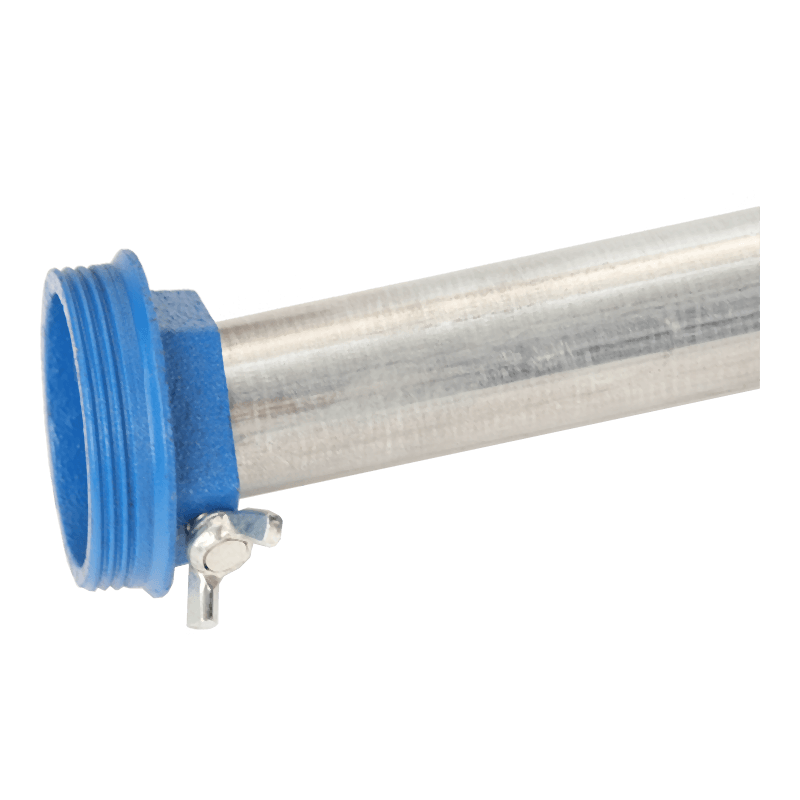 Type 25/32 Cast Iron Rotary Barrel PumpCast iron hand-cranked pump for drum-to-container transfer of oils and fuels, with a durable pump core and barrel fixing buckle.View Product →
Decanting into small containers is the step where most waste happens. A screw-in pourer with a corrugated spout gives a controllable stream and lets air enter the container, which prevents the glugging that splashes oil down the side of the drum. It is a low-cost accessory that pays for itself the first time someone fills a 5-liter can in a hurry.
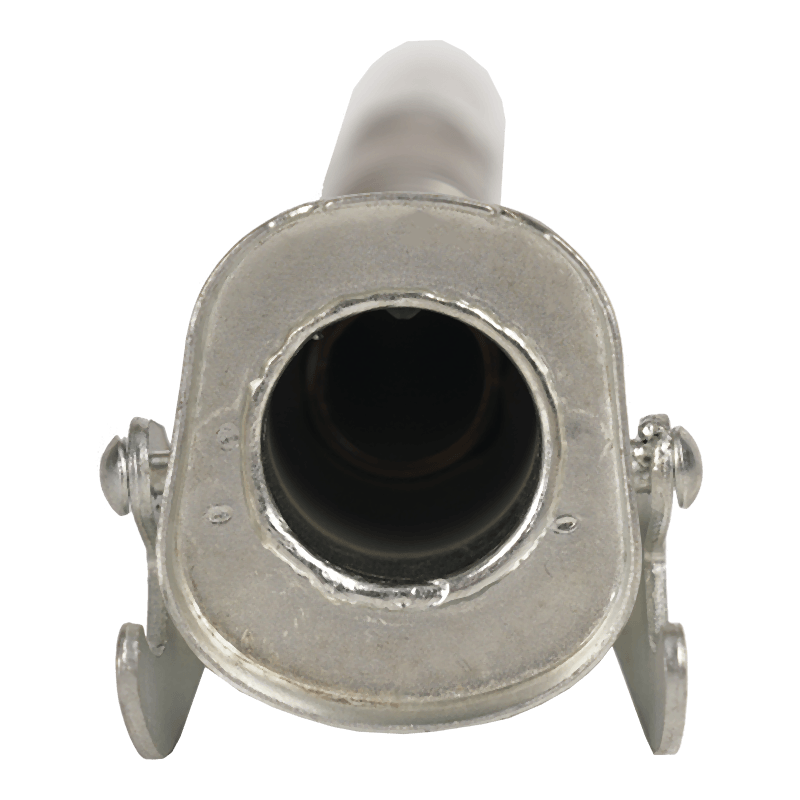 Stainless Steel Corrugated Oil PourerHeavy-duty stainless steel pourer with a flexible corrugated spout and sealing gasket, helping control flow when decanting oil into cans and jerrycans.View Product →
Grease follows the same logic with different numbers. A standard grease cartridge holds 14.5 ounces, which is about 411 cubic centimeters, and that is precisely why 400 cc hand guns are the most common size on the market. A 500 cc or 900 cc gun can run on cartridges or on bulk fill, and the choice usually depends on how many lubrication points a technician reaches in a shift. Bulk grease arrives in kegs sold by weight, so the conversion into gun fills depends on density, not on a barrel figure.
Storage layout deserves a moment of thought. A full 208-liter drum of lubricating oil weighs around 200 kilograms once you add the steel shell, which is beyond safe manual lifting and needs a pallet truck or a fixed dispensing station. A 20-liter container weighs under 20 kilograms when full of a typical oil, which one person can move safely. Sorting your fluids into these two handling classes prevents most of the strain injuries and dropped-container spills that show up in maintenance areas.
For a broader look at how industrial oil barrels are built, coated and specified, the site's guide to industrial oil barrel construction and selection covers shell thickness, lining and closure options in more detail.
Where 42 Gallons Does Not Apply
The 42-gallon figure is the petroleum standard in the United States and in international oil pricing, but it is not universal. Applying it outside that context produces estimates that are wrong by 20 to 30 percent, and occasionally by much more.
Imperial and Legacy Volumes
Older UK petroleum documents sometimes use a 36 imperial gallon barrel, which equals 163.66 liters or about 43.2 US gallons. The difference from 42 US gallons is modest, roughly 3 percent, but it compounds across a cargo. Beer uses yet another set of barrels: 31 US gallons in American brewing and 36 imperial gallons in the UK. Spirits add a third standard, with a bourbon barrel holding about 53 US gallons.
Oilfield Service Units
In oilfield cementing, a barrel still means 5.615 cubic feet, but the material is measured in sacks of one cubic foot each, so a barrel of cement mix relates to sacks rather than to liquid gallons. Pumping schedules that treat the cement barrel as a fluid gallon measure will be badly off. Similarly, a barrel of oil equivalent used in energy reporting converts hydrocarbon gas into the same energy content as one barrel of crude, using a convention of roughly 5.8 thousand cubic feet of gas at 1,000 Btu per cubic foot. It is an energy unit, not a volume of liquid.
Industrial Packaging
Industrial drums are the most common source of confusion in a purchasing department. A "55-gallon drum" is 208.2 liters, while a European 200-liter drum is 52.8 US gallons. The two look identical on a loading dock, sit on the same pallet footprint and accept the same 2-inch pump, but they differ by about 8 liters. When a formulation sheet says "one drum per batch", the batch size depends on which drum the plant actually stocks.
Plastic containers bring a further wrinkle: nominal capacity is often below brimful capacity, and the usable fill is lower again once you leave headspace for thermal expansion. A container sold as 20 liters may hold 21 liters to the brim and should be filled to about 19 liters for safe transport of a liquid that will warm up in a vehicle.
A Practical Checklist for Sizing Oil Storage and Handling
Whether you are specifying drums for a factory, a fleet workshop or a retail range, the same eight questions resolve most of the risk. Work through them before confirming an order, not after the container arrives.
- Confirm the unit: is the requirement stated in US gallons, imperial gallons, liters or barrels, and which barrel definition applies?
- Separate nominal from brimful capacity, and decide the working fill level, typically leaving about 5 percent headspace for thermal expansion.
- Check the closure thread: 2-inch and 3/4-inch bungs are standard on industrial drums, but plastic containers often use different caps entirely.
- Match the material to the fluid: steel for lubricating oils, stainless steel where corrosion or contamination matters, aluminum where weight is the priority, high-density plastic for water-based and mild chemicals.
- Verify packaging certification where transport requires it, including UN marking for dangerous goods and local labeling rules for flammable liquids.
- Calculate the full weight, not just the volume, because a 208-liter drum of oil is a two-person or machine-handling item.
- Match the pump to both the drum opening and the fluid viscosity, and check seal compatibility with the base oil and any additives.
- Plan grounding and bonding if the fluid is flammable, and plan secondary containment sized to at least the largest container in the store.
Tolerance matters here. A supplier quoting 200 liters may deliver a drum with a brimful capacity of 210 liters and a recommended fill of 200 liters, which is correct practice but reads as a shortfall if the buyer expected a 208-liter drum. Writing the nominal capacity, the brimful capacity and the acceptable tolerance into the purchase specification removes the argument before it starts.
The Conversion Mistakes That Cost the Most
Most errors in this area are not arithmetic failures. They are unit failures, and they survive review because the numbers look plausible.
- Mixing US and imperial gallons, which introduces a 20 percent error in a single step.
- Treating a 55-gallon drum as a barrel of oil, which inflates the volume by about 31 percent.
- Rounding 158.987 liters to 160 liters in a custody transfer document, where the tolerance is measured in fractions of a percent.
- Confusing barrels per day with barrels per year, a 365-fold error that occasionally appears in press releases.
- Converting tonnes to barrels without stating the API gravity or the reference temperature.
- Applying a single density figure to a blended product whose components have different specific gravities.
- Ignoring temperature correction when comparing a tank gauge reading taken in summer with one taken in winter.
For internal planning, a two-significant-figure conversion is usually enough, and rounding 42 US gallons to 159 liters keeps the arithmetic clean. For anything that touches invoicing, customs or safety, use the full figure, state the unit and state the reference temperature. The gap between a rough estimate and a contract number is exactly where disputes live.
Putting the Number to Work
Forty-two US gallons, or 158.987 liters, is the answer for a barrel of oil, and it has held since the 1870s because contracts, pipelines and refineries were all built around it. Everything else in this article follows from two habits: always name the unit, and always separate the unit from the container. A barrel is a measure. A drum is a thing you can drop on your foot.
In a workshop, that distinction turns into practical decisions about 20-liter containers, 208-liter drums, rotary pumps and pourers that match the bung thread you actually have. Get those details right and the conversion stops being trivia and starts being a purchasing tool.
For the full range of capacities, materials and closures, the 2024 product catalogue lists the oil drums, pumps, grease guns and accessories described above, with the dimensions and fill volumes needed to match containers to the fluids and the people handling them.