English
 中文简体


At a tank farm, a 100,000-barrel crude cargo can trigger a dispute over a few hundred liters, even when every meter has been calibrated. The reason is simple: a crude oil barrel is a volume unit with a fixed definition, but the oil inside it changes weight with density and temperature. A buyer who treats “barrel” as a physical drum, or as a fixed tonnage, will misread the contract before the first truck loads.
The practical answer is this: one crude oil barrel equals 42 US gallons, or 158.987 liters, or 5.615 cubic feet. That is the volume. Weight is a separate calculation, and the container on site is often a different size from the contract barrel.
What One Barrel of Crude Oil Actually Means
A crude oil barrel is not a 55-gallon steel drum. It is a standard unit of account used in petroleum pricing, shipping, and storage. The 42 US gallon figure is the anchor for almost every crude oil conversion, from pipeline nominations to tank gauging. The table below gives the equivalents buyers and maintenance teams most often need.
| Unit | Equivalent | Practical note |
|---|---|---|
| 1 crude oil barrel | 42 US gallons | The standard petroleum barrel |
| 1 crude oil barrel | 158.987 liters, usually rounded to 159 L | The figure used in most engineering and procurement conversions |
| 1 crude oil barrel | 5.615 cubic feet | Useful for tank capacity and vapor-space calculations |
| 1 crude oil barrel | 34.97 imperial gallons | Do not mix US and UK gallon figures in the same schedule |
| 1 crude oil barrel | About 0.136 metric tonnes at 0.85 specific gravity | An approximate weight, not a fixed conversion |
That is the number to use in contracts, tank tables, and transfer calculations. If a document says “barrel” without defining the gallon basis, ask. A 42 US gallon barrel is 158.987 liters. A 42 imperial gallon barrel would be much larger, and that difference is far too expensive to leave to habit.
Why the 42-Gallon Standard Exists and Where It Stops Applying
The 42 US gallon crude oil barrel is a settled petroleum convention, not a description of the steel drum in a workshop. That distinction matters because “barrel” is used loosely in storage and maintenance purchasing. A beer barrel, a fluid barrel, and a 55-gallon drum all use different capacities. A 55-gallon drum holds 208.2 liters, or about 1.31 crude oil barrels. A 200-liter drum holds about 1.26 barrels.
For crude oil cargoes, the contract unit is the 42 US gallon barrel. For lubricants, solvents, and workshop fluids, the container may be a 5-liter can, a 20-liter pail, a 200-liter drum, or a 1,000-liter intermediate bulk container. Those containers are measured in liters or gallons, not necessarily in crude oil barrels. Buyers who mix the two levels of measurement create avoidable errors in order quantity, freight cost, and storage space. A useful reference for the container side is this industrial oil barrel guide, which treats physical drums separately from the crude oil unit of account.
Volume vs Weight: API Gravity Changes the Tonne Conversion
Crude oil is bought and sold by volume far more often than by weight, but shipping, customs, and refinery accounting often use metric tonnes. That is where density enters. A barrel is a fixed 158.987 liters. A tonne is 1,000 kilograms. The number of barrels in a tonne depends on how heavy the oil is.
At a specific gravity of 0.80, one barrel weighs about 127 kilograms, so one metric tonne is roughly 7.9 barrels. At 0.85 specific gravity, one barrel weighs about 135 kilograms, so one tonne is roughly 7.4 barrels. At 0.95 specific gravity, one barrel weighs about 151 kilograms, so one tonne is roughly 6.6 barrels. The often-quoted 7.33 barrels per tonne is only a rough average. It should not be used as a contract conversion without an agreed density or API gravity.
API gravity is the industry shorthand for density. Higher API gravity means lighter oil, lower mass per barrel, and more barrels per tonne. Lower API gravity means heavier oil and fewer barrels per tonne. For a cargo of 500,000 barrels, a small density difference can shift the tonnage by thousands of metric tonnes. The contract should state the density basis, the temperature basis, and the method used to convert between volume and weight. If it does not, the commercial tolerance may be doing more work than the operations team realizes.
From Wellhead to Tank: Where Barrel Volume Gets Measured
Crude oil barrel volume is rarely a single, simple reading. At the wellhead, production may be measured by tank gauge, Coriolis meter, or positive displacement meter. At a terminal, custody transfer may depend on calibrated storage tanks, automatic tank gauging, or metering skids. At a refinery, the same oil may be converted again under a different temperature base. Each step needs a clear reference condition.
Temperature is the usual source of small but expensive differences. Oil expands as it warms. A cargo measured at 30°C will occupy more volume than the same mass measured at 15°C. Contracts therefore use a standard temperature, often 60°F or 15°C, and apply a volume correction factor. If one party reports observed volume and the other reports standard volume, the numbers can look wrong even when both meters are working.
Sediment and water are the second major adjustment. Crude oil may contain basic sediment and water, usually written as BS&W. A volume that includes water is not the same as a volume of dry crude. Custody transfer procedures normally define sampling, centrifuge or extraction methods, and the allowable BS&W limit. A 0.1% difference on 100,000 barrels is 100 barrels, which is enough to justify a claim if the contract is silent.
Meter calibration and tank strapping are the third layer. Tanks are not perfect cylinders. Their capacity tables are built from strapping records, deadwood, and internal fittings. A tank that is “about 10,000 barrels” is not good enough for custody transfer. The tank table, the gauge, the temperature probe, and the correction procedure all need to be traceable and mutually accepted.
The 55-Gallon Drum Is Not a Crude Oil Barrel
The most common storage error is assuming that a standard 55-gallon drum is one crude oil barrel. It is not. A 55 US gallon drum holds 55 gallons, while a crude oil barrel holds 42 US gallons. That makes the drum about 31% larger than one barrel. In reverse, a 100-barrel requirement needs about 76 standard 55-gallon drums, not 100 drums. For a maintenance store, that is a useful sanity check before a purchase order is released.
A 200-liter drum is also not a crude oil barrel. It holds about 1.26 barrels. A 20-liter pail holds about 0.126 barrels. The confusion is understandable because “barrel” is used in everyday speech for any large cylindrical container. In petroleum accounting, however, the unit is fixed. The container is a separate specification with its own fill volume, headspace, closure, material, and handling requirement.
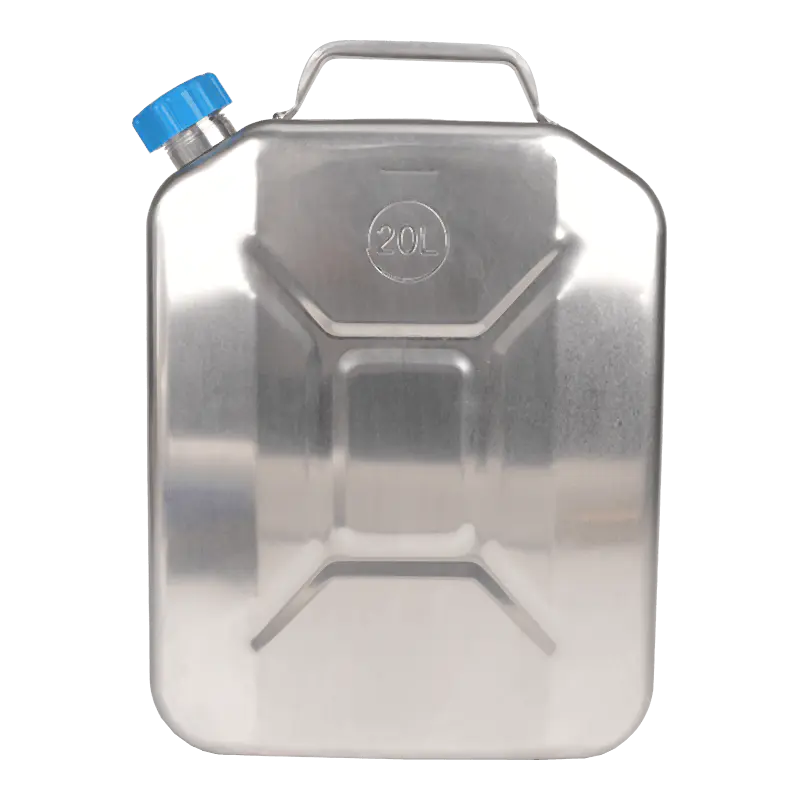
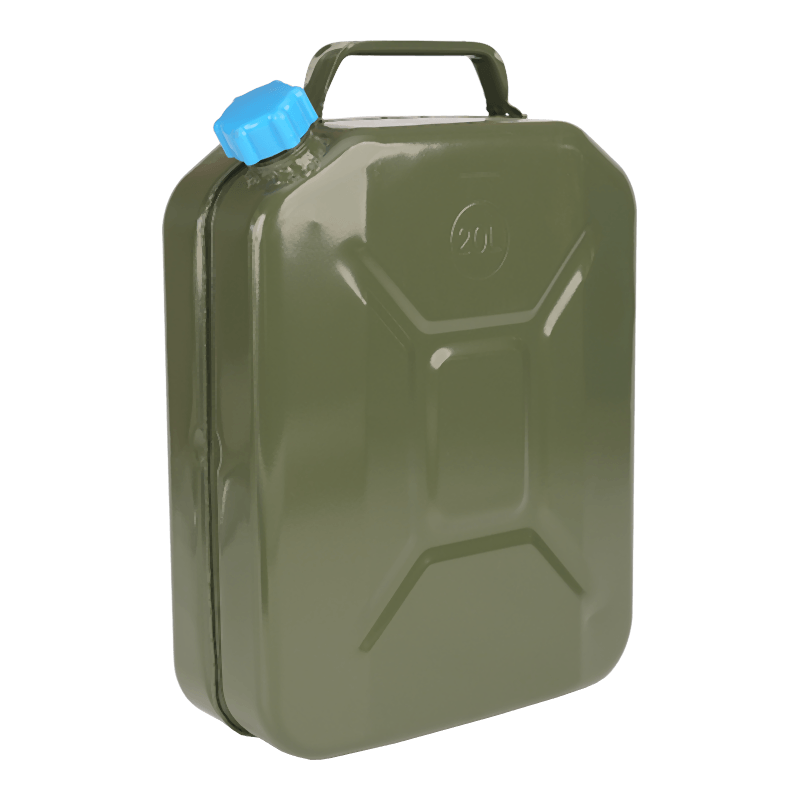
For workshop storage and transfer, the practical question is whether the container suits the fluid and the job. A powder-coated 10L/20L aluminum oil barrel, for example, is a workshop container, not a crude oil custody vessel. It is chosen for portability, clean filling, and resistance to the working environment. Buyers should size it against liters or gallons used per shift, not against a crude oil cargo figure.
 Portable 10L/20L Powder-Coated Aluminum Oil BarrelA portable aluminum container for gasoline, diesel, water and other liquids, with 10 L/20 L options and powder-coated finish; suited to workshop storage and transfer.View Product →
Storage and Transfer: Matching Equipment to the Real Volume
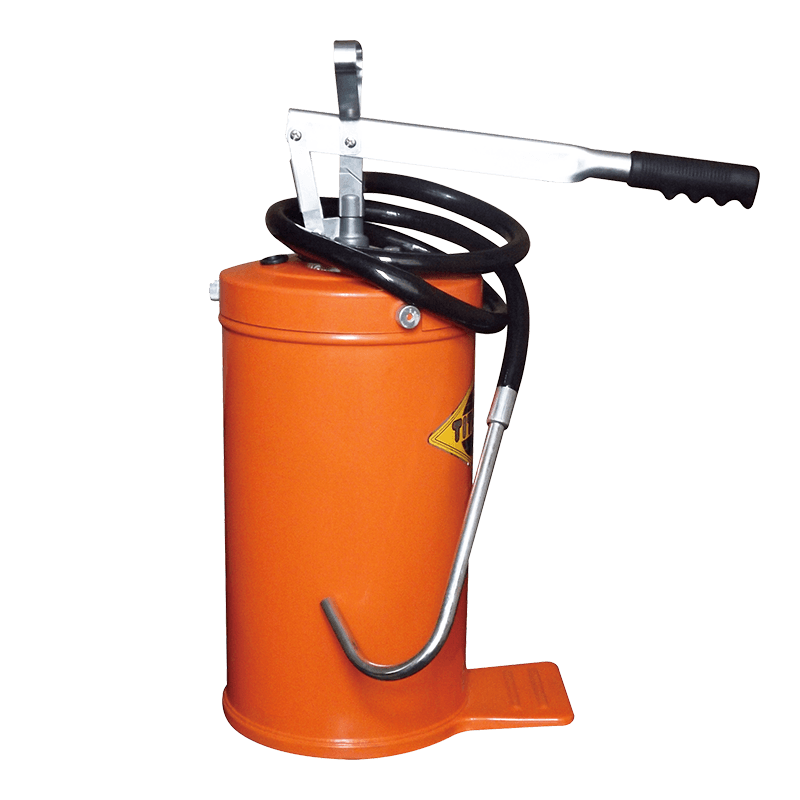
Once the unit is clear, the equipment decision becomes easier. Fixed storage favors a container with a stable footprint, a reliable closure, and a pump connection that matches the drum opening. Mobile storage favors a smaller container that one person can move without a forklift. Transfer equipment must match both the container and the fluid: a rotary pump for a closed drum is a different choice from a hand grease gun for a bearing point.
For fixed storage in a workshop or small terminal, a vertical metal oil barrel is usually selected when floor space is limited and top access is practical. The volume should be checked against the largest expected delivery and the smallest practical batch. A container that is too large increases working capital and spill risk. A container that is too small multiplies handling and changeover time.
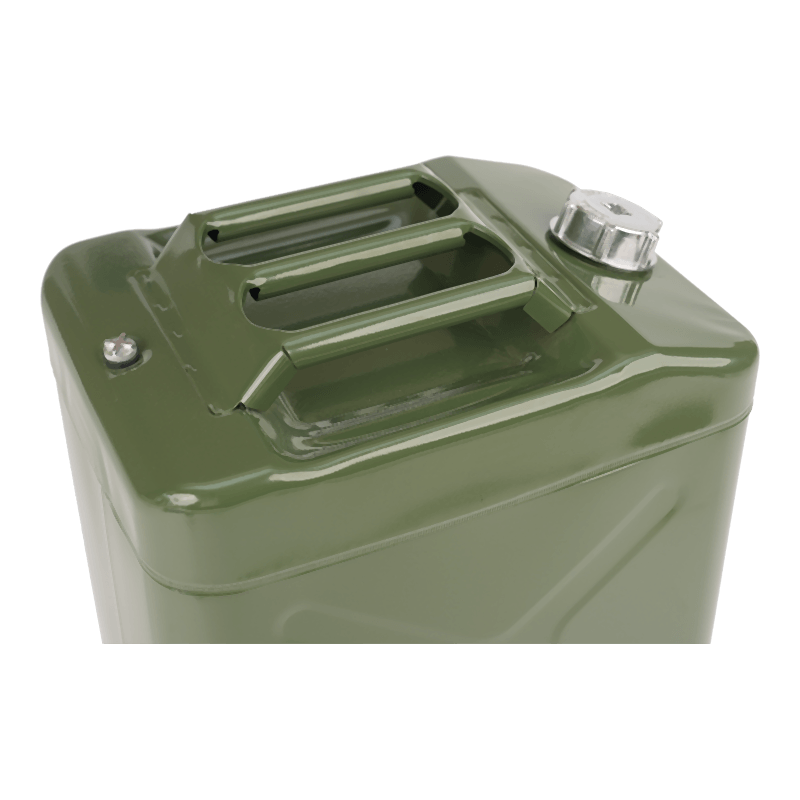 Vertical Metal Oil Barrel in 5L to 40L CapacitiesVertical metal container in 5 L to 40 L sizes, with three-bar handle, enlarged outlet, oil guide pipe, and exhaust hole for transport and pouring.View Product →
For closed drums, a rotary pump is a common transfer solution because it reaches into the drum and moves fluid without lifting the container. The pump material and seal choice should match the oil, the duty cycle, and the frequency of use. An aluminum alloy rotary pump is suitable for many light and medium oil transfer tasks, but it is not a universal answer for every chemical or every viscosity. The buyer should confirm compatibility before placing a bulk order.
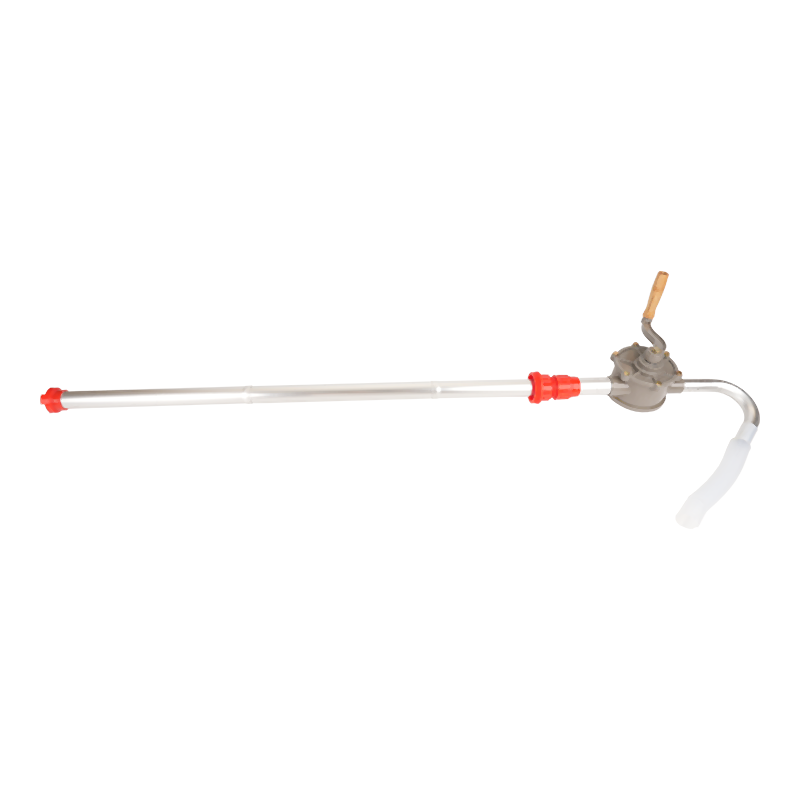 Aluminum Alloy Rotary Drum Pump for Oil TransferA manual hand-crank pump with aluminum alloy core and adjustable three-section suction pipe, made to fit standard oil drums for oil extraction.View Product →
In a maintenance store, the working range is usually liters per job, not barrels per cargo. A 5-liter can, a 20-liter pail, and a 200-liter drum may all appear in the same room. Labeling each container by its actual capacity, not by the word “barrel,” prevents the most common mix-up in requisitions and stock counts.
Procurement Checklist: Contract Terms That Prevent Volume Disputes
A crude oil barrel volume clause should be short enough to read and specific enough to audit. The following points cover the commercial and operational gaps that most often appear in supply agreements.
- Define the barrel as 42 US gallons and 158.987 liters, and state whether US or imperial gallons apply elsewhere in the document.
- State the standard temperature for volume correction, such as 60°F or 15°C, and the correction method to be used.
- Record the density or API gravity basis for any volume-to-weight conversion. Do not rely on a generic 7.33 barrels per tonne.
- Set the BS&W limit, sampling method, and responsibility for inspection. Volume without quality adjustment can overstate delivered crude.
- Require calibrated meters and tank tables, with calibration certificates available for review.
- Agree on rounding rules. A small rounding difference repeated across many parcels becomes a real commercial difference.
- Specify the tolerance for measurement uncertainty and the procedure for resolving a discrepancy before discharge.
- Keep container capacity separate from contract volume. A 55-gallon drum, a 200-liter drum, and a 42-gallon crude barrel are three different figures.
These points are not legal decoration. They determine which number appears on the invoice, the bill of lading, and the stock report. When the numbers agree, operations move faster and claims are easier to avoid.
What Buyers Should Remember
A crude oil barrel is 42 US gallons, 158.987 liters, or 5.615 cubic feet. That volume is fixed. The weight is not. API gravity, temperature, BS&W, and contract terms decide how many barrels sit in a tonne and how much oil is actually delivered. The steel drum in the workshop is a separate object: a 55-gallon drum is about 1.31 crude oil barrels, and a 200-liter drum is about 1.26 barrels.
For procurement teams, the safest approach is to write the unit, the reference temperature, and the conversion method into the agreement before the first cargo or the first drum order. For maintenance teams, the safest approach is to label containers by actual capacity and match pumps and guns to the fluid and the job. The barrel standard does not change, but the equipment around it has to fit the real volume in front of the operator.