English
 中文简体


A purchasing manager sends a short request to three suppliers: quote me one barrel of oil, delivered to our workshop. The first reply comes back for 159 liters. The buyer, who had been picturing the 200-liter steel drum standing in the corner of the yard, marks it down as an under-delivery and starts looking for someone else. Nobody was dishonest. Nobody was careless. Two people used the same word for two different volumes, and the order stalled for a week.
Here is the short answer before any of the detail. One barrel of oil, the unit that appears in every price quote, customs declaration and production statistic, is exactly 42 US gallons. That works out to 158.987 liters, or roughly 0.159 cubic meters. It is a unit of account, not a package. The steel container on your loading dock is a different object with a different number: a 55-gallon drum holds 208.2 liters, and the ISO 200-liter drum that dominates European logistics holds 200 liters nominal and about 216.5 liters to the brim. The difference between these figures is small on paper and expensive in practice, because freight, filling limits, dangerous-goods paperwork and storage layouts all key off the number you wrote on the order.
What follows is a working guide to barrel and drum sizes as they are actually used in sourcing and maintenance work: where the 42-gallon figure came from, how it compares with the containers people buy, what those containers measure in millimeters and inches, which conversions cause trouble across metric and imperial markets, and how to write a specification that a factory in one country and a buyer in another can both read the same way.
The Short Answer: One Barrel of Oil Is 42 US Gallons
If you only remember one line from this article, remember this one. The oil barrel is a fixed, legally defined volume:
- 42 US gallons
- 158.987294928 liters, usually rounded to 158.99 liters
- 0.158987 cubic meters
- 5.6146 cubic feet
- 34.972 imperial (UK) gallons
That definition is exact. It is not a nominal capacity, a shipping estimate or a rough industry convention. When a trading desk quotes a price per barrel, when a government publishes daily production, when a refinery reports throughput, every one of those figures is multiplied by 158.987 liters to become a physical volume. The container that the oil eventually travels in may be any size at all, and usually is.
The barrel also converts into mass, but only approximately, because crude oils differ in density. As a working rule, one metric tonne of crude oil is about 7.33 barrels for a light grade such as Brent, and closer to 6.5 to 7.0 barrels for heavier grades. The reverse is easier to remember: one barrel weighs roughly 136 kilograms for a typical light crude, more for heavy sour grades. This is why customs paperwork often asks for both a volume and a mass, and why the two numbers never reconcile perfectly unless someone states the density.
Energy content runs on a similar logic. One barrel of crude oil carries roughly 5.8 million British thermal units, about 1.7 megawatt-hours. That is the basis of the barrel of oil equivalent, a unit used to compare oil with natural gas and other fuels on a single scale. Again, the barrel here is the 42-gallon accounting barrel, not a physical drum.
Where the 42-Gallon Barrel Came From, and Why It Still Binds Contracts
The number is not arbitrary, but it is also not scientific. It is a nineteenth-century compromise that outlived the industry that created it.
When commercial oil production began in Pennsylvania in the late 1850s and 1860s, there was no oil-specific packaging. Producers bought whatever barrels were available, and the most available barrels were the ones coopers already made for whiskey, wine and salted goods. Those came in a range of sizes, and the ones used for spirits were commonly rated at 40 gallons. Because oil leaked, evaporated and clung to the wood, buyers and sellers could never agree on whether a full barrel was a full barrel.
In 1866, a group of Pennsylvania producers and buyers settled on 42 gallons as the standard: 40 gallons of product plus a two-gallon allowance for leakage and handling. That informal agreement hardened into commercial custom, then into the unit that every oil price in the world is still quoted in. By the time steel drums replaced wooden barrels in the early twentieth century, the unit and the container had already drifted apart. The word stayed; the object changed.
This history explains a frustration that shows up in purchasing departments constantly. There is no technical reason why a barrel is 42 gallons rather than 40 or 45. It is a contract convention, and contract conventions are only changed by agreement across an entire industry, which is why nobody expects it to move.
Oil Barrel, Oil Drum, Keg and Pail: Four Units Buyers Keep Mixing Up
Most of the confusion in day-to-day purchasing is not about the 42-gallon figure itself. It is about the several other volumes that legitimately carry the name "barrel" or "drum" in different trades and different countries. A quotation that says "barrel" without a unit is a quotation that will be argued about.
| Name | Capacity | Where it is used |
|---|---|---|
| Oil barrel (bbl) | 42 US gal / 158.99 L | Crude oil pricing, production statistics, refinery reporting |
| US liquid barrel | 31.5 US gal / 119.24 L | Some US liquid commodity and beverage contexts |
| US dry barrel | About 115.6 L | Legacy agricultural and dry goods measures |
| US beer barrel | 31 US gal / 117.35 L | Brewing in the United States |
| UK beer barrel | 36 imperial gal / 163.66 L | Brewing in the United Kingdom |
| 55-gallon steel drum | 55 US gal / 208.20 L | Industrial packaging, lubricants, chemicals, solvents |
| 200-liter drum | 200 L nominal, about 216.5 L brimful | International shipping under ISO drum standards |
| Hogshead | 63 US gal / 238.48 L | Legacy wine, spirits and tobacco measures |
The practical point of the table is the last two rows. A buyer who specifies "one drum" of lubricant in a European context will usually receive a 200-liter drum. A buyer who specifies "one drum" in a US context will usually receive 208.2 liters. That is a difference of 8.2 liters, about four percent, and it is large enough to matter when a contract runs to ten thousand drums a year. It is also small enough that no one notices until the invoices are reconciled.
The safe habit is simple. Never write "barrel" or "drum" alone in a specification or a purchase order. Write the unit: 158.99 L, 200 L, 208.2 L, or 42 US gal. Two extra characters prevent a surprising number of disputes.
What the Container in Your Warehouse Actually Measures
Volume tells you what a container holds. Dimensions tell you whether it will fit on the pallet, under the racking beam and through the door of the delivery van. Both matter, and the second set of numbers is often missing from quotations.
| Container | Nominal capacity | Typical outside diameter | Typical overall height |
|---|---|---|---|
| Tight-head steel drum, ISO type | 200 L | 571.5 mm (22.5 in) | 880 mm (34.6 in) |
| Closed-head 55 US gal drum | 208.2 L | 571.5 mm (22.5 in) | 851 mm (33.5 in) |
| 30 US gal steel drum | About 114 L | About 460 mm | About 670 mm |
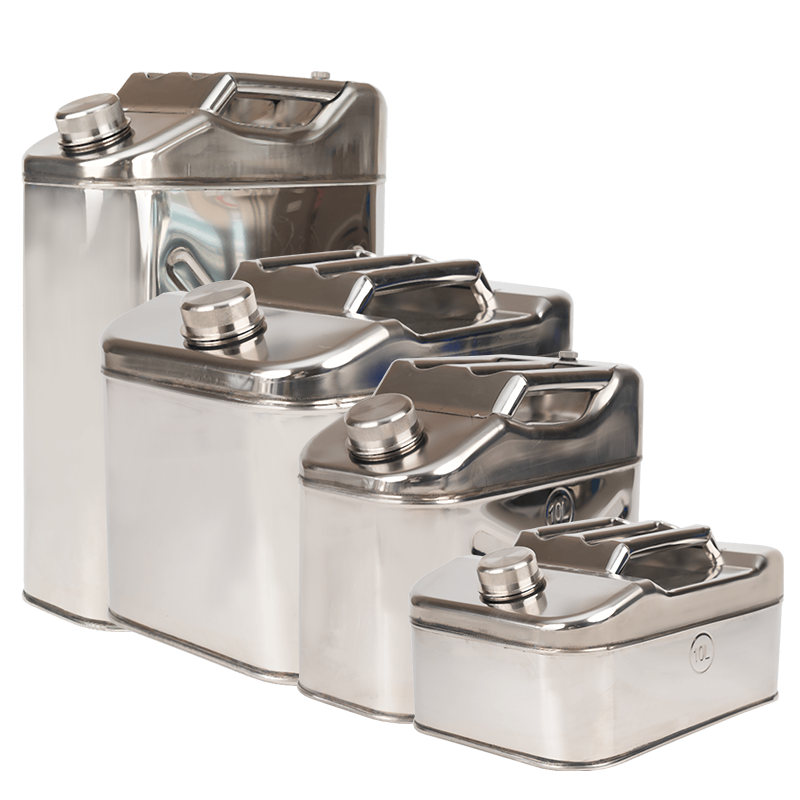
| 20 L jerry can or portable can | 20 L | About 160 to 180 mm | About 450 mm |
| 10 L portable can | 10 L | About 140 mm | About 350 mm |
| 5 L container | 5 L | About 130 mm | About 260 mm |
| Intermediate bulk container | 1000 L | 1200 x 1000 mm footprint | About 1150 mm |
Two details in that table deserve attention. The first is that the 200-liter ISO drum and the 55-gallon drum share the same 571.5 mm diameter but differ in height by roughly 29 mm. That is enough to break a racking layout that was dimensioned for one and filled with the other. The second is that the nominal capacity of a drum is never the brimful capacity. A 200-liter drum holds about 216.5 liters when filled to the very top, and a 55-gallon drum holds a little more than 55 gallons before it overflows. Designers use the difference for ullage.
Ullage is the empty space deliberately left above the liquid. For flammable liquids it is a safety requirement, since the contents expand as they warm; for ordinary lubricants it is a handling allowance that prevents spillage during filling and pouring. A common working figure is to fill to 95 to 98 percent of nominal capacity, which means a 200-liter drum is treated as holding about 190 to 196 liters in normal trade. If your process planning assumes a full 200 liters per drum, your stock calculations will be optimistic by a few percent.
Materials matter as much as dimensions. Steel drums are built in cold-rolled sheet typically between 0.8 and 1.2 mm thick for the body, with heavier gauges and a ring or bead pattern for larger sizes. Aluminum drums are lighter and resist corrosion but cost more and dent more easily. Plastic containers cover the small end of the range and are usually blow-molded HDPE, which is fine for many lubricants and unsuitable for aggressive solvents. The choice is not cosmetic: a drum that fails in transit is a dangerous-goods incident, not a warehouse inconvenience.
Metric, Imperial and US Traps in Cross-Border Sourcing
Three measurement systems meet in the oil and lubricant trade, and the collisions between them cause a disproportionate share of specification errors.
Gallons are not always gallons
A US gallon is 3.785411784 liters. An imperial gallon is 4.54609 liters, about twenty percent larger. A UK buyer who asks for 40 gallons and a US supplier who quotes 40 gallons are discussing volumes that differ by nearly 30 liters. The barrel figures diverge for the same reason: the 42-gallon oil barrel is 34.97 imperial gallons, and the 36-imperial-gallon UK beer barrel is 43.2 US gallons. If a drawing or a quote says "gal" without a country, ask.
Tonnes and barrels do not convert on their own
Volume to mass requires density. Volume to energy requires calorific value. Any quotation that offers a straight tonne-to-barrel conversion without a density figure is offering an average, and averages hide the spread between light and heavy grades. For lubricants and finished oils, the densities are usually published on the technical data sheet, around 0.85 to 0.90 kg per liter for many lubricating oils, which means a 200-liter drum holds roughly 170 to 180 kilograms of product. Freight calculations that assume one liter equals one kilogram will be wrong by ten to fifteen percent.
The 200-liter and 55-gallon split
Europe standardized on 200-liter drums and the ISO dimensions around them. North America stayed with the 55-gallon drum. Manufacturers who serve both markets commonly build both, and the bodies look almost identical on a loading dock. The difference of 8.2 liters is invisible to the eye and visible on the invoice. Where a project mixes drums from two supply chains, the receiving team should measure one drum from each batch rather than trust the label.
Small container sizes hide the same trap
The same discipline applies at the small end. Jerry cans and portable cans sold as 5 L, 10 L and 20 L are usually close to nominal, but the usable volume after leaving the expansion gap may be five percent lower. For hand-carried containers used in maintenance work, that gap rarely matters. For a fleet of vehicles where each one is topped up from a 20-liter can, it decides how many cans the technician carries on a shift.
How Barrel Size Drives Freight, Storage and Handling Costs
Container size is one of the few purchasing variables that changes landed cost without changing the product at all. The arithmetic is worth doing before the order, not after.
Freight efficiency
A standard 20-foot container takes 80 loose 200-liter drums in a single tier arrangement, with the exact count depending on palletization and closure type. A 40-foot container takes roughly double. Shipping the same volume in 20-liter cans instead of 200-liter drums multiplies the container count by roughly ten, because the packaging itself occupies most of the space. On long sea routes, the freight difference between bulk drums and small containers can exceed the value of the product inside them. This is the single strongest argument for buying at the largest container size the operation can actually use.
Palletization and racking
Drums are typically handled four to a 1200 x 1000 mm pallet, or two to a 1200 x 800 mm pallet, with the pallet footprint driving warehouse density far more than drum volume does. A 200-liter drum standing alone occupies 0.257 square meters of floor; four on a pallet, allowing for pallet overhang and aisle access, work out to roughly 0.3 to 0.35 square meters each. Horizontal drums change the calculation entirely, because they cannot be stacked more than two or three high without racking and they cannot be rolled without a cradle. Vertical storage almost always wins on density; horizontal storage wins when the drum has to be drained completely or when headroom is limited.
Filling limits and dangerous goods
Flammable liquids are shipped with defined ullage under transport regulations. The familiar UN marking on a drum, with designations such as 1A1 for a non-removable head steel drum and 1A2 for a removable head steel drum, tells the handler what the packaging has been tested for. A drum that is chemically suitable but not UN-rated cannot legally carry a regulated product, however well it holds oil. Buyers sourcing packaging for regulated lubricants should confirm the UN specification and the test report, not just the capacity.
Handling weight
A full 200-liter drum of lubricating oil weighs around 180 kilograms plus roughly 19 kilograms of steel, so about 200 kilograms total. That is a forklift or drum trolley job, never a two-person lift. A 20-liter can weighs about 18 kilograms when full, which is the practical ceiling for one person carrying it up a flight of stairs. Choosing between the two is a decision about who does the moving, not just about price per liter. Where product has to reach machinery on upper floors or in confined spaces, the small container usually pays for its higher unit cost in avoided handling incidents.
Matching Container Size to the Job in Front of You
The sensible way to choose a container size is to work backwards from the task, not forwards from the price list. Three tasks cover most situations.
Bulk storage and transfer
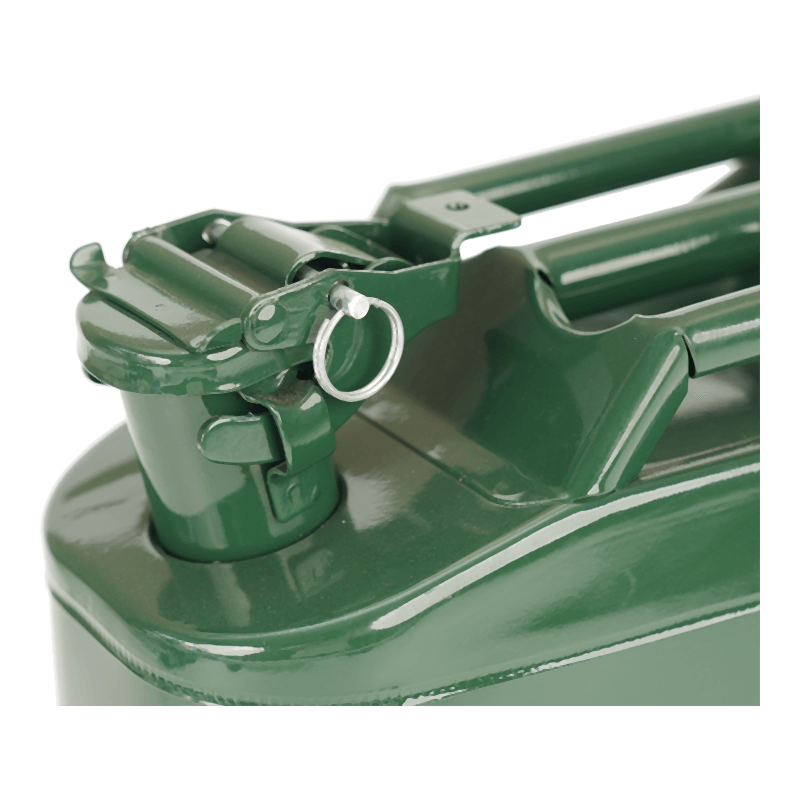
If oil or lubricant arrives in volume and stays in one place, the container is storage furniture. Steel drums in the 200-liter class, or metal oil barrels where durability and long service life matter more than weight, are the normal answer. Vertical drums are the default for gravity-fed or pump-fed installations because they present a clean top surface for a pump or a bung, and they stack and rack predictably. Horizontal drums earn their place where the drum must be drained completely or where height is restricted, since the liquid sits closer to the outlet.
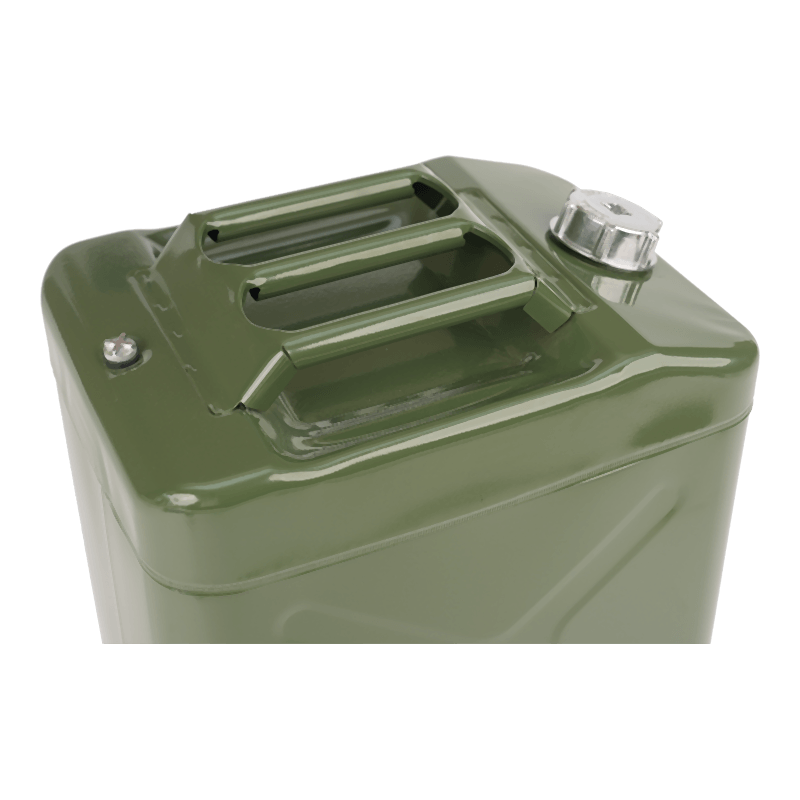 Vertical Metal Oil Barrel for Oil Handling and PouringVertical metal oil barrel in 5L–40L capacities with three-bar handle, enlarged outlet, oil guide pipe and exhaust hole for handling and pouring.View Product →
Whatever the orientation, the fittings decide how usable the drum is. A two-inch bung with a matching pourer or a rotary pump turns a sealed drum into a working dispenser. A drum without the right accessory is a heavy object with a lid.
Small-volume transfer and top-up
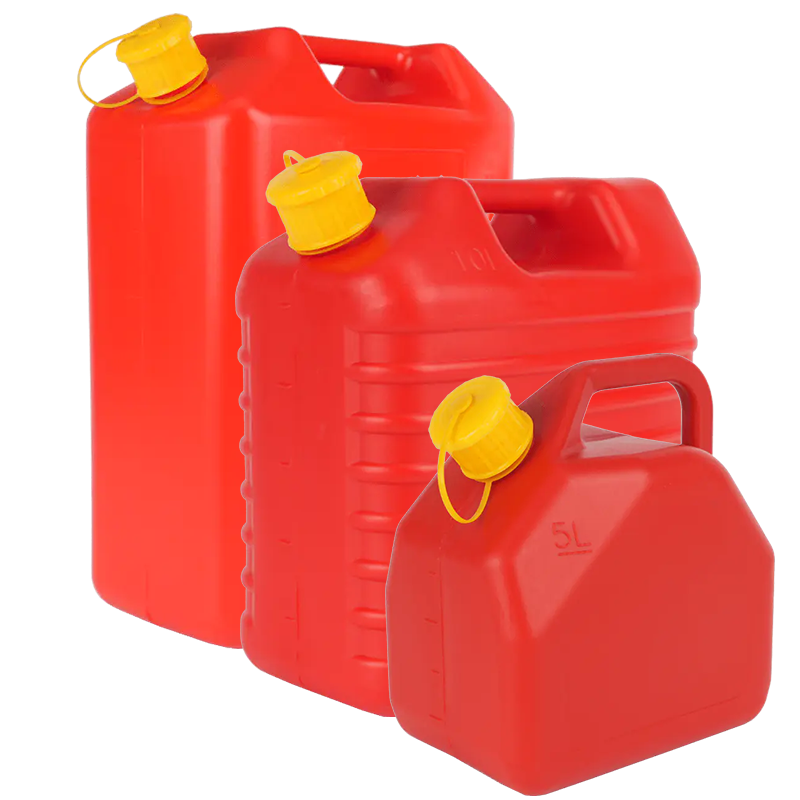
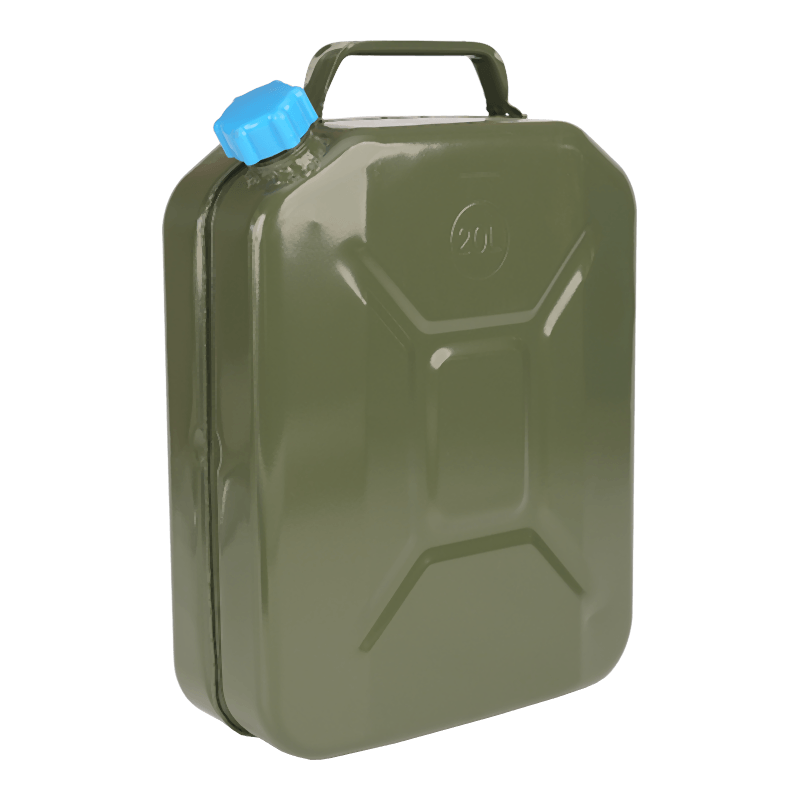
At the other end of the scale, 5, 10 and 20-liter portable cans and jerry cans move oil from the storage point to the machine. Their value is not capacity but portability: a 20-liter container is enough to refill several pieces of equipment and still light enough for one technician to carry. Where the site has multiple machines spread over a wide area, a set of small cans plus one bulk drum is usually cheaper than either extreme on its own, because the drum absorbs the bulk price and the cans absorb the distance.
 Wholesale 5L/10L/20L Portable Jerry Can for Oil TransferPortable 5L/10L/20L jerry can with plastic powder surface treatment, suited to moving oil from storage to machines and available for wholesale inquiry.View Product →
Sizing small containers is mostly a question of how often they are refilled. A container that empties twice a shift is too small; one that empties twice a year is too large, because the product inside ages and the container occupies space. Matching the container to one shift, one day or one week of consumption is a more useful rule than matching it to the machine.
Dispensing from a drum
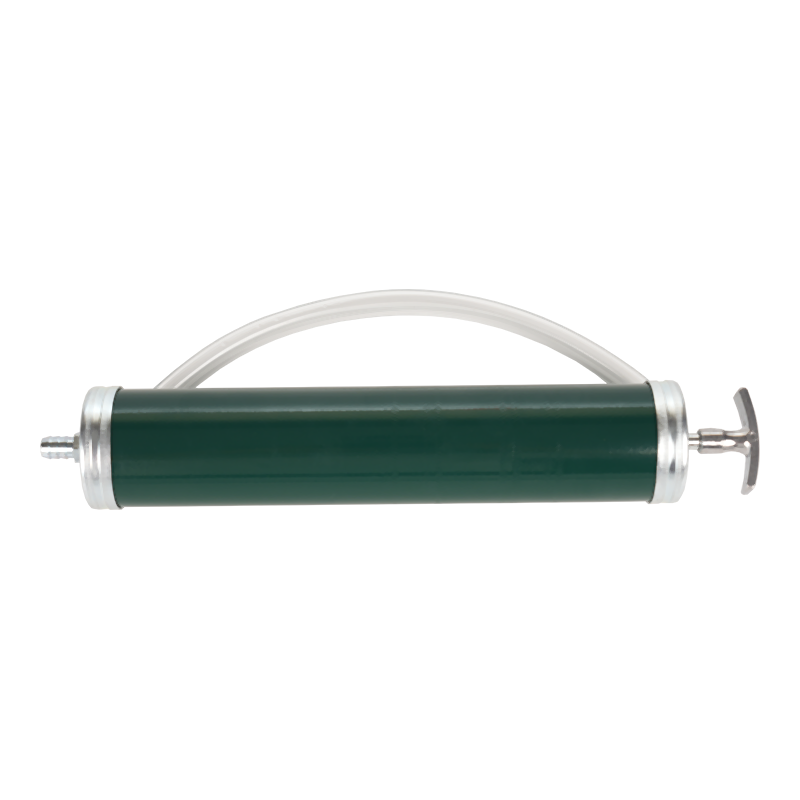
Once a drum is in place, the question becomes how the product leaves it. Gravity pourers suit thin oils and small draw-off volumes. Manual pumps suit intermittent use and sites without compressed air or power near the drum. Rotary barrel pumps suit higher throughput and are usually the cheapest way to move a few liters a minute out of a 200-liter drum. The drum size determines the pump throat and the bung thread; a pump specified for a 55-gallon drum will usually fit a 200-liter ISO drum because the bung sizes are the same, but the dip tube length is not always interchangeable.
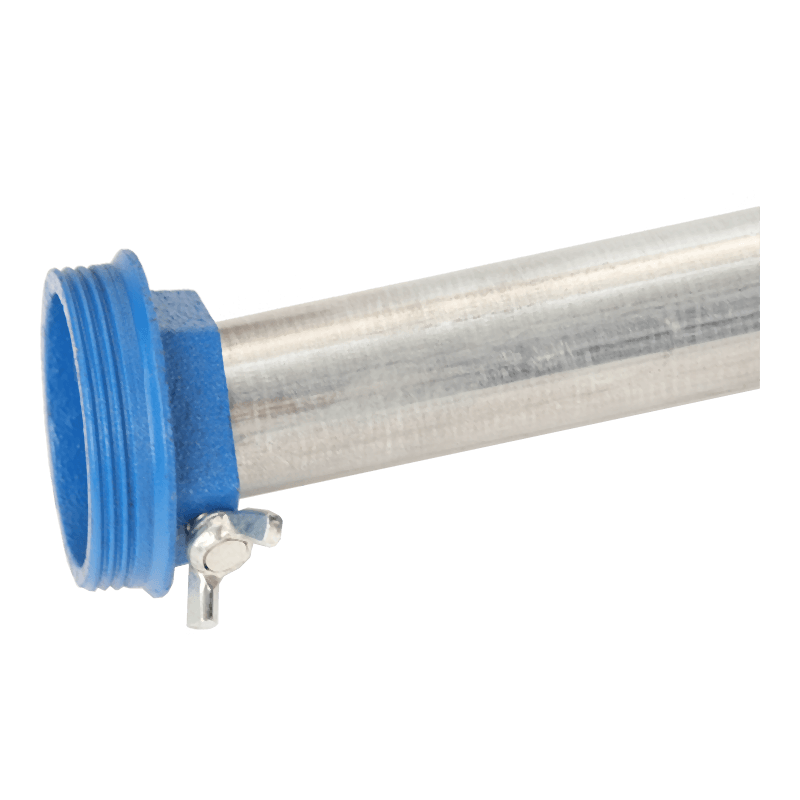 Cast Iron Rotary Barrel Pump 25/32 for Oil DrumsHand-cranked cast iron rotary pump for barrels, listed as 25/32 type, with sealing design and fixing buckle for stable oil transfer.View Product →
The same logic scales through the rest of the lubrication chain. Where the product is grease rather than oil, the container feeds a grease gun or an injector, and the injector capacity in liters or kilograms should be sized to the maintenance round, not to the storage drum. A 15-liter electric dispenser and a 40-liter pneumatic unit are both reasonable choices; they answer different questions about how many grease points one technician covers in a day.
Procurement Risks That Show Up After the Order Is Placed
Barrel-size mistakes rarely appear at the quotation stage. They surface at receiving, at filling or at the customer's site. The recurring ones are predictable enough to be designed out.
- Unit ambiguity in the specification. "One drum" without a unit invites the 200-liter and 208.2-liter mismatch. Write liters or gallons with the country of origin.
- Nominal versus usable capacity. Planning on 200 liters per drum when the fill limit is 190 liters distorts stock levels by five percent across a whole warehouse.
- Dimension drift between suppliers. Two suppliers can both deliver a 200-liter drum and still differ by 20 to 30 mm in height and a few millimeters in diameter, which matters for racking, pallets and decanting stations.
- Closure and thread mismatch. Bung threads, pourer threads and pump connections vary between regions. A drum that meets capacity and dimension requirements can still be unusable because no pump in the building fits it.
- Missing transport certification. Packaging for regulated products needs the appropriate UN performance marking. Buying unpackaged drums without it can strand a shipment at the port.
- Weight assumptions in freight quotes. Oil is lighter than water; assuming one liter equals one kilogram overstates shipping mass by ten to fifteen percent and can push a load over a weight limit that did not need to be breached.
- Material compatibility. Solvent-based products attack some plastics and coatings. The capacity is the easiest part of the specification to get right, and the least likely to cause a failure.
- Small-container proliferation. Adding one more can size to a fleet looks harmless until spares, labels, storage bins and training all multiply. Consolidating to two or three sizes usually saves more than it costs.
Most of these risks cost nothing to eliminate. They cost a paragraph in the specification.
Quick Reference: Conversions Buyers Actually Use
The figures below are the ones that come up repeatedly in sourcing, planning and freight work. Keep them alongside the drum dimensions and the specification checklist.
| From | To | Multiply by |
|---|---|---|
| Oil barrel (bbl) | US gallons | 42 |
| Oil barrel (bbl) | Liters | 158.987 |
| Oil barrel (bbl) | Cubic meters | 0.158987 |
| Cubic meter | Oil barrels | 6.2898 |
| Metric tonne of light crude | Oil barrels | About 7.33 |
| Oil barrel | Imperial gallons | 34.972 |
| Oil barrel per day | Liters per year | About 58,030 |
| 55-gallon drum | Liters | 208.20 |
| 200-liter ISO drum | Liters, brimful | About 216.5 |
One caution on the tonne conversion. The 7.33 figure is an average for light crude and is published widely for exactly that reason, but it is not a constant. Heavy crudes need more barrels per tonne, light condensates fewer. If a contract depends on the conversion, ask for the density and do the arithmetic rather than using the average.
The fastest way to avoid the entire class of problem described above is to stop treating "barrel" as a word and start treating it as a number. A clean specification answers five questions in a few lines: how much volume, in which unit and in which country's gallon; which container, including nominal capacity and brimful capacity; which dimensions, with tolerances; which opening and thread; and which transport certification if the contents are regulated. Suppliers who receive that list will quote accurately. Suppliers who receive "one barrel" will quote something, and it may not be the same something twice.
For buyers who want to see how capacities and accessories fit together across a full range, from small portable cans through 200-liter drums to the pumps and pourers that empty them, the 2024 product catalogue (PDF) at /template/en/images/Product%20Catalogue%202024.pdf sets out the current ranges with capacities and specifications, and a comprehensive guide to industrial oil barrels covers the storage side in more depth. Reading both before writing a specification takes twenty minutes and prevents the kind of dispute that takes a quarter to settle.
The final point is the one that surprises people new to the trade. The number 42 has nothing to do with how much oil a container can physically hold, and everything to do with an agreement made by Pennsylvania oilmen in 1866. The unit survived because it was useful and universal. The containers kept changing because engineering kept improving. Keeping those two facts separate is most of what it takes to specify a barrel correctly, whether the order is for one drum or ten thousand.