English
 中文简体
中文简体

A barrel of crude oil holds exactly 42 US gallons, which is 158.987 liters. That is not a rough industry estimate; it is the legal and commercial standard used on exchanges, in government reports, and in supply contracts around the world. When you see Brent or West Texas Intermediate quoted at a dollar-per-barrel price, that price refers to this precise volume. The same unit appears in production data, refinery throughput, tanker capacity, and strategic petroleum reserve inventories. The 42-gallon barrel is also a useful reference point for anyone who buys and handles lubricants or fuels in smaller containers, because it explains why a 200-liter drum, a 20-liter jerry can, and a hand pump are all described the way they are.
For people working in maintenance, procurement, or industrial supply, the practical conclusion is simple: one barrel of crude oil is defined by volume, not by weight, and its 42-gallon size is a historical decision that survived everything from wooden barrels to digital trading. The rest of this article explains why the number is 42, how to convert barrels into liters and tonnes, what a barrel actually contains after refining, and how the unit connects to the physical drums and transfer equipment used in real workshops and warehouses.
Why the Oil Barrel Is Exactly 42 Gallons
The answer goes back to the earliest days of the American oil industry. Before the first commercial oil well, crude oil was a niche product collected in small quantities and sold in whatever containers were available, including bottles, buckets, and assorted casks. There was no standard size, which made pricing chaotic and trade difficult.
That changed in 1859, when Edwin Drake drilled the first commercially successful oil well near Titusville, Pennsylvania. Oil production grew quickly, and producers needed something familiar in which to store and ship the product. The most common large container in the region was the whiskey barrel, which by tradition held about 40 gallons. Coopers in Pennsylvania produced these barrels in large numbers, so the oil industry adopted them as the default shipping vessel.
There was, however, a subtle but important adjustment. Producers noticed that oil evaporates, seeps into wood, and leaks through imperfect seams. A 40-gallon barrel often delivered less than 40 gallons to the buyer by the time it reached a distant city. To compensate, oil producers asked coopers to make the barrel slightly larger, and the working figure settled at 42 gallons. That extra two gallons absorbed evaporation and leakage, so the customer still received approximately 40 gallons of usable oil.
The informal convention became formal in 1866 when a group of oil producers in the Pennsylvania oil region agreed to adopt 42 gallons as the standard oil barrel. Six years later, in 1872, the Petroleum Producers Association, a trade body of the time, ratified the 42-gallon definition and recommended it for all transactions. The decision was commercial rather than scientific, but it had lasting power because contracts, shipping documents, and ledgers were all written around it.
Interestingly, the 42-gallon barrel never corresponded perfectly to a standard piece of cooperage. The oil barrel was an accounting unit from the start, a defined quantity of 42 gallons that buyers and sellers agreed upon, rather than a description of a wooden cask. Even as producers replaced wooden barrels with iron tanks, pipelines, and railcars, the contract language kept referring to barrels of 42 gallons, and every downstream party accepted that definition.
The United States government formally recognized the 42-gallon barrel in federal regulations, and it remains embedded in tax law, customs schedules, and statistical reporting. International commodities exchanges, including the major crude futures markets, quote prices in U.S. dollars per barrel, and that barrel is still exactly 42 U.S. gallons. In the early twentieth century, physical steel oil drums were sometimes built to hold 42 gallons so that one drum equaled one accounting barrel. Later, the now-familiar 55-gallon drum became the mainstream shipping container, and the link between the physical drum and the commercial barrel was broken for good. The accounting unit, however, never changed.
Barrels, Drums, and the Units That Often Get Confused
One of the most common mistakes in reading oil industry documents is confusing the crude oil barrel with other things called barrels. A crude oil barrel is a unit of volume equal to 42 U.S. gallons, and it is not the same as the physical steel drum you stack in a warehouse. It is also not the same as a beer barrel, a fluid barrel, or a barrel of dry goods.
In the United States, a fluid barrel used for some non-oil liquids is defined as 31.5 U.S. gallons. This older unit comes from the pre-industrial English tradition and is still used in certain regulatory contexts, but it has nothing to do with crude oil trading. A beer barrel in the United States is 31 gallons, while in the United Kingdom a beer barrel is 36 imperial gallons. For dry goods, the U.S. barrel is often 105 dry quarts, which is roughly 26.25 gallons, and different agricultural commodities have their own barrel definitions.
The distinction between a U.S. gallon and an imperial gallon is another frequent source of confusion. The U.S. gallon is 3.785 liters, while the imperial gallon used in the United Kingdom and some Commonwealth countries is 4.546 liters. A 42-gallon barrel measured with imperial gallons would hold 190.9 liters, which is substantially more than the 158.987 liters that the crude oil industry uses. When you see a European or Asian report noting a barrel, always confirm whether it uses the international petroleum convention of 42 U.S. gallons; nearly all global oil reporting does.
The abbreviation for barrel in oil markets is "bbl." The word barrel in singular and plural is abbreviated the same way, and the letters "bbl" do not imply double barrels. A common story traces the abbreviation to the blue barrels used by Standard Oil in the late nineteenth century, with the first b standing for blue and the second b for barrel. The story may be folklore, but the abbreviation is universal. In modern reporting you will also see "mb/d" for thousands of barrels per day and "mmb/d" for millions of barrels per day, using the Roman numeral convention for thousand and million.
Finally, do not confuse the crude oil barrel with the drum. A drum is a physical cylindrical container. The most common industrial drum today holds 55 U.S. gallons, which is about 208 liters, although it is also commonly described as a 200-liter drum. In some countries the same container is called a 44-gallon drum, because 44 imperial gallons equal about 200 liters. The 42-gallon crude oil barrel is smaller than the typical modern drum, so one drum holds about 1.31 barrels of liquid, and one barrel fills about 76 percent of a standard drum.
Converting One Barrel of Crude Oil into Other Units
Because the oil trade is global, you will frequently need to convert barrels into liters, cubic meters, or metric tons. The conversion to liters is fixed and exact; the conversion to tons depends on the density of the crude, which varies widely from one producing region to another. A table of the most important fixed conversions is useful for quick reference.
| Unit | Value per Barrel |
|---|---|
| U.S. gallons | 42 |
| Liters | 158.987 |
| Imperial gallons | 34.972 |
| Cubic feet | 5.6146 |
| Cubic meters | 0.15899 |
| Barrels per cubic meter | 6.2898 |
The relationship between barrels and cubic meters is the one most often used in international shipping and storage tank calculations. One cubic meter of crude oil, at standard temperature, equals 6.2898 barrels. Conversely, one barrel occupies 0.15899 cubic meters. If a storage tank has a rated capacity of 10,000 cubic meters, it holds about 62,898 barrels. Tank farms and terminals use this conversion constantly when reconciling inventory against trading records.
Converting barrels to metric tons requires density, because a ton is a unit of mass and a barrel is a unit of volume. The density of crude oil is commonly expressed as specific gravity relative to water, or as an API gravity value, which will be discussed in the next section. As a rule of thumb, a medium-density crude converts at roughly 7.2 barrels per metric ton. Light crudes can reach 8 barrels per ton or more, while heavy crudes can fall below 6.5 barrels per ton. The table below shows typical ranges for different crude classifications.
| Crude Type | API Gravity Range | Specific Gravity at 60°F | Barrels per Metric Ton |
|---|---|---|---|
| Super light and condensate | Above 50 | Below 0.78 | More than 8.0 |
| Light crude | 35 to 50 | 0.78 to 0.85 | 7.4 to 8.0 |
| Medium crude | 26 to 35 | 0.85 to 0.90 | 7.0 to 7.4 |
| Heavy crude | 10 to 26 | 0.90 to 1.00 | 6.3 to 7.0 |
| Extra heavy and bitumen | Below 10 | Above 1.00 | Below 6.3 |
For practical procurement, the metric ton conversion matters when you buy lubricants, drilling fluids, or fuel oil by weight rather than by volume. A truck carrying a certain tonnage of oil can carry more barrels if the crude is light than if it is heavy, which is one reason logistics planners always confirm density before scheduling transport.
Density, API Gravity, and Why Volume Is Not Weight
Crude oil is not a single substance. It is a complex mixture of hydrocarbons that ranges from thin, light liquids to thick, almost solid bitumen. The petroleum industry expresses this variation with a scale called API gravity, named after the American Petroleum Institute. The formula is inverse to standard density: lighter oils have higher API gravity values, and heavier oils have lower values.
The formula is API gravity equals 141.5 divided by the specific gravity at 60 degrees Fahrenheit, minus 131.5. Water, with a specific gravity of 1.0, works out to an API gravity of 10. Crude oil that sinks in water has an API gravity below 10, while crude that floats has an API gravity above 10. In practice, commercial crudes range from about 8 for extra-heavy bitumen to more than 50 for very light condensates. A light crude such as West Texas Intermediate typically sits in the range of 38 to 40 degrees API, while a heavier grade such as Mexican Maya may be around 21 to 22 degrees.
The classification of crude as light, medium, or heavy follows API gravity. A commonly used commercial scale labels crude above 31.1 degrees API as light, crude between 22.3 and 31.1 degrees as medium, and crude below 22.3 degrees as heavy. Extra-heavy crude falls below 10 degrees. Lighter crudes generally produce higher percentages of gasoline and diesel and require less energy to refine, which is why they command higher prices in the market. Heavier crudes fetch discounts because they need more complex processing and produce more low-value residue.
Because one barrel is a fixed volume, the mass inside a barrel changes with density. A barrel of very light condensate at 0.75 specific gravity weighs about 119 kilograms. A barrel of medium crude at 0.86 specific gravity weighs roughly 137 kilograms. A barrel of heavy crude at 0.95 specific gravity weighs close to 151 kilograms. The difference can exceed 30 kilograms per barrel, which is why a tanker loaded by volume can carry significantly different tonnages depending on the cargo.
Temperature also changes the picture. Like all liquids, crude oil expands when heated and contracts when cooled. The volume at 60 degrees Fahrenheit, which is 15.6 degrees Celsius, is the standard reference point for API gravity and for commercial volume measurement. When oil is traded, custody transfer meters often report volume at the actual temperature, and the data are then corrected back to the standard temperature using volume correction factors from ASTM or API standards. This correction matters at industrial scale; a large storage tank expanding by only two percent due to heating represents thousands of dollars in apparent inventory change that must be reconciled.
One related term you will encounter is barrel of oil equivalent, often abbreviated as boe. It is used to express natural gas or other energy sources in terms of the energy content of one barrel of crude oil. A common industry assumption is that one barrel of crude contains roughly the same energy as 5,800 cubic feet of natural gas, although the exact value varies with gas composition. This unit helps companies and analysts compare oil and gas production on a single scale.
What a Barrel of Crude Oil Actually Yields After Refining
A barrel of crude oil is not a product itself; it is the raw material for a basket of refined products. When a refinery processes one barrel of crude, the output is a mix of fuels, Petrochemical feedstocks, lubricants, and residual products. The exact mix depends on the quality of the crude and the configuration of the refinery, but the average yields of a U.S. refinery provide a reliable baseline.
| Refined Product | Gallons per Barrel | Share of Barrel |
|---|---|---|
| Finished motor gasoline | 19 to 20 | 45 to 48 percent |
| Distillate fuel oil, including diesel and heating oil | 11 to 12 | 26 to 29 percent |
| Jet fuel, kerosene type | 4 | 9 to 10 percent |
| Still gas and refinery fuel | 2 | 4 to 5 percent |
| Petrochemical feedstocks | 2 | 4 to 5 percent |
| Petroleum coke | 1 to 2 | 3 to 4 percent |
| Asphalt and road oil | 1 | 2 to 3 percent |
| Lubricants, waxes, and other products | 1 | 2 to 3 percent |
The table shows why gasoline dominates public attention: roughly half of every barrel of typical U.S. crude ends up as gasoline. Diesel and other distillates take the second largest share. Jet fuel, so important for aviation, is a smaller slice. The remaining products, including lubricants, asphalt, petroleum coke, and petrochemical feedstocks, are still essential to modern industry even though they occupy a smaller portion of the barrel.
The percentage of lubricants, waxes, and other specialty products is usually small, but the value per gallon is high. High-quality base oils for engine oil, industrial grease, and transmission fluid come from carefully selected crude fractions that are further processed and blended. This is the part of the barrel that connects directly to the tools and equipment used in maintenance operations, such as grease guns, oil pumps, and lubricant dispensers.
Refining yields are not a fixed recipe. A refinery designed for maximum gasoline production processes light sweet crude and uses catalytic cracking to convert heavier fractions into gasoline. A refinery serving a region with high diesel demand will adjust its processing to maximize distillate output. Heavy sour crude requires more complex upgrading and yields a larger share of residual products. This variability is why a barrel of one crude grade at one refinery is not identical to a barrel of a different grade at another refinery. The 42-gallon input is fixed, but the commercial value of the barrel is determined by what the refinery can extract from it.
It is also worth noting that refined products can be measured in gallons without any reference to barrels. When you buy motor fuel at a filling station, nobody bills you in barrels. The barrel is the upstream unit, used for crude oil trading, production reporting, and inventory accounting. Once the crude is refined, the products are sold in gallons, liters, or tons, according to local convention. Understanding this division helps you interpret energy statistics without mixing upstream and downstream figures.
Reading Oil Markets in Millions of Barrels per Day
Global oil production and consumption are so large that the barrel becomes unwieldy as a daily unit for anything but a small operation. The industry therefore reports supply, demand, and inventories in thousands or millions of barrels per day. A million barrels per day is the standard scale for whole countries and large refining regions.
World consumption of liquid fuels has hovered around and above 100 million barrels per day in recent years, and projections for 2026 continue in that range. The U.S. Energy Information Administration, which publishes one of the most widely cited short-term outlooks in the industry, tracks global balances in millions of barrels per day. In its Short-Term Energy Outlook for 2026, the EIA reported global crude oil and petroleum liquids inventory builds averaging about 4.9 million barrels per day in the second quarter of 2026, following an average build of about 5.4 million barrels per day in the fourth quarter of 2025. Figures like these tell analysts whether the market is oversupplied or undersupplied, and they move prices accordingly.
To put a million barrels per day into physical perspective, one million barrels equals 42 million gallons. If you filled standard 55-gallon drums with that volume, you would need roughly 763,000 drums. A very large crude carrier, the largest class of oil tanker, can transport about 2 million barrels in a single voyage. The U.S. Strategic Petroleum Reserve holds hundreds of millions of barrels in underground salt caverns, a number large enough to be reported in barrels but small enough to be meaningful as a percentage of consumption.
When you compare countries, the scale becomes even clearer. Saudi Arabia, Russia, and the United States each produce or export several million barrels per day. A single giga-project such as a large offshore field can add hundreds of thousands of barrels per day to global supply. Analysts watch monthly reports from OPEC, the IEA, and national statistical agencies for small deviations in these numbers, because even a change of 500,000 barrels per day can shift the global price balance.
The barrel also appears in financial markets through futures contracts. The major crude futures contracts, such as Brent and West Texas Intermediate, are standardized to 1,000 barrels per contract. When a trader buys one lot of Brent futures, the underlying commodity is 1,000 barrels of crude oil. Settlement and margin calculations are done in dollars per barrel, and the 42-gallon definition is built into every contract specification. This standardization is a reminder that the barrel is more than a historical curiosity; it is the foundation of an enormous global derivatives market.
From the 42-Gallon Accounting Barrel to Real Storage Drums
In the real world of workshops, warehouses, and maintenance shops, crude oil in its raw form is rarely handled in small quantities. What operators actually handle are refined products and lubricants stored in drums, jerry cans, and tanks. The connection between the 42-gallon commercial barrel and these physical containers is often misunderstood, but a clear picture of both is essential for anyone who buys oil storage equipment.
The most common industrial drum sold today has a nominal capacity of 55 U.S. gallons, which rounds to 208 liters. In Europe and much of Asia, the same drum is specified as 200 liters. The slight difference exists because metric and imperial standards converged independently on roughly the same container size. In Australia and the United Kingdom, the same container is often called a 44-gallon drum, since 44 imperial gallons equal about 200 liters. Regardless of the name, this drum is the workhorse of the lubricant and chemical industries.
Drums come in two basic configurations. Tight-head drums have a permanently sealed top with a small bung hole, and they are intended for liquids that need to remain sealed during transport and storage. Open-head drums have one removable end, which makes them suitable for relatively viscous materials that need to be scooped or poured out, such as some greases. The choice between tight-head and open-head is an important procurement decision that depends on the product and how it will be dispensed.
Material selection is equally important. Carbon steel drums offer strength and are the default for many petroleum products, but they can corrode over time, so internal linings are common. Stainless steel drums resist corrosion and are preferred for aggressive chemicals and high-purity lubricants, although they are more expensive. High-density polyethylene drums are lightweight, resistant to corrosion, and widely used for oils, coolants, and industrial chemicals; they are often fitted with a child-resistant lock to prevent accidental opening. Aluminum drums offer a favorable combination of light weight and corrosion resistance, which is why they are popular for high-value lubricants and for applications where handling weight matters.
Regulatory compliance is another reason to pay attention to drum construction. Containers used to transport hazardous materials are typically marked with United Nations performance specifications, such as UN 1A1 for steel tight-head drums or UN 1H1 for plastic tight-head drums. In the United States, the Department of Transportation requires that drums used for many petroleum products meet construction and testing standards, including drop tests, leak tests, and stacking tests. Buyers should always verify that the drums they purchase carry the appropriate markings for the products they intend to store.
Companies that build a complete product ladder around oil storage and dispensing know that one container does not fit every job. A maintenance shop might store large volumes in 200-liter metal drums, transfer oil into 5-liter or 20-liter portable cans for daily use, and keep grease in smaller containers for use with manual grease guns. This is the context in which a manufacturer such as Yangzhou Qionghua Tools, which has supplied lubricating tools and industrial containers to European retail chains and industrial customers for about three decades, builds its product range. Their catalogue spans aluminum oil barrels, metal drums, plastic barrels with child locks, barrel pumps, oil pourers, grease guns, and lubricant injectors, all arranged around the practical flow of oil from a storage drum to a machine point.
Readers who need more detail on industrial oil barrel types, capacity options, and application guidance may find it useful to review a practical guide to industrial oil barrels, which covers the distinctions between barrel classes and how to choose among them.
Choosing Oil Drums, Pumps, and Handling Equipment for Your Own Operation
Selecting the right equipment for storing and dispensing oil involves more than picking a drum that looks large enough. You need to match the container material, the dispensing method, the viscosity of the fluid, and the working environment. The decisions you make affect safety, efficiency, product loss, and the total cost of ownership over years of use.
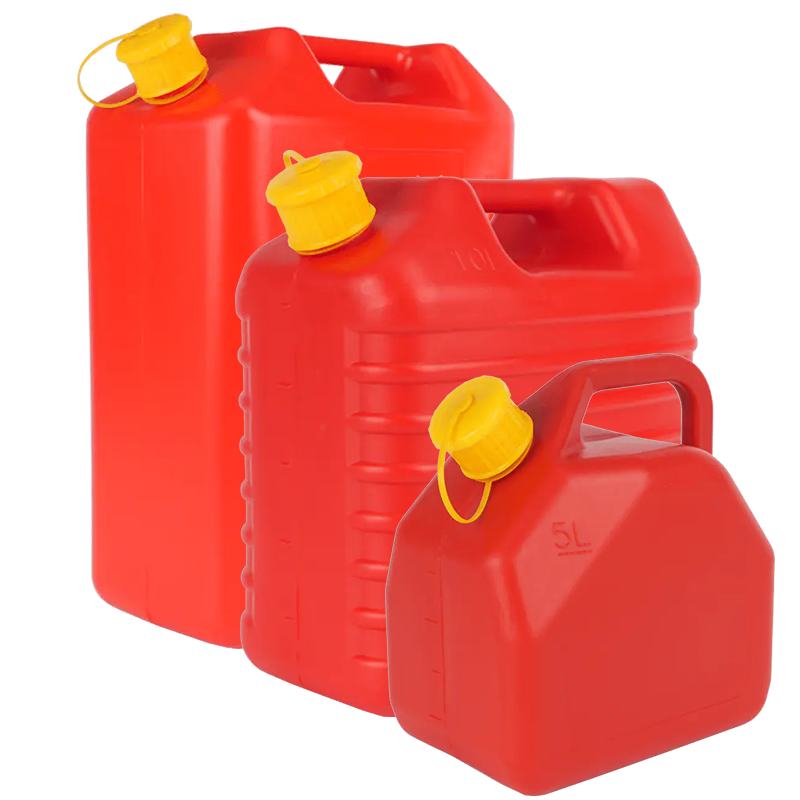
The first decision is capacity. A single barrel of crude oil is 42 gallons, but the physical drums you will buy are usually 55 gallons or 200 liters. For smaller tasks, portable containers come in 5-liter, 10-liter, and 20-liter sizes. The term "jerry can" traditionally refers to a flat-sided portable fuel can, and many manufacturers now offer variants with integrated pouring spouts and ventilation. A sensible storage layout keeps the large bulk drum in a fixed position and uses smaller portable cans to carry oil to individual machines or vehicles. This minimizes contamination and reduces the risk of spills during transport.
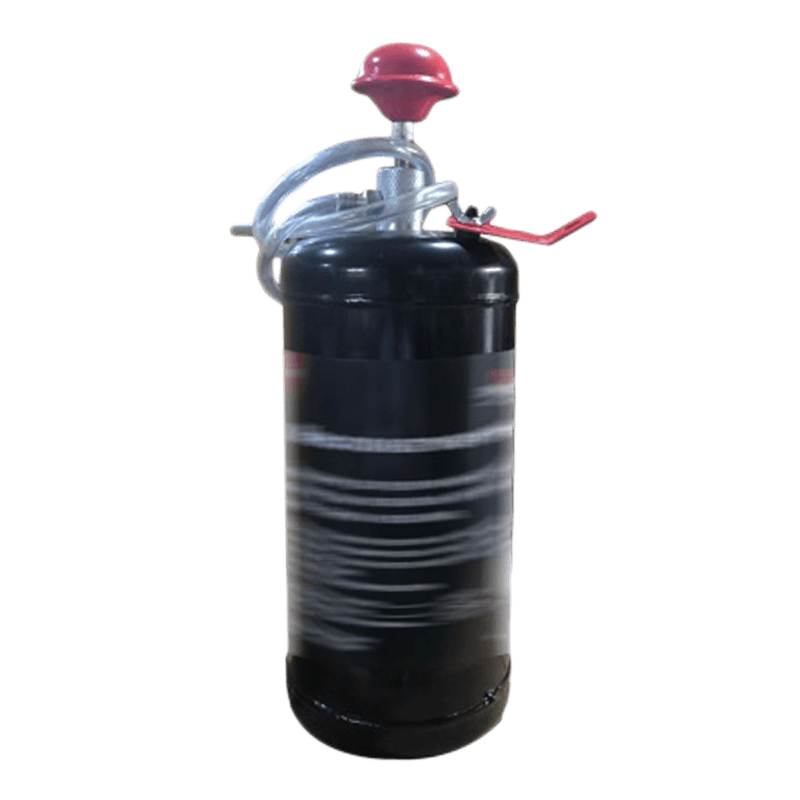
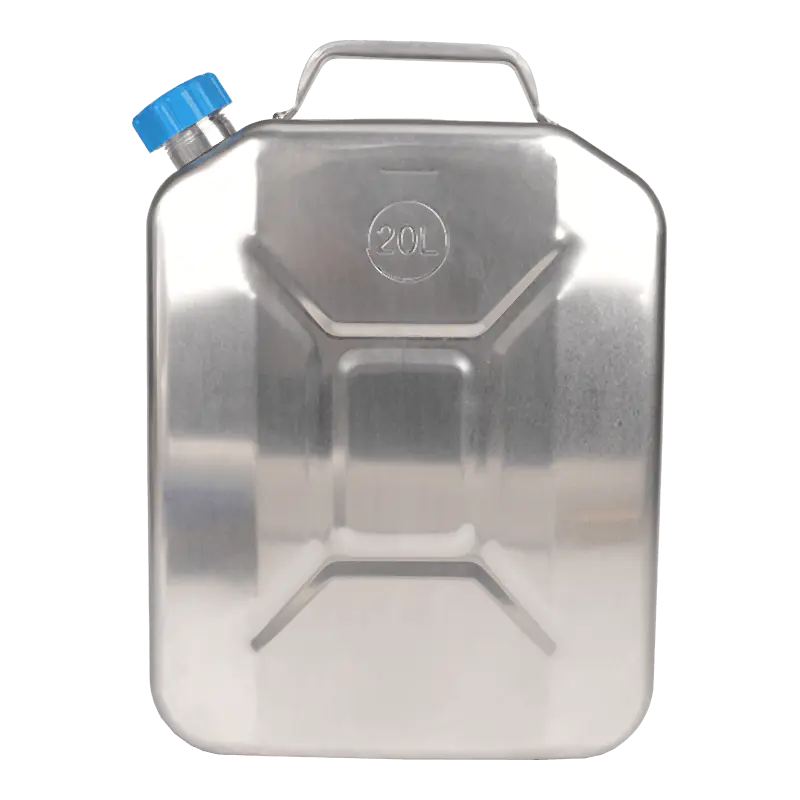
Material choice comes next. For a permanent storage location, a vertical metal oil barrel is a solid option because it occupies minimal floor space, can be fitted with a drum pump, and is compatible with most petroleum products. If the barrel will be exposed to moisture or corrosive environments, an aluminum oil barrel with PVC cover offers corrosion resistance and a lighter handling weight, which is an advantage when the barrel must be moved periodically. Plastic drums should be selected when chemical compatibility with the stored fluid is a concern, and models with child locks are a sensible choice in shared workshops where accidental opening could lead to injury or contamination.
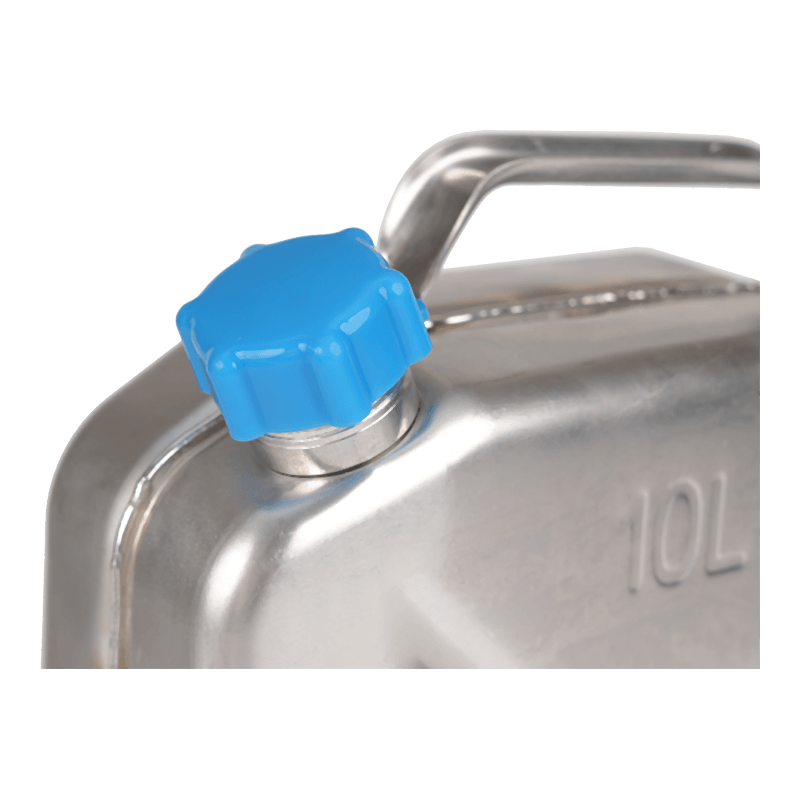 Wholesale 10L/20L Aluminum Oil Barrel Suppliers, Factory - Yangzhou Qionghua TooYangzhou Qionghua Tools Co., Ltd. is top China wholesale 10L/20L Aluminum Oil Barrel suppliers and factory,Material: pure aluminum High-q...View Product →
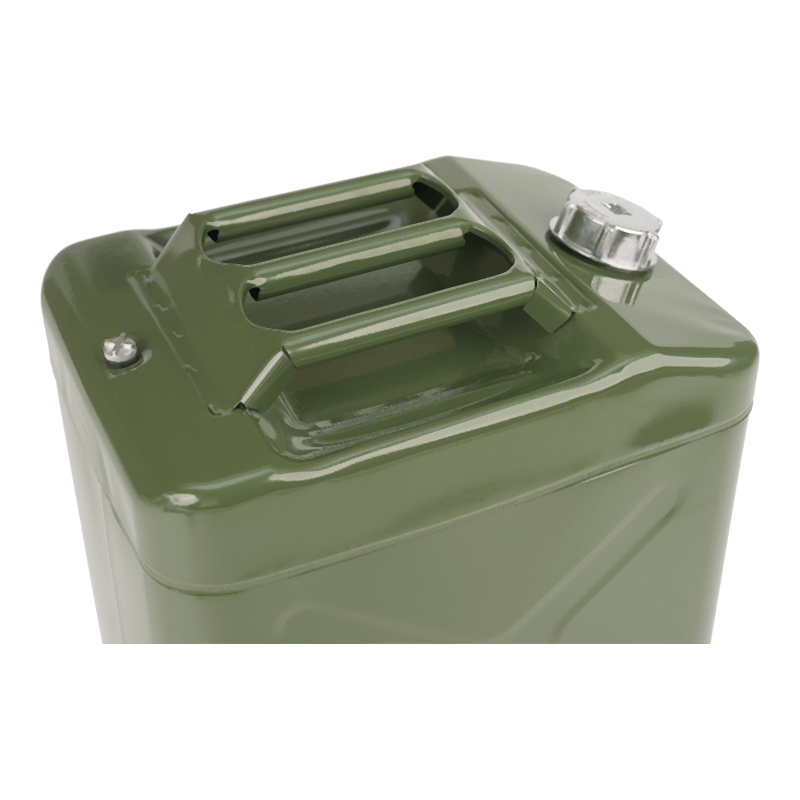 Wholesale 5L/10L/20L/25L/30L/35L/40L Vertical metal oil barrel Suppliers, FactorYangzhou Qionghua Tools Co., Ltd. is top China wholesale 5L/10L/20L/25L/30L/35L/40L Vertical metal oil barrel suppliers and factory,Three...View Product →
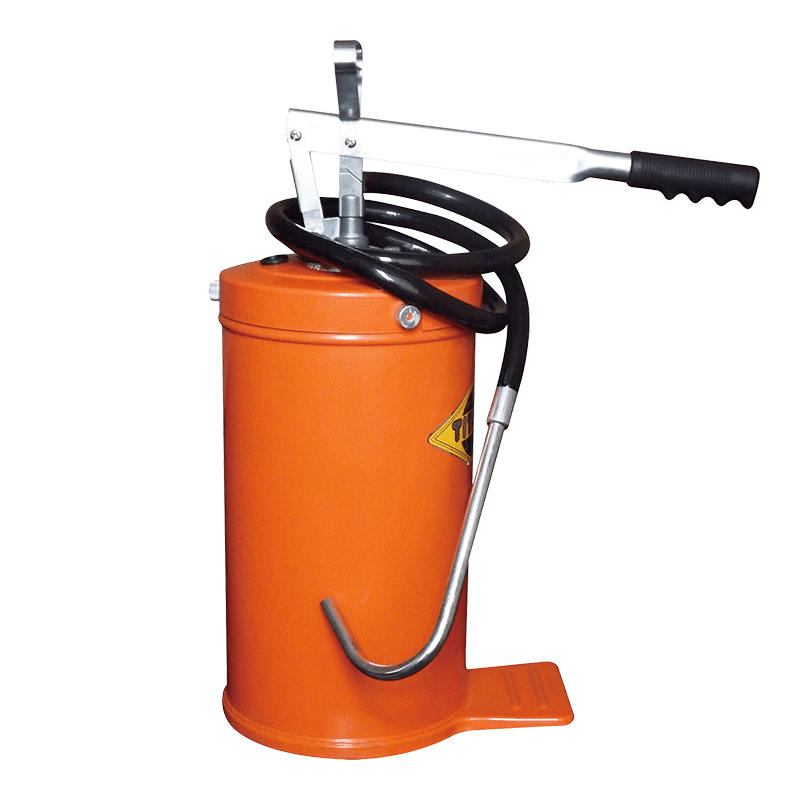
The third decision is how to get oil out of the drum. Pouring from a 200-liter drum is neither practical nor safe, so a pump or pourer is essential. The options include hand-operated piston pumps for low-viscosity oils, lever-action grease pumps for thicker lubricants, rotary pumps for transferring oil from a barrel into smaller containers, and pneumatic or electric injectors for high-volume dispensing. Matching the pump to the fluid viscosity is critical; a pump designed for thin oil may cavitate or struggle with heavy grease, while an oversized grease pump may over-deliver and waste lubricant.
For frequent transfer from horizontal or vertical drums, an aluminum alloy rotary pump is a reliable choice. Rotary pumps move a fixed volume per revolution, giving the operator consistent control, and aluminum alloy construction resists corrosion while keeping the pump light enough for routine handling. For barrels that are stored with a wide opening, a metal or plastic pourer can be inserted into the drum head to guide the stream and reduce splashing. Many pourers include a flame arrestor screen, which is a valuable safety feature when the fluid is flammable.
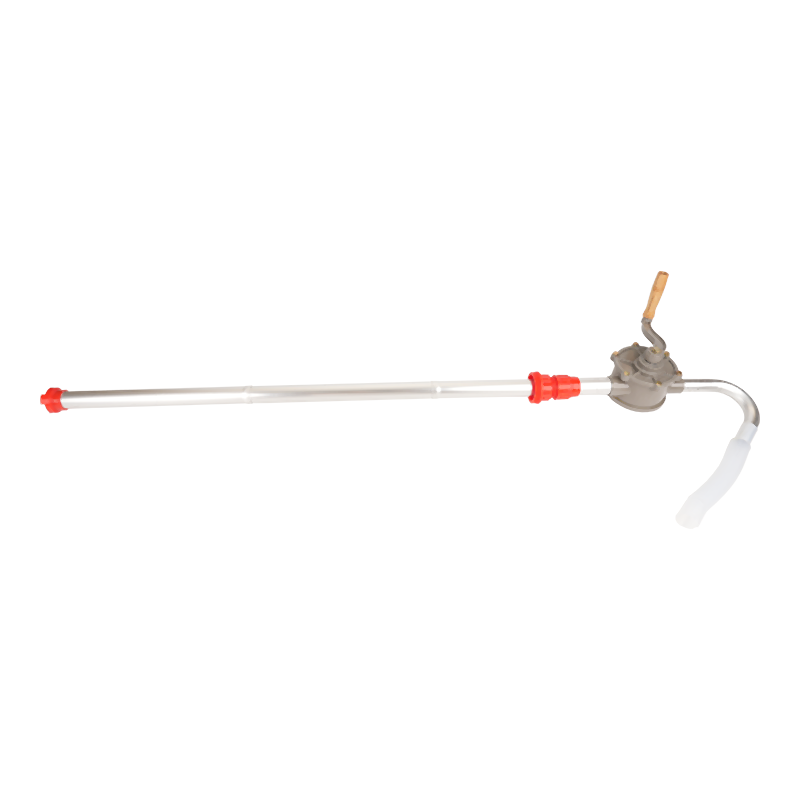 Wholesale Aluminum alloy Rotary Pump Suppliers, Factory - Yangzhou Qionghua ToYangzhou Qionghua Tools Co., Ltd. is top China wholesale Aluminum alloy Rotary Pump suppliers and factory,Aluminum alloy pump core; Mob...View Product →
When buying several containers and dispensers, evaluate the ergonomics of the entire system. A steel drum stored on the floor is difficult to access; a horizontal cradle or a drum stand improves usability. A rotary pump mounted on a vertical drum lets a worker dispense oil at waist height, reducing strain. A grease gun is necessary for applying lubricating grease to specific points such as bearings, joints, and fittings, and the gun must be compatible with the grease cartridge or bulk grease being used. Consider whether you need manual grease guns for occasional use or pneumatic and electric injectors for continuous production environments.
Safety and environmental protection should be built into the choice of accessories. Spill containment trays, drip pans, and absorbent pads are part of a responsible oil handling setup. The container itself should be clearly labeled with the product name, hazard class, and date of filling. Drums should be stored away from heat sources, protected from direct sunlight if they are plastic, and kept in bunded areas where a leak will not reach drains or soil. In regulated jurisdictions, bulk storage of flammable liquids may trigger inspection and permitting requirements, so check local codes before installing a large tank or drum farm.
Finally, plan for the full lifecycle of the container. A drum that has held oil must be emptied, decontaminated, and disposed of or recycled according to regulations. Some suppliers offer reconditioned drums, but reconditioning only qualifies if the drum was originally certified for the commodity and the reconditioner follows applicable standards. Factoring this cost into the purchase decision often leads buyers toward durable containers from suppliers with a track record of industrial quality, such as the product lines that Qionghua Tools has manufactured under its own brand for European chains and industrial partners for decades.
The 42-gallon barrel is a historical unit that the modern oil industry has never seen a reason to replace. It is the common denominator that connects a price quote, a tanker manifest, a government forecast, and a refinery yield table. It is also the yardstick that explains why a standard industrial drum holds about 55 gallons rather than 42 gallons, and why a 5-liter can is a convenient fraction of a barrel for everyday workshop use.
For buyers of oil handling equipment, the most useful takeaway is to treat the barrel as a volume unit first and a pricing unit second. Always convert to liters or cubic meters when comparing container capacities. Verify density whenever you plan to purchase oil by weight. Select barrels, drums, and pumps based on the physical properties of the fluid and the working conditions of the site, not just on the nominal capacity. A properly matched storage and dispensing system reduces waste, improves safety, and lowers the cost of maintenance operations.
Whether you are reading the daily crude price, planning a lubricant storage area, or buying a single grease gun for a maintenance cart, the 42-gallon barrel gives you a stable reference point in a market that otherwise seems dominated by enormous and abstract numbers.