English
 中文简体
中文简体

One barrel of crude oil is exactly 42 U.S. gallons. That equals 158.987 liters, or roughly 5.6 cubic feet. This number is not the size of the metal tub that sits behind a service station, nor is it the massive tank on a truck. It is a standardized unit of volume that the global oil industry has used for more than a century.
The distinction matters more than you might think. In everyday language, “barrel” can mean a physical container, and in workshop environments you often meet greases, lubricants, and chemicals stored in 55-gallon steel drums. In crude oil trading, however, the barrel is a measurement convention. Prices for Brent, West Texas Intermediate, and other benchmarks are quoted in dollars per barrel, and that barrel is always 42 gallons. If you are involved in fuel purchasing, industrial maintenance, or international trade, understanding this simple fact can prevent costly mistakes when you convert volumes, weights, and costs.
This article explains the origin of the 42-gallon standard, how it compares to real industrial drums, how the barrel relates to metric units and oil density, and what one barrel of crude oil actually becomes after refining. You will also learn how to choose practical storage and dispensing equipment for your own operation, because the measurement standard for oil trading is not always the right size for day-to-day handling.
The Quick Answer: One Barrel of Crude Oil Is 42 U.S. Gallons
When traders, refiners, and analysts talk about a barrel of crude oil, they always mean a volume of 42 U.S. gallons. In metric terms, that is 158.987 liters. In imperial measurement, it is about 35 imperial gallons. The barrel is a volume unit, so it does not depend on the type of crude oil or its temperature. A barrel of light sweet crude and a barrel of heavy sour crude both contain the same volume, but they weigh different amounts and sell for different prices.
The abbreviation for a barrel is usually “bbl.” There is a popular story that the double “b” stands for “blue barrel” because Standard Oil once painted its barrels blue, but the true origin of the abbreviation is less clear. Some oilfield historians trace it to the plural convention used in nineteenth-century bookkeeping, while others link it to the blue barrel story. The exact etymology is not critical for practical purposes. What matters is that one bbl equals 42 U.S. gallons wherever oil is traded.
The table below shows the most common conversions for one crude oil barrel. Keep this table handy when you need to reconcile shipping documents, storage tank readings, or purchase orders that use different units.
| Unit | Equivalent to 1 bbl |
|---|---|
| U.S. gallons | 42 |
| Imperial gallons | 34.97 |
| Liters | 158.987 |
| Cubic meters | 0.158987 |
| Cubic feet | 5.61458 |
| Tonnes of light crude (approx.) | 0.115–0.135 depending on density |
For most commercial calculations, you can round 158.987 liters to 159 liters, but if you are blending products or calculating taxes, use the exact figure.
A Short History of the 42-Gallon Oil Barrel
Why did the oil industry settle on 42 gallons instead of a rounder number like 40 or 50? The answer goes back to the earliest days of commercial oil production in Pennsylvania in the 1850s and 1860s, before pipelines and tanker ships existed.
The Confusion Before Standardization
In the 1850s, oil was produced in small quantities and sold in whatever containers were available. Producers used wooden barrels that had previously held whiskey, fish, molasses, wine, and other goods. These barrels were not uniform. Some held 32 gallons, some held 40, and others held more than 45. Buyers and sellers constantly argued about the actual quantity being delivered. A producer might quote a price per barrel, but the buyer had no guarantee that the barrel matched any legal standard.
As the Pennsylvania oil boom expanded after Edwin Drake’s first successful well in 1859, the need for a reliable measure became urgent. Oil was moving by rail and by ship, and pricing chaos slowed commerce. Without a common definition, a “barrel” on one lease could mean something different from a “barrel” on the next lease.
Why 42 Gallons Won
Several factors pushed the industry toward 42 gallons. In the British colonial system, a tierce was a cask that held 42 gallons, and this size was already used for shipping sugar, wine, and other goods. It was a familiar trade standard. In the American oil trade, a 42-gallon wooden barrel also made practical sense for rail transport: a typical freight car could carry about 20 of these barrels without exceeding weight limits. A barrel of oil at 42 gallons weighed roughly 300 pounds, and 20 barrels added up to around 6,000 to 7,000 pounds, which was close to the effective capacity of mid-nineteenth-century rail cars.
Another reason was simple compromise. Producers wanted a larger barrel so that buyers received more oil for the same price; buyers wanted a smaller barrel so that they paid less. A 42-gallon unit sat between the two extremes and could be justified by established trade practice. By 1866, the Pennsylvania oil producers’ association formally adopted 42 gallons as the standard. In 1872, the Petroleum Producers’ Association confirmed that standard, and soon after it spread to shipping and exchange markets.
A Standard of Measurement, Not a Container
It is important to understand that the 42-gallon barrel was originally a physical wooden barrel, but it quickly became a unit of account. After the adoption of the standard, producers and buyers no longer needed to measure each physical barrel. They could simply count wooden barrels or, more often, measure oil in bulk tanks and convert the measured volume into barrels for billing. This is why the modern oil barrel is a unit of volume rather than a description of a steel drum. Physical steel drums, as discussed in the next section, hold a different amount.
The historical trace of the 42-gallon barrel also explains why barrels are still used today in an age that otherwise prefers metric units. The oil and gas industry has a deeply embedded history, and changing the unit now would require renegotiating decades of contracts, technical standards, and legal definitions. As a result, traders around the world continue to price and measure oil in barrels, even in countries that normally use liters and cubic meters.
Crude Oil Barrel vs. 55-Gallon Drum: Two Different Things
One of the most common points of confusion is the difference between a 42-gallon barrel of crude oil and the 55-gallon drum that you see in garages, factories, and workshops. Both are called barrels in informal speech, but they are not interchangeable.
The 55-gallon (208-liter) drum is a modern industrial container made of steel or plastic. Its size comes from practical engineering considerations: a cylindrical drum with a diameter of about 23 inches and a height of about 35 inches provides good structural strength, can be handled by standard equipment, and stacks efficiently on pallets and ships. It was not designed to match an old oilfield measurement. Instead, it was developed as a universal container for transporting and storing liquids such as lubricants, chemicals, fuels, and waste materials.
Crude oil itself is rarely moved in 55-gallon drums today. It travels through pipelines, rail tank cars, tanker trucks, and ocean tankers. The 42-gallon barrel is purely a measure of volume used for pricing and statistics. If you see a worker moving a steel drum in a refinery, that drum is likely carrying a refined product, lubricant, or waste stream, not crude oil cargo.
The difference also matters when you are estimating storage capacity. Suppose you read that a small refinery processes 100,000 barrels per day. That means about 4.2 million U.S. gallons per day, not 5.5 million. If you mistakenly applied the 55-gallon drum size, you would overestimate the actual volume. For large industrial facilities, even a small conversion error can lead to significant misplanning and cost miscalculations.
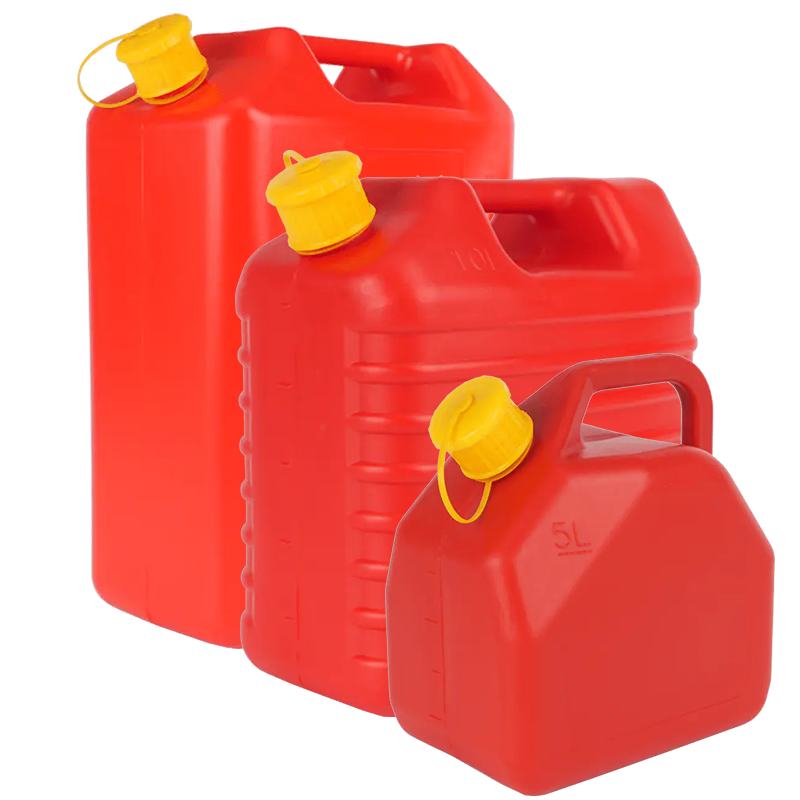
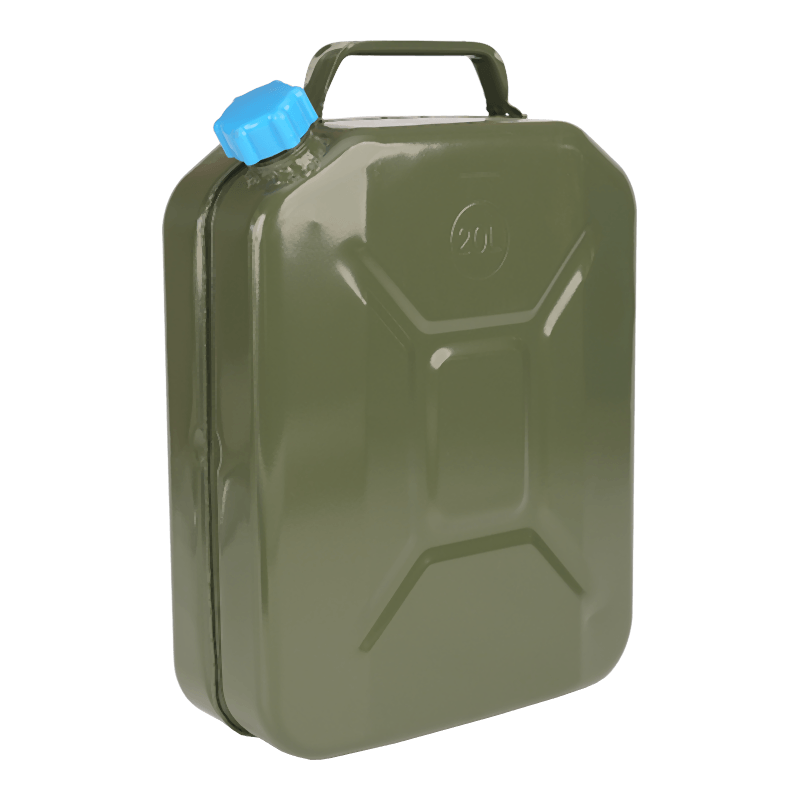
In workshop-scale operations, the 55-gallon drum is actually a common container for bulk lubricants. But when you need to move oil to various workstations, a large drum is not always practical. You may need smaller dispensing containers that can be carried easily and poured precisely. For example, our portable jerry cans in 5L, 10L, and 20L capacities are designed for this kind of handling. They fit on a workbench, in a van, or in a tool compartment, and they let you use small amounts of oil or diesel without dragging a heavy drum around.
 Wholesale 5L/10L/20L Portable Jerry Can Suppliers, Factory - Yangzhou Qionghua TYangzhou Qionghua Tools Co., Ltd. is top China wholesale 5L/10L/20L Portable Jerry Can suppliers and factory,Capacity: 5L/10L/20L Surface...View Product →
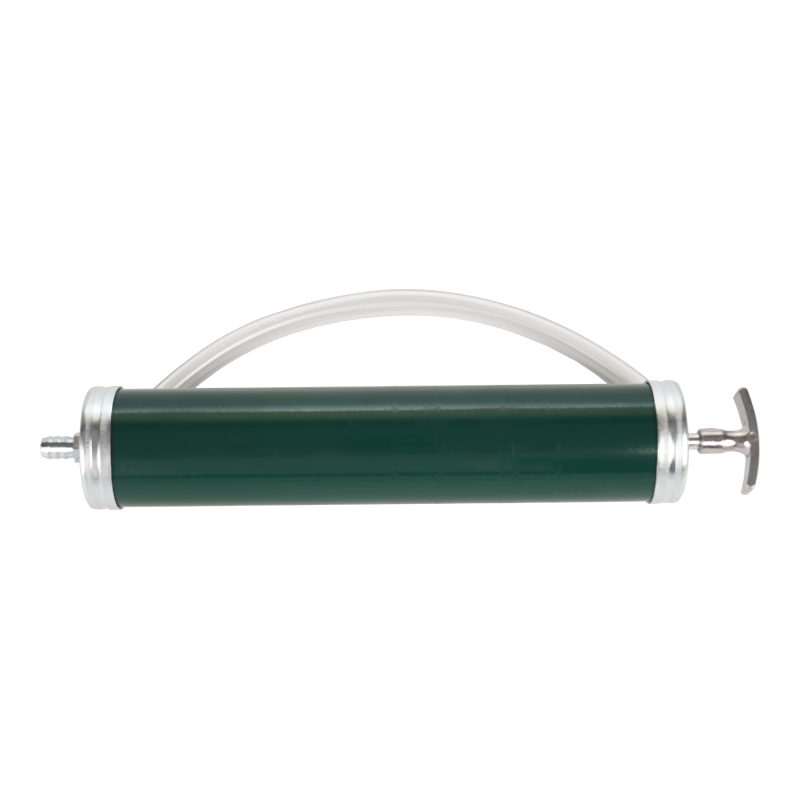
Another common approach is to use a pump or spout to transfer oil from a barrel into a smaller container. The connection between the barrel and the pump determines how clean and efficient the transfer will be. Many maintenance teams discover that using a proper pump and a small portable container costs less and causes fewer spills than tipping a 55-gallon drum or unscrewing a large bung each time.
From Barrels to Weight: Density, API Gravity, and Conversion
Because a barrel of crude oil is a volume unit, the weight of that barrel varies from one crude grade to another. Some crude oils are light and flow easily, while others are thick and nearly solid at room temperature. Density is the key factor that connects volume to weight, and the petroleum industry uses a special scale called API gravity to describe it.
What Is API Gravity?
API gravity, developed by the American Petroleum Institute, measures how heavy or light a petroleum liquid is compared to water. Water has an API gravity of 10 degrees. Liquids with an API gravity higher than 10 are lighter than water and float on it; liquids with an API gravity lower than 10 are heavier than water and sink. The formula is:
API gravity (degrees) = (141.5 / specific gravity at 60°F) – 131.5
Light crude oils typically have API gravity greater than 31 degrees, medium crudes fall between 22 and 31 degrees, and heavy crudes are below 22 degrees. A typical light crude like West Texas Intermediate has an API gravity around 39 to 40 degrees, which gives it a specific gravity of about 0.827. That means one liter of WTI weighs about 0.827 kilograms. A barrel of WTI therefore weighs roughly 131 kilograms, or about 289 pounds.
A heavy crude with an API gravity of 20 degrees has a specific gravity of about 0.934. That same 42-gallon barrel would weigh approximately 148 kilograms, or 327 pounds. The difference of about 17 kilograms per barrel is substantial for shipping and storage calculations, even though the volume is identical.
Metric Conversion for Tonnes
When companies report oil production in tonnes, which is common in Europe and Asia, they need a density-dependent conversion factor. The general rule of thumb is that one tonne of crude oil equals roughly 7 to 8 barrels, but you should use a precise factor based on the specific grade.
The table below illustrates how density affects the tonnes-per-barrel figure for common crude categories.
| Crude Type | API Gravity (degrees) | Specific Gravity | Barrels per Tonne (approx.) | Tonnes per Barrel |
|---|---|---|---|---|
| Extra light | 45 | 0.8017 | 7.86 | 0.127 |
| Light (WTI-type) | 39 | 0.827 | 7.60 | 0.132 |
| Medium (Brent-type) | 33 | 0.861 | 7.30 | 0.137 |
| Heavy | 20 | 0.934 | 6.73 | 0.149 |
For procurement and logistics teams, this conversion is not just an academic exercise. If a supplier quotes the price of a crude stream in dollars per barrel, but you want to compare it with a product that is sold by the tonne, you need to know the density. Similarly, if you are calculating taxes or customs duties that are based on weight, applying the wrong barrel-to-tonne factor can create serious compliance problems.
The Impact of Temperature
Volume changes with temperature. Hot liquid expands, so a barrel of hot crude occupies the same volume as cool crude but contains fewer molecules. The industry standard is 60 degrees Fahrenheit (15.6 degrees Celsius). If a tank holds a certain number of barrels at a higher temperature, the actual amount in standard barrels will be lower. This is why experienced operators use temperature correction factors when measuring tank levels. Anyone who buys or sells crude oil in volume must insist on corrected measurements, not just the raw tank gauges.
What Does One Barrel of Crude Oil Actually Produce?
When a refinery processes one 42-gallon barrel of crude oil, the output is not exactly 42 gallons of product. In fact, the total volume of refined products is usually larger than the input. This phenomenon is called processing gain, or refinery gain. The refining process breaks down large hydrocarbon molecules into smaller ones, and the result is a slight increase in total liquid volume. A typical U.S. refinery can turn one barrel of crude into about 45 gallons of saleable refined products. That is why the list of products from a barrel can seem to add up to more than the original barrel.
The exact product mix depends on the crude quality and the refinery configuration. A simple refinery focused on gasoline will produce a larger share of gasoline, while a more complex refinery can adjust output to maximize diesel, jet fuel, or petrochemical feedstocks. The table below shows a representative breakdown for a typical U.S. refinery, based on average industry data.
| Product | Approx. Gallons per Barrel |
|---|---|
| Gasoline (finished motor gasoline) | 19–20 |
| Distillate fuel (diesel, heating oil) | 11–12 |
| Jet fuel / kerosene | 4–5 |
| Hydrocarbon gas liquids (propane, butane, etc.) | 3–4 |
| Residual fuel oil | 2–3 |
| Lubricants, waxes, petrochemical feedstocks, asphalt, and other products | 4–6 |
| Processing gain | +2 to +3 |
These numbers are averages. A refinery that is set up for petrochemical production will shift more volume to naphtha and liquefied petroleum gases, while a simpler unit might produce more residual fuel. Nevertheless, the 42-gallon barrel is always the starting point, and the approximate 45 gallons of output is the reason that some industry publications talk about products exceeding the input.
The product yield also influences the economics of transportation fuel. When crude prices rise, refiners look for cheaper heavy crudes and adjust their units to maximize high-value products. Shippers, freight carriers, and logistics companies watch crackers and refinery margins because changes in product yields affect the supply of diesel and jet fuel.
For a business that consumes fuels and lubricants, knowing the typical yield can help you understand why diesel prices sometimes move faster than gasoline prices. A barrel of crude yields roughly the same amount of gasoline and distillate, but if one product faces stronger seasonal demand, the refinery can change the balance only within certain limits. This is why seasonal diesel demand in winter, combined with global supply constraints, often has an outsized effect on the price of heating oil and truck fuel.
Why the 42-Gallon Barrel Still Matters in Pricing and Logistics
The 42-gallon barrel is not just an accounting curiosity. It is built into the infrastructure of global energy trade. Every day, millions of barrels are bought and sold, transported, and processed. The size and the unit itself affect everything from contract language to tanker capacity.
International Benchmarks and Price Quotations
The most widely used crude oil benchmarks are Brent and West Texas Intermediate (WTI). Both are quoted in U.S. dollars per barrel. When you see a headline such as “oil rises to $80 per barrel,” the price is for one 42-gallon barrel. This universal quotation allows traders to compare prices across different grades and regions without needing to know the weight or density of each grade. If oil were quoted by the tonne, buyers would need to adjust for density every time they compared grades.
The presence of different benchmarks also matters for regional prices. Brent is a blend of North Sea crudes and is widely used as a reference for Europe, Africa, and the Middle East. WTI is the U.S. benchmark and is priced at Cushing, Oklahoma. The price difference between Brent and WTI, known as the spread, reflects transportation costs, supply imbalances, and export competition. Both are quoted per barrel, which makes the spread simple to calculate. If one benchmark were priced in tonnes and the other in barrels, the comparison would be much more complicated.
Shipping and Storage Capacity
Ocean tankers are usually described by their deadweight tonnage, but the oil they carry is measured in barrels. A typical Very Large Crude Carrier (VLCC) can carry about 2 million barrels of oil, or roughly 84 million gallons. That is enough to power the average passenger vehicle for many millions of miles. Storage tanks, tank farms, and pipelines are also sized in barrels, and the entire logistics chain from wellhead to refinery uses the same unit.
When a logistics manager plans a shipment, they must account for the fact that a VLCC full of crude will not weigh the same as a VLCC full of heavy Brazilian crude, even though both carry the same number of barrels. Vessel draft limits, port restrictions, and insurance calculations depend on both volume and weight. Using the 42-gallon standard allows the volume side of the calculation to remain consistent, while density becomes a separate operational variable.
Contracts and Risk Management
Crude oil futures and options contracts are standardized around specific volumes. The New York Mercantile Exchange’s WTI crude futures contract represents 1,000 barrels per contract. That is 42,000 gallons per contract. The ICE Brent futures contract also represents 1,000 barrels. Hedging involves buying and selling these contracts to lock in prices, and the fixed barrel size makes it easy to match hedge quantities with physical production volumes.
For a company that does not trade derivatives but buys diesel, gasoline, or lubricants, the barrel still has an indirect effect. Many fuel prices are based on the wholesale price of refined products, which in turn depends on crude oil prices expressed in barrels. Understanding the unit helps you interpret price announcements, adjust budgets, and forecast future costs when public reports mention changes in oil inventories or production levels.
Choosing the Right Container for Storing Oil and Lubricants
Now that you know the difference between a 42-gallon crude measurement and a 55-gallon physical drum, it is worth thinking about what size container is actually appropriate for your own operation. For industrial maintenance, farming, trucking, and workshop use, the goal is rarely to store hundreds of thousands of barrels. Instead, you need usable containers that keep oil and lubricants clean, do not leak, and allow accurate dispensing.
Smaller Portable Containers
For work that requires moving oil around a facility, 5-liter, 10-liter, and 20-liter cans are practical choices. They can be lifted by hand, stored in a cabinet, and easily refilled from a bulk drum. In busy repair shops, a 20-liter can is often the right balance between capacity and weight: it holds enough for a day of work without forcing you to pour constantly. These cans are designed with spouts and handles that reduce spills, which saves product and keeps the workplace safe. If you are still relying on large open buckets to transfer oil, you are probably losing money to evaporation, contamination, and minor spills every week.
Metal Barrels for Strong Storage
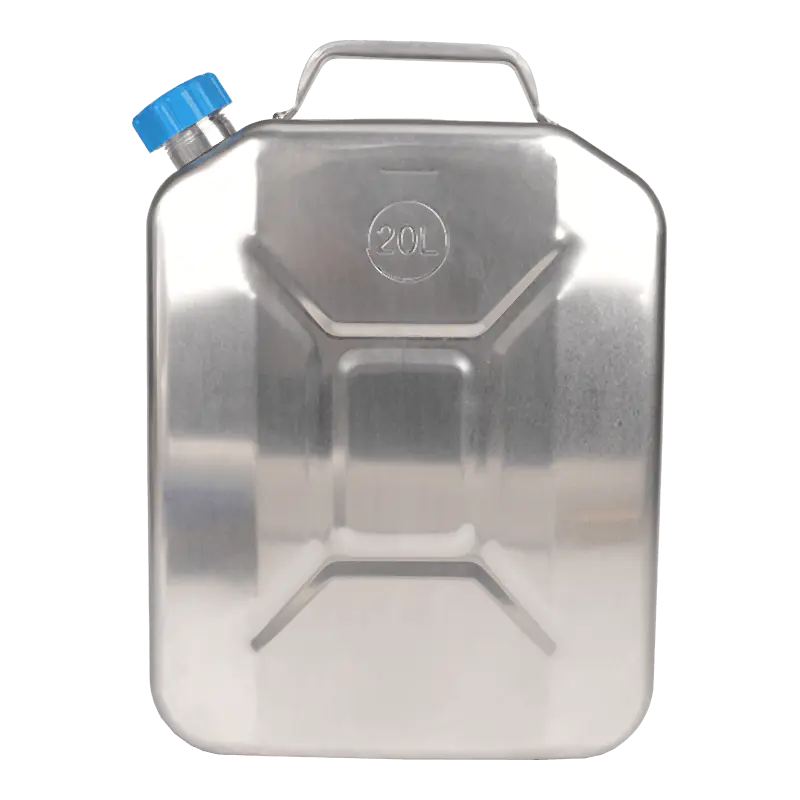
For longer-term storage or larger volumes, metal oil barrels offer durability and resistance to impact. American-style iron oil barrels have been a classic choice because they stand up to rough handling and can be stored outdoors for short periods. Their steel walls protect the contents from punctures, and the top openings can be sealed with a drum cover or bung. Metal barrels are also suitable for transporting oil and lubricants from a central storage area to a field site.
 Wholesale 5L/10L/20L Classic Metal Jerry Can Suppliers, Factory - Yangzhou QiongYangzhou Qionghua Tools Co., Ltd. is top China wholesale 5L/10L/20L Classic Metal Jerry Can suppliers and factory,Military design, built-...View Product →
When you select a metal barrel, check the internal lining. Some steel barrels are bare inside, while others have a protective coating for better corrosion resistance. If you are storing chemicals or reclaimed oil, a lined barrel is often necessary to prevent contamination. Also, be sure to use the correct drum cover and closure gasket so that moisture and dirt cannot enter.
Lightweight Aluminum Barrels
Aluminum barrels offer a different set of advantages. They are considerably lighter than steel barrels, which makes them easier to handle when full. Aluminum also resists rust, so these barrels are a good choice for facilities in humid environments or for storing products that are sensitive to metal contamination. Aluminum oil barrels with PVC covers combine this lightweight construction with a protective cover that keeps the pouring surface clean and prevents small debris from entering the barrel. This combination is common in food-grade and pharmaceutical applications, but it is also useful in high-standard industrial workshops where cleanliness is critical.
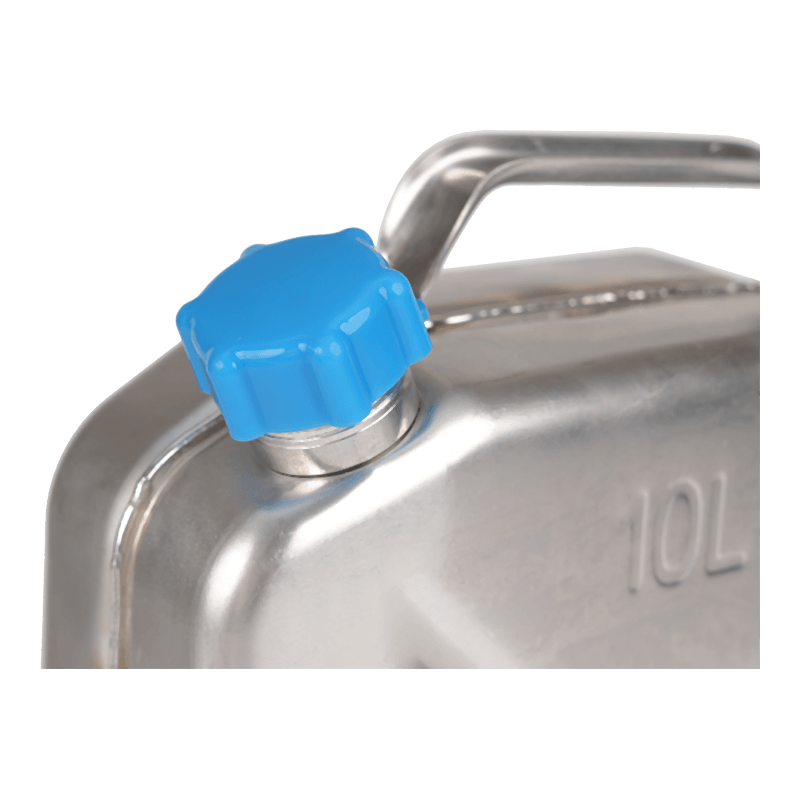 Wholesale 10L/20L Aluminum Oil Barrel Suppliers, Factory - Yangzhou Qionghua TooYangzhou Qionghua Tools Co., Ltd. is top China wholesale 10L/20L Aluminum Oil Barrel suppliers and factory,Material: pure aluminum High-q...View Product →
Keep in mind that aluminum can react with some strong chemicals, so you should always verify compatibility with the specific fluid you plan to store. For ordinary motor oil, gear oil, and diesel fuel, aluminum is generally safe and durable.
Plastic Drums and Cans
Plastic oil containers are popular because they are low cost, impact resistant, and transparent enough to show the remaining level. Many plastic drums are made from high-density polyethylene, which is compatible with most petroleum products. However, direct sunlight can degrade some plastics over time, so store them in the shade or choose a container with UV protection. Plastic cans with child-lock closures are a smart choice when you need to keep oil stored in a location where children or untrained personnel could reach it.
Don’t Forget the Pump and Dispensing System
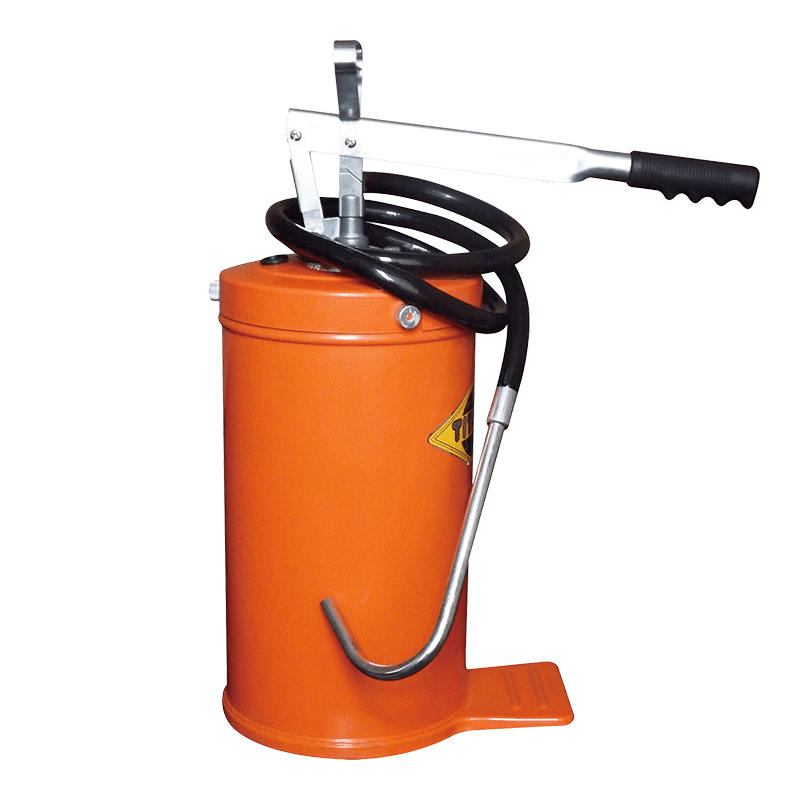
The container is only half of the storage story. Even the best barrel is useless if you cannot get the oil out cleanly and accurately. For a 55-gallon drum, a rotary pump or hand-operated pump reduces the effort and prevents messy pouring. For smaller cans, a flexible spout and a funnel are essential for routine refills. The right pump not only saves time but also reduces the loss of vapors and the risk of contamination. In many industries, the cost of a quality pump is repaid by the oil it saves within a month.
If you are new to selecting industrial storage equipment, you can read our comprehensive guide to industrial oil barrels for a more detailed explanation of barrel standards, fittings, and handling. For the full range of related equipment, including grease guns, oil pumps, and tool boxes, you can also browse our broader range of lubrication tools. You will find that the same company supplies both the storage container and the dispensing equipment, which simplifies assembly, training, and replacement parts.
The standard size of a barrel of crude oil is 42 U.S. gallons, a number that has survived for over 150 years because it solved a practical problem in the early oil fields. It is a unit of volume used for trading, pricing, and refining, and it is not the same as the physical 55-gallon drums used in warehouses and workshops.
Understanding this difference is important for anyone who buys oil, sells oil, or simply wants to interpret energy news accurately. A one-barrel mistake in a small operation might mean only a few dollars; a one-barrel mistake in a cargo of VLCC size would mean tens of thousands of barrels of volume error. Knowing the exact conversion to liters and cubic meters, accounting for density in weight calculations, and recognizing the practical difference between barrels and drums will help you avoid that confusion.
Finally, whether you are purchasing a small portable can or a full-size metal barrel for your own storage needs, take the time to choose the right material, capacity, and dispensing system. The oil barrel may be a historical unit, but the containers that hold your oil still need to work hard every day.