English
 中文简体
中文简体

A grease gun is one of the most essential tools in any maintenance workshop — whether you're servicing farm equipment, trucks, industrial machinery, or a home garage. For most general-purpose lubrication tasks, a lever grease gun is the best hand-operated option, delivering reliable pressure output and straightforward cartridge loading at a low cost. An oil suction gun serves a different purpose entirely — it's designed for transferring liquid oils rather than dispensing semi-solid grease. Understanding which tool does what, and how the key variants compare, saves time, prevents equipment damage from under- or over-lubrication, and helps you choose the right grease gun the first time.
What Is a Grease Gun and How Does It Work
A grease gun is a lubrication tool that forces grease through a nozzle or coupler into a fitting — typically a Zerk or hydraulic grease fitting — on a piece of machinery. The grease fills bearing housings, joints, pins, and bushings to reduce friction, prevent corrosion, and extend component life.
The basic mechanism across all grease gun types is the same: a plunger rod compresses grease inside a cylinder, building pressure that forces the lubricant through a check valve and out the delivery tube. What differs between types is how that pressure is generated — manually via a lever or pistol grip, pneumatically via compressed air, or electrically via a battery-powered motor.
Grease vs Oil: Why the Distinction Matters
Grease guns handle semi-solid lubricants with an NLGI consistency rating typically between Grade 1 and Grade 2. These lubricants stay in place on bearings and fittings. An oil suction gun, by contrast, handles liquid oils (ISO VG 32–220 or similar) and is used for transferring oil into gearboxes, reservoirs, or hard-to-reach fill ports. The two tools are not interchangeable — using the wrong tool with the wrong lubricant leads to leaks, contamination, or inadequate lubrication coverage.
Types of Grease Guns: A Practical Overview
Grease guns fall into four main categories based on their actuation method. Each suits different environments, frequencies of use, and operator capabilities.
| Type | Max Pressure | Output per Stroke | Typical Capacity | Best For |
|---|---|---|---|---|
| Lever Grease Gun | 6,000–10,000 PSI | ~1.28 g (1/40 oz) | 14 oz cartridge | General maintenance, workshops |
| Pistol-Grip Grease Gun | 3,000–6,000 PSI | ~1.0 g | 14 oz cartridge | Light-duty, one-handed use |
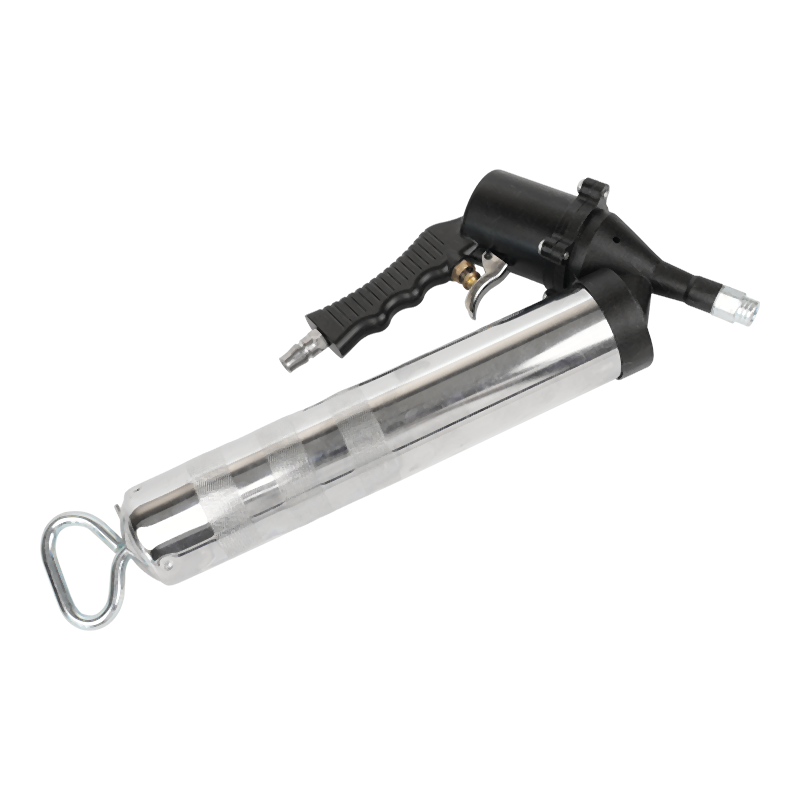
| Pneumatic Grease Gun | Up to 15,000 PSI | Variable | 14 oz or bulk | High-volume industrial service |
| Battery-Powered Grease Gun | Up to 10,000 PSI | Variable | 14 oz cartridge | Fleet maintenance, remote locations |
| Oil Suction Gun | Low (transfer only) | N/A | 150–500 ml | Liquid oil transfer and fill |
Lever Grease Gun: The Standard Hand-Operated Choice
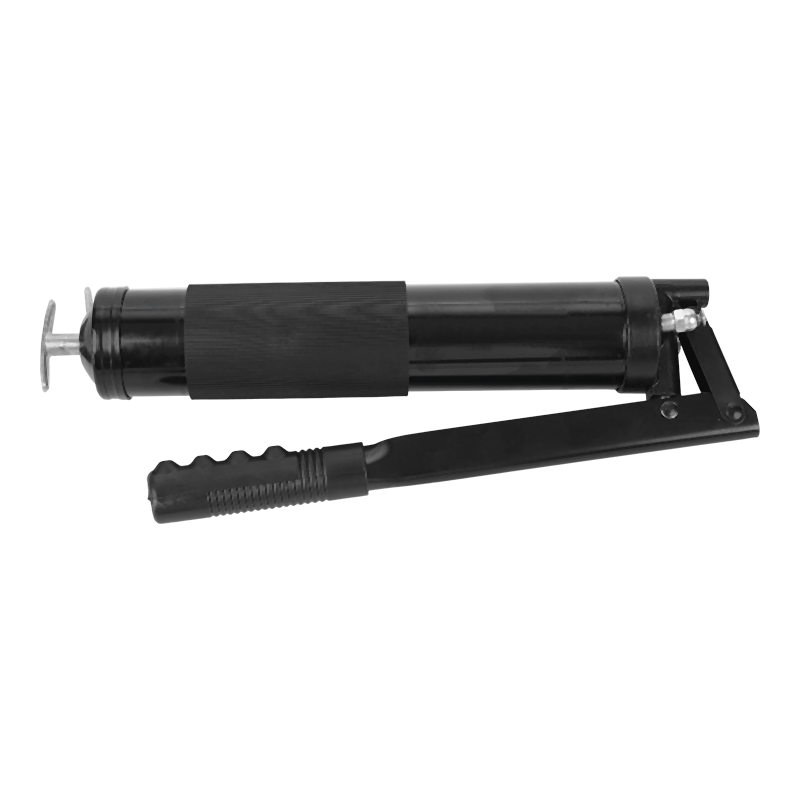
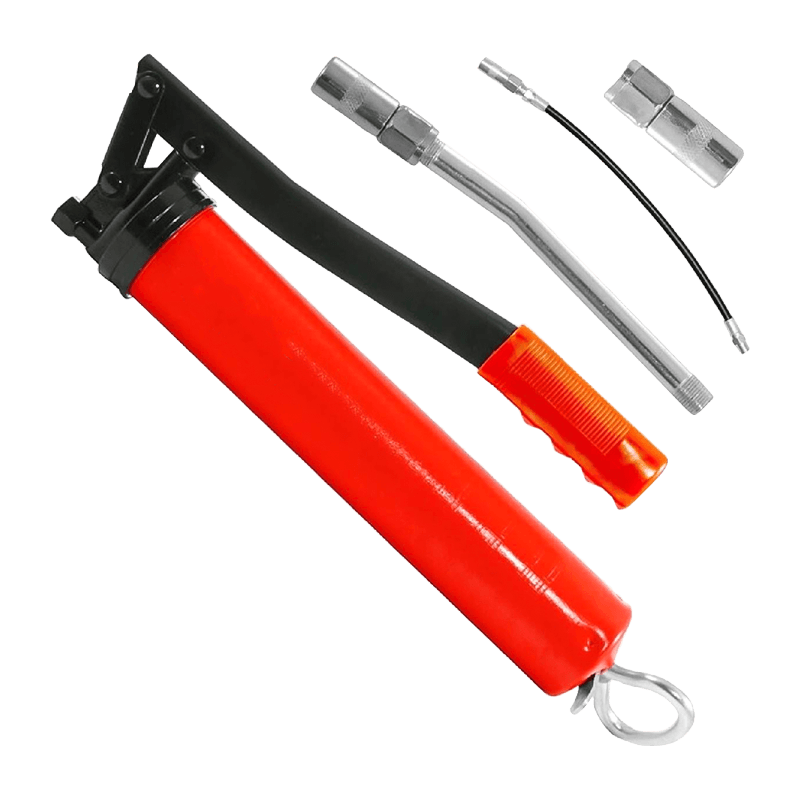
The lever grease gun is the most widely used hand-operated grease gun in workshops worldwide. Its design uses a two-handed pumping action — one hand holds the barrel while the other operates the lever handle — to generate considerably more pressure per stroke than a pistol-grip model. Most lever grease guns are rated at 6,000 to 10,000 PSI, with professional-grade models from brands like Lincoln Industrial and Alemite reaching the upper end of that range.
How Much Grease Does Each Stroke Deliver
A standard lever grease gun delivers approximately 1/40 oz (about 1.28 grams) of grease per stroke. This standardized output — consistent across most quality brands — allows technicians to calculate exactly how many strokes a fitting requires based on the manufacturer's lubrication specification. For example, a fitting requiring 1 oz of grease needs approximately 40 strokes. This precision is why lever grease guns are preferred in professional maintenance environments over pistol-grip models, which can vary in output per pull.
Loading Methods: Cartridge, Bulk, and Suction Fill
Lever grease guns accept grease in three formats:
- Cartridge loading: The most common method. A standard 14 oz (400g) grease cartridge is inserted into the barrel — fast, clean, and requiring no contact with the grease itself.
- Bulk loading: The barrel is manually packed with grease from a tub using the plunger rod. More economical for high-volume users, but messier and slower.
- Suction fill: The gun draws grease from a pail by pulling the plunger. Used when cartridges are unavailable or when working with non-standard grease containers.
When to Choose a Lever Grease Gun
- Regular maintenance on vehicles, trailers, and agricultural equipment
- Situations requiring precise stroke counting for controlled lubrication
- Applications requiring higher pressure to break through hardened or packed grease in a fitting
- Users who prefer a no-battery, no-compressor tool that works anywhere
Oil Suction Gun: A Different Tool for a Different Job
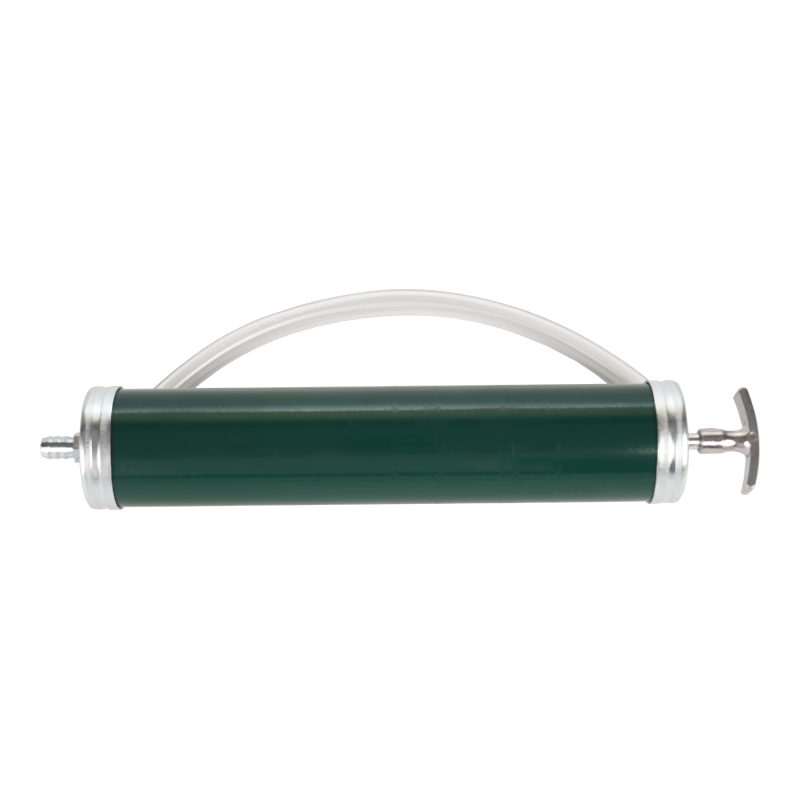
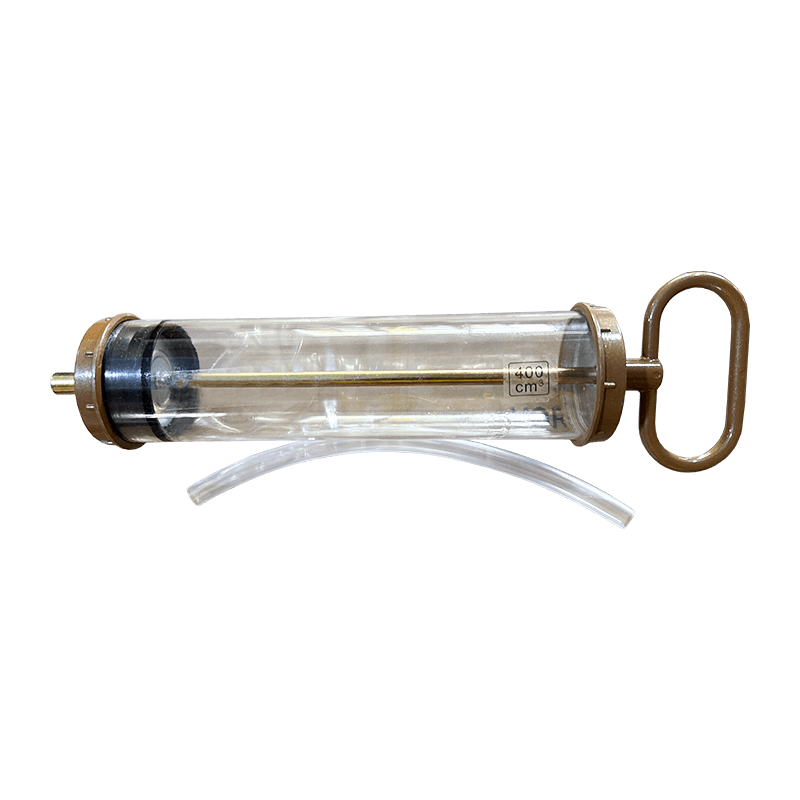
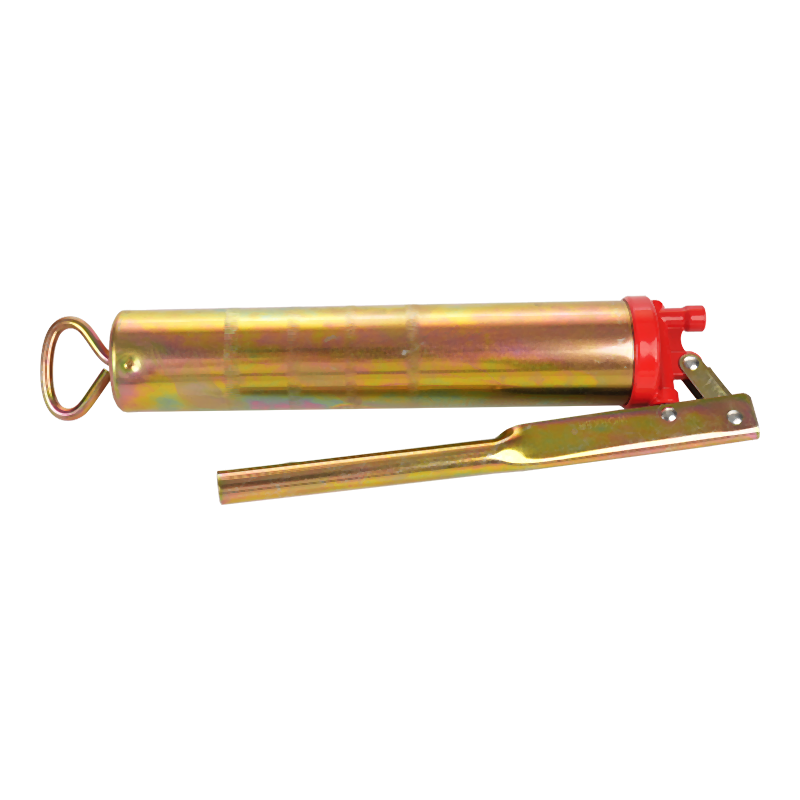
An oil suction gun — sometimes called an oil injector or oil transfer gun — is a syringe-style tool used to draw liquid oil from one container and inject it precisely into another location, such as a small gearbox port, a chainsaw bar oil reservoir, or a machine oiling point. It is not a grease gun and cannot handle semi-solid grease.
Oil suction guns typically hold between 150 ml and 500 ml of oil and operate by pulling the plunger back to draw oil in via suction, then pushing it forward to dispense. The nozzle is usually a rigid or flexible tube sized for standard oil fill ports.
Common Applications for Oil Suction Guns
- Filling transmission, differential, or final drive gearboxes where a pour spout cannot reach the fill port
- Topping up hydraulic cylinders or reservoirs in tight spaces
- Lubricating motorcycle or bicycle chains, cables, and pivot points
- Extracting used oil from small sumps or crankcase inspection ports during diagnostics
- Dispensing light machine oil in watch repair, woodworking tools, or sewing machines
A quality oil suction gun — such as those made by Mityvac, Lumax, or Groz — typically costs between $10 and $35, making it an inexpensive but indispensable addition to any maintenance toolkit alongside a separate grease gun.
Hand-Operated Grease Gun: Lever vs Pistol Grip
Both lever and pistol-grip grease guns are hand-operated and share the same 14 oz cartridge standard, but they differ in ergonomics, pressure capability, and ideal use scenario. Choosing between them depends primarily on your lubrication environment and physical comfort.
| Attribute | Lever Grease Gun | Pistol-Grip Grease Gun |
|---|---|---|
| Operating Style | Two-handed pump action | One-handed trigger squeeze |
| Max Pressure | 6,000–10,000 PSI | 3,000–6,000 PSI |
| Output Consistency | High (~1/40 oz per stroke) | Moderate (varies by pull) |
| Confined Space Use | More difficult | Better — compact form factor |
| Hand Fatigue (extended use) | Lower (full arm leverage) | Higher (finger/wrist strain) |
| Typical Cost | $15–$80 | $10–$50 |
| Best Environment | Open access, high-pressure fittings | Tight spaces, light-duty fittings |
For technicians servicing heavy equipment, trucks, or construction machinery with many fittings per service interval, the lever grease gun is the more practical and durable long-term tool. For automotive hobbyists or light shop use with occasional fittings, the pistol grip is a reasonable alternative.
Key Specifications to Evaluate Before Buying a Grease Gun
Beyond type and handle style, several technical specifications determine whether a grease gun will perform reliably in your specific application.
Pressure Rating
Most standard Zerk fittings accept grease at pressures from 1,500 to 15,000 PSI depending on the fitting type and application. For general automotive and agricultural use, a hand-operated lever gun rated at 6,000–8,000 PSI handles virtually all standard fittings without risk of seal damage. High-pressure industrial fittings or severely contaminated fittings may require 10,000 PSI or more — at which point a pneumatic gun becomes more practical than a hand-operated tool.
Coupler Type and Fit
The coupler connects the grease gun to the Zerk fitting. A poorly fitting or worn coupler causes grease bypass — grease exits around the fitting rather than entering it, wasting lubricant and leaving the component under-lubricated. Quality hydraulic couplers from brands like Lincoln, Alemite, or LockNLube feature 360-degree swivel heads and positive locking mechanisms that prevent blowoff under pressure. For applications with recessed or angled fittings, flexible hose extensions (typically 12–18 inches) are more effective than rigid delivery tubes.
Barrel Material: Steel vs Aluminum
Steel barrels are heavier but more resistant to impact damage and long-term wear — appropriate for job site and shop use. Aluminum barrels reduce overall weight by approximately 20–30%, making them preferable for overhead work or extended-use sessions where arm fatigue is a concern. Either material is suitable for professional-grade performance if manufactured to appropriate tolerances.
Air Bleed Valve
Air trapped in the grease barrel causes the gun to pump inconsistently — delivering air instead of grease to the fitting. A quality lever grease gun includes an air bleed valve on the barrel that allows trapped air to be purged after loading. This feature is especially important when loading bulk grease, where air entrapment is more common than with cartridges.
Proper Technique for Using a Lever Grease Gun
Owning the right grease gun only delivers results if it's used correctly. Improper technique causes seal damage, wasted grease, and insufficient lubrication.
- Clean the fitting before connecting: Wipe dirt and old grease from the Zerk fitting with a clean rag before attaching the coupler. Contaminated grease introduced into a bearing accelerates wear rather than preventing it.
- Connect the coupler squarely: Press the coupler straight onto the fitting at a 90-degree angle. An angled connection reduces sealing pressure and increases the likelihood of blowoff.
- Count strokes, don't guess: Follow the equipment manufacturer's specification for the number of strokes per fitting. Over-greasing can rupture bearing seals just as damaging as under-greasing — a common mistake on wheel bearing hubs and electric motor bearings.
- Watch for back-pressure resistance: A sudden increase in resistance mid-stroke can indicate a blocked fitting, a failed fitting, or a full bearing. Stop and inspect before continuing.
- Wipe excess grease after removal: Remove the coupler carefully and wipe any residual grease from around the fitting to prevent dirt accumulation at the next service interval.
Maintenance and Storage of Your Grease Gun
A well-maintained grease gun lasts for decades. Neglected guns develop hardened grease blockages, seized plunger rods, and failed seals that compromise output consistency.
- Store with the plunger rod retracted: Leaving the rod extended under spring tension stresses the barrel seals over time. Always retract after use.
- Cap the coupler when not in use: Dust and debris entering the coupler contaminate the next lubrication task. A rubber cap or plug on the nozzle keeps the delivery path clean.
- Don't mix grease types in the same gun: Different grease formulations (lithium, calcium, polyurea, clay-based) can react chemically and lose viscosity. Dedicate a separate gun to each grease type if you use multiple lubricants.
- Replace the coupler seal annually in high-use environments. A worn coupler seal is the most common source of grease bypass and the easiest component to replace.
- Avoid storing loaded guns in temperature extremes: Grease hardens in cold and separates in excessive heat. A temperature range of 10–35°C (50–95°F) is ideal for loaded gun storage.
Choosing the Right Grease Gun for Your Situation
Use this framework to narrow your selection based on actual working conditions:
- Home garage or light agricultural use (under 20 fittings per service): A mid-grade lever grease gun with a 12-inch flexible hose and standard coupler — brands like Lincoln 1162 or Plews 30-454 — covers virtually all scenarios for under $40.
- Commercial fleet or heavy equipment maintenance (50+ fittings per service): A battery-powered grease gun such as the Milwaukee 2446-21XC or Dewalt DCGG571M1 eliminates hand fatigue and speeds up service intervals significantly, with ROI measurable in labor time saved.
- Industrial/manufacturing with compressed air available: A pneumatic grease gun delivering up to 15,000 PSI handles the most stubborn fittings and integrates into existing shop air infrastructure.
- Liquid oil transfer into gearboxes or reservoirs: Add an oil suction gun (150–500 ml capacity) to your toolkit — it's not a substitute for a grease gun but is essential for liquid lubricant management.
The lever grease gun remains the most versatile and cost-effective starting point for anyone new to equipment maintenance — it requires no power source, delivers precise output, handles all standard fittings, and with proper care will outlast many of the machines it services.