English
 中文简体
中文简体

In an age of battery‑powered tools and automated lubrication systems, the hand‑operated grease gun remains an indispensable workhorse. Construction crews, farmers, truck fleet mechanics, and industrial maintenance technicians continue to rely on manual grease guns for their simplicity, reliability, and precise control. Unlike pneumatic or electric guns, a hand‑operated grease gun works anywhere, requires no power source, and delivers just the right amount of grease exactly where it is needed. Why do professionals still choose manual grease guns over more "advanced" options? This guide explores the technology, types, key features, and best practices for hand‑operated grease guns.
What Is a Hand-Operated Grease Gun and How Does It Work?
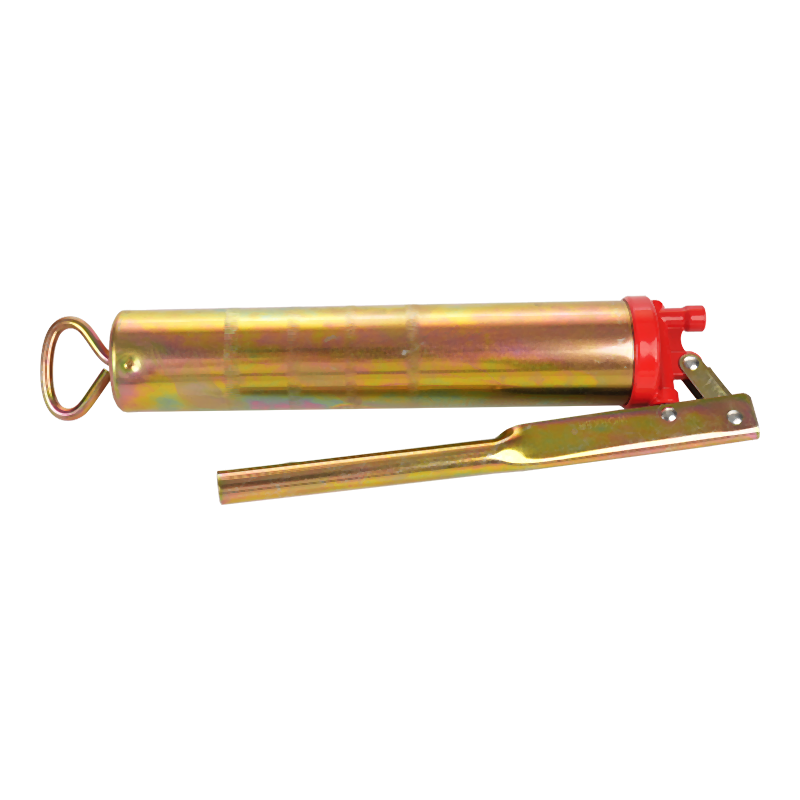
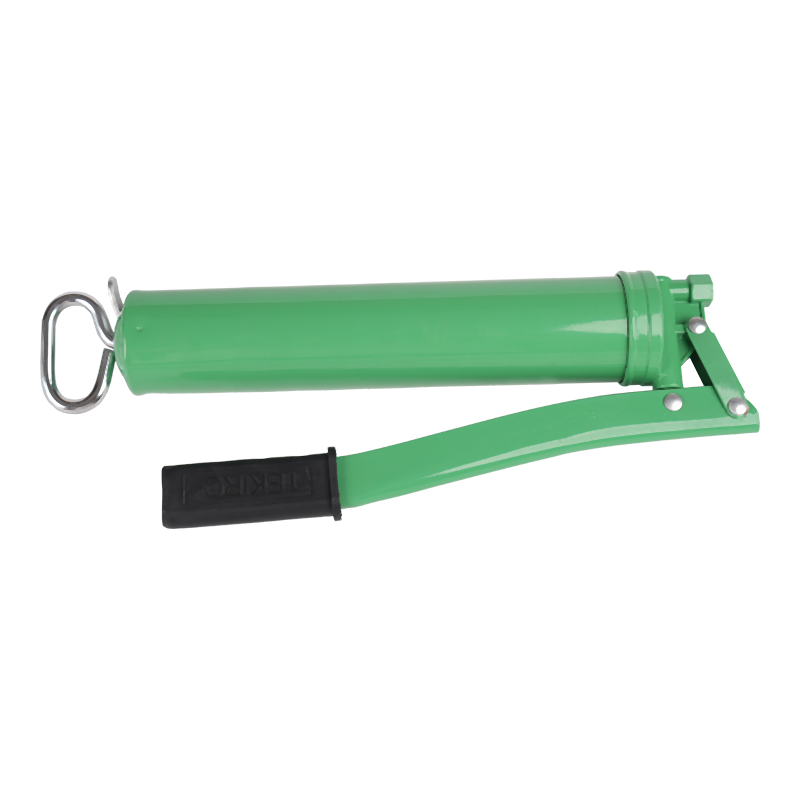
A hand‑operated grease gun is a mechanical device that forces lubricating grease into a bearing, fitting, or grease point under high pressure. It consists of a barrel or tube that holds grease, a plunger or follower rod, a discharge head with a coupler that attaches to a grease fitting (Zerk fitting), and a mechanism to generate pressure – either a lever, a pistol grip trigger, or a screw action. When the user operates the handle, grease is drawn from the tube and expelled through the hose or rigid extension into the fitting. Typical manual grease guns can generate pressures between 2,000 and 10,000 psi, enough to force grease through even blocked or tight fittings.
Why Hand-Operated Grease Guns Outperform Power Options
Complete Independence from Electricity or Compressed Air
In remote field locations, underground mines, or during roadside breakdowns, you cannot rely on batteries or compressors. A manual grease gun works every time, regardless of weather or infrastructure. It is also intrinsically safe – no sparks, no electrical hazards, making it suitable for explosive atmospheres (e.g., grain elevators, chemical plants). For emergency repairs, a hand‑operated grease gun is a tool you keep in the truck cab, not in the charging station.
Precision Control to Prevent Over‑Greasing
Over‑greasing is a leading cause of bearing failure. Manual grease guns give the user tactile feedback: you can feel resistance when grease enters a tight bearing and know when to stop. Pneumatic guns often blast grease at high speed, making it easy to blow out seals. Manual operation allows a slow, measured application – essential for precision bearings, electric motors, and high‑speed spindles.
Durability and Long Service Life
A quality hand grease gun has no motor, no battery to degrade, and few moving parts. With proper care, a cast‑iron or heavy‑duty aluminum grease gun can last decades. Many farmers use the same manual grease gun their father used. Even the seals and plungers are replaceable. This low total cost of ownership is unmatched by battery‑powered models that may require new batteries every 2‑3 years.
Extreme Pressure Capability
While battery guns typically produce 3,000‑6,000 psi, some manual lever guns can generate over 10,000 psi. This is critical for breaking through hardened grease, clearing blocked fittings, or lubricating heavily loaded pins and bushings on excavators, dozers, and large trucks. The mechanical advantage of a long lever or high‑ratio screw translates human effort into immense hydraulic pressure.
Key Technical Parameters of Hand-Operated Grease Guns
| Parameter | Typical Description |
|---|---|
| Operating pressure | 3,000 – 10,000 psi (lever type); 2,000 – 6,000 psi (pistol grip) |
| Grease capacity | 14 oz (cartridge), 16 oz, 24 oz, or bulk fill (for larger barrels) |
| Stroke volume | 0.5 – 1.5 grams per stroke (approx 0.02 – 0.05 oz) |
| Maximum delivery rate | 30 – 80 grams per minute at 60 strokes/min |
| Compatible grease grades | NLGI #0, #1, #2 (most common); some guns handle #3 with colder temperatures |
| Fitting type | Standard hydraulic coupler (fits most Zerk fittings); also needle nozzle, cone, or magnetic |
| Hose length | 6″ rigid extension to 24″ flexible rubber hose; whip hoses up to 36″ |
| Bleeder valve | Integrated to release trapped air after cartridge change |
| Materials | Cast iron, steel, aluminum body; rubber or metal follower handle |
Types of Hand-Operated Grease Guns
Lever Action Grease Guns
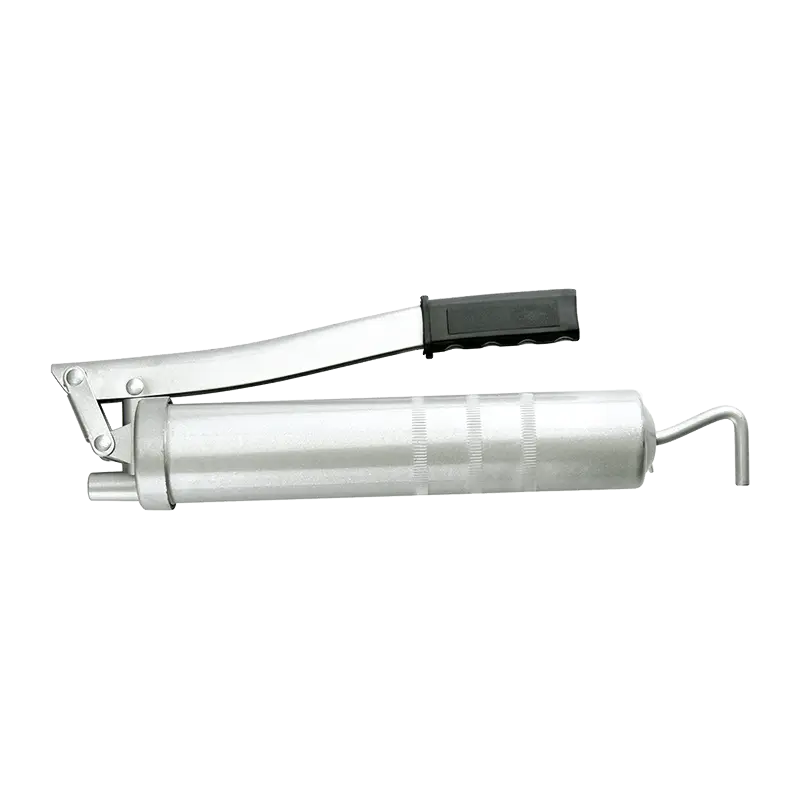
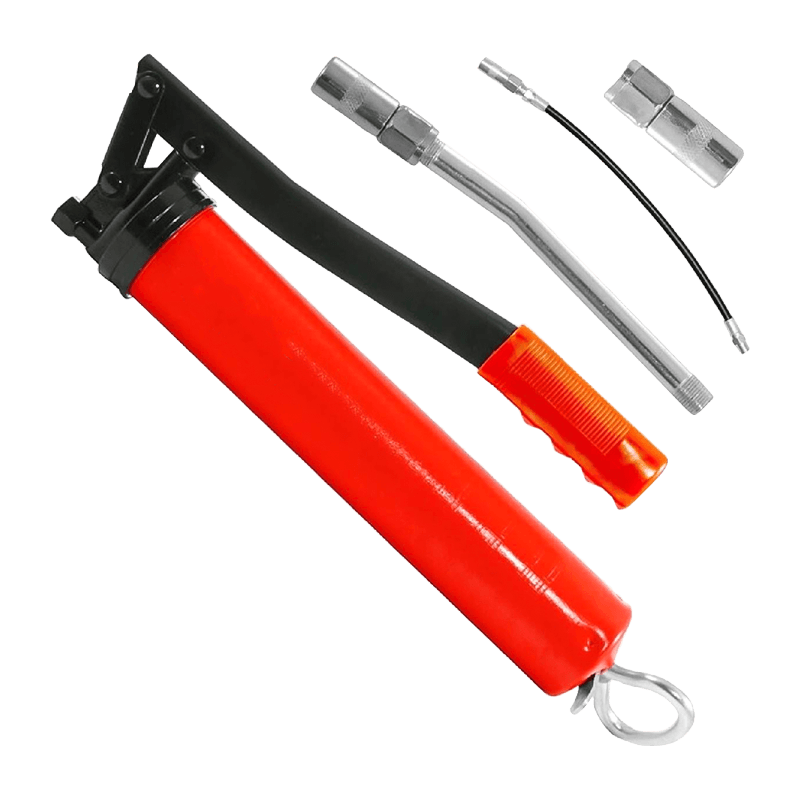
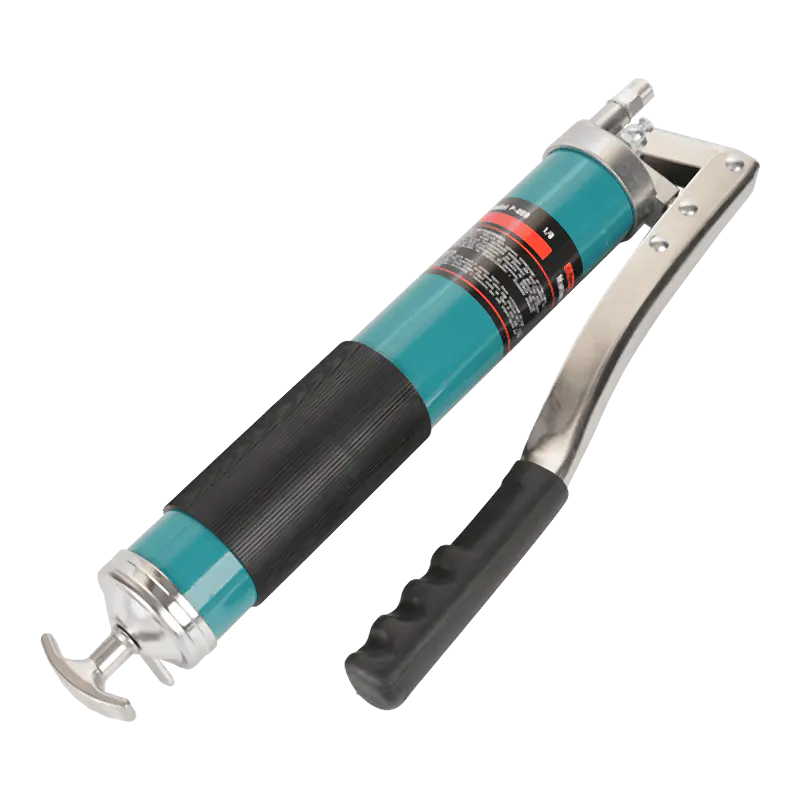
The classic design. A long lever is squeezed repeatedly to advance grease. Lever guns produce the highest pressures (up to 10,000+ psi) and deliver more grease per stroke. They are preferred for heavy equipment, agricultural machinery, and industrial applications where fittings are large or hardened. The downside is that they require two hands to operate – one to hold the coupler on the fitting, the other to pump the lever. Lever guns are bulkier but nearly indestructible.
Pistol Grip (Trigger) Grease Guns
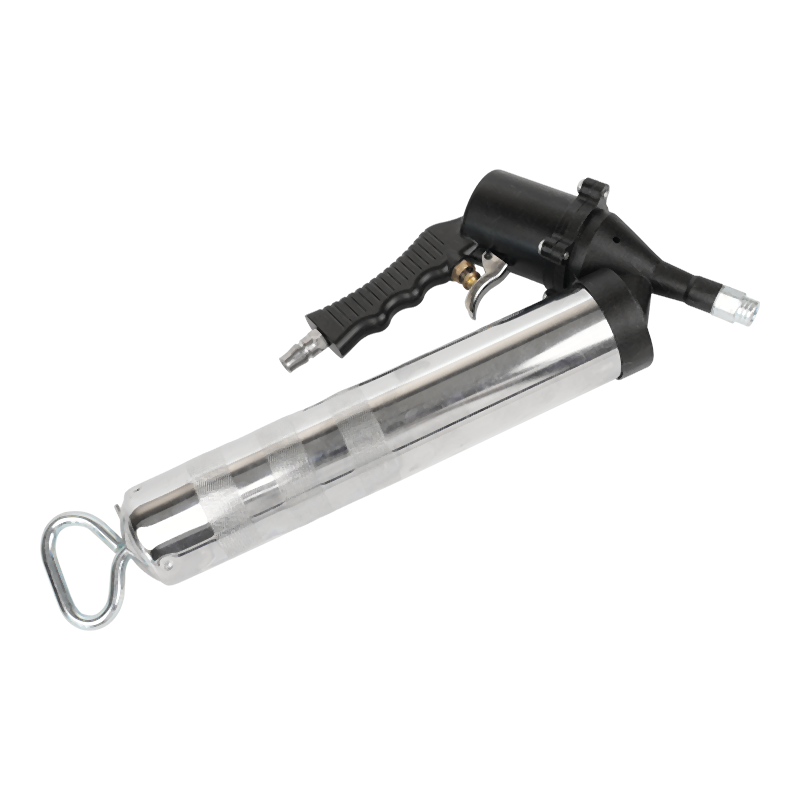
These guns feature a trigger that is pulled with the same hand that holds the gun, leaving the other hand free to stabilize the gun or hold the hose. They are more compact and easier to use in tight spaces. Maximum pressure is typically lower (2,000‑6,000 psi). Pistol grip guns are popular for automotive work, light trucks, and general shop use where access is limited and extreme pressure is not required.
Push‑Type / Tubular Grease Guns
Also known as “screw‑type” or “dab‑type”, these consist of a tube with a screw cap that advances a solid follower. Pressure is generated by screwing the cap, forcing grease out. They produce very high pressure but very low flow rate. Used for specialty applications like precision instrument lubrication or when working with very stiff greases.
Bulk vs. Cartridge Loading
Most hand‑operated grease guns accept standard 14 oz grease cartridges – clean, fast, and mess‑free. Alternatively, bulk fill guns allow you to suction grease from a pail, which is economical for high‑volume users. Some guns offer both options via a removable cartridge follower.
How to Choose the Right Hand-Operated Grease Gun
Consider Your Typical Operating Pressure Needs
If you grease heavily loaded pins on an excavator, backhoe, or large truck, choose a lever‑action gun with a pressure rating above 8,000 psi. For automotive suspension, U‑joints, and most farm equipment, 4,000‑6,000 psi is sufficient. If you work with NLGI #2 or #3 greases in cold weather, higher pressure capability is advisable.
Evaluate Workspace and Access
Pistol grip guns shine in cramped engine bays or tight machinery compartments. Lever guns are better when you have room to pump but need high pressure. Also consider hose or extension needs – a rigid pipe extension works for most fittings; a flexible whip hose (12‑24 inches) is invaluable for hard‑to‑reach grease points.
Build Quality and Material
Look for a forged or cast iron head and barrel for maximum durability. Aluminum guns are lighter but may not withstand as much abuse. Steel barrels are rust‑prone unless painted. Check the coupler – a high‑quality coupler with a spring‑loaded jaw and release button will seal tightly and not leak grease. Avoid plastic couplers or cheap zinc‑alloy components.
Air Bleeding and Priming Features
After changing a cartridge, air can become trapped in the barrel, causing the gun to “lose prime” (pumping with no grease output). A visible bleed port or a screw‑type bleeder valve makes repriming easy. Some premium guns have a built‑in button or lever to vent air without losing grease. This feature saves significant frustration in the field.
Step‑by‑Step Operating Guide for Hand‑Operated Grease Guns
First, select the correct grease type and NLGI grade (consult the equipment manual). Remove the grease gun’s barrel cap and withdraw the follower rod. If using a cartridge, insert it open‑end first, then pull back the follower rod slightly. Reinstall the barrel cap and tighten. To prime, pump the handle or trigger slowly while depressing the coupler release (or open the bleeder valve) until grease flows without air bubbles. Attach the coupler to the grease fitting by pushing straight onto the fitting until it clicks. Pump grease until you see a slight bead of fresh grease exiting the component’s seal (or until you feel increased resistance – do not force). Release the coupler by twisting or pushing the release collar. Wipe excess grease and repeat at the next fitting. After use, release pressure from the hose by depressing the coupler into a rag.
Troubleshooting Common Manual Grease Gun Problems
Gun Loses Prime / Pumps Air Instead of Grease
This usually indicates air trapped in the barrel after a cartridge change. Loosen the barrel cap slightly, pull the follower rod back one inch, then push it forward to expel air. Alternatively, use the bleeder valve while pumping slowly. If the problem persists, the rubber cup or plunger seal may be hardened or cracked – replace the seal kit.
Grease Leaks from the Head or Coupler
A worn coupler jaw or O‑ring inside the head is the usual culprit. Replace the coupler (many brands have rebuild kits). Also check that the coupler is fully seated on the fitting – a partially seated coupler will leak high‑pressure grease.
Very Difficult to Pump (Extreme Resistance)
This can happen with very thick grease (NLGI #3) in cold weather. Warm the grease by leaving the gun in a heated shop or use a winter‑grade grease. Also check for a blocked grease fitting – try a manual fitting cleaner or replace the fitting. Excessive resistance could also indicate a failed hose (collapsed liner).
Grease Oozes Out When Gun is Not in Use
The plunger rod may be bent or the barrel cap not fully tightened. Inspect the rod for straightness. Also, some grease guns have a pressure relief valve – ensure it is not stuck open. Finally, store the gun horizontally or with the coupler pointed upward to reduce gravity‑induced seepage.
Maintenance Tips for Long Hand‑Operated Grease Gun Life
After every few cartridges, clean the inside of the barrel with a rag to remove old grease buildup. Lubricate the follower rod and plunger shaft with a light oil to prevent rust. Inspect the rubber cup and replace at first sign of cracking or hardening – a $5 seal kit restores performance. Keep the coupler clean; if it becomes clogged with dried grease, soak it in solvent and blow out with compressed air. When using a flexible hose, avoid kinking – it can break internal wires and reduce pressure delivery. Finally, if your gun will sit idle for months, empty the cartridge to prevent grease separation and leakage.
Accessories That Enhance Hand‑Operated Grease Guns
A rigid pipe extension in lengths 6″ to 18″ helps reach recessed fittings. A flexible whip hose (12″ to 36″) is essential for fittings behind obstacles or on moving linkages. Needle nozzles allow precise greasing of tiny fittings or blind holes. Magnetic coupler holders keep the end of the gun attached to metal parts, leaving both hands free to pump. Hydraulic couplers with a built‑in release button prevent high‑pressure spray when disconnecting. A grease fitting cleaner tool clears blockages without disassembling the joint. For high volume, a bulk filler pump that directly loads grease from a 50‑gallon drum into your hand gun saves time and mess.
Applications Where Hand‑Operated Grease Guns Are Still Essential
Heavy construction equipment – excavators, loaders, dozers – have dozens of grease points, many of which require high pressure. Agricultural machinery such as tractors, combines, and balers rely on manual guns for daily greasing. Fleet maintenance for trucks and trailers uses both lever and pistol grip guns. Marine applications on boats and ship deck equipment benefit from the corrosion‑resistant versions (brass or stainless). Mining equipment, often in remote areas, depends on manual guns due to lack of power. Even in factories, certain bearings are intentionally hand‑greased to avoid over‑lubrication from automated systems. Simply put, wherever reliability, portability, and control matter, the hand‑operated grease gun remains the tool of choice.