English
 中文简体


The Short Answer: How Oil Pumps Move Liquid
Most oil pumps work by trapping a fixed volume of oil at the inlet, carrying it through the pump body, and pushing it out the outlet, so the flow they deliver depends mainly on how quickly that trapped volume is moved. Engine oil pumps, industrial oil pumps, and portable oil transfer pumps all follow this principle, though they differ in drive method, pressure range, and the type of mechanism used.
For buyers and operators, the practical takeaway is that understanding how the pump moves fluid helps predict its performance. A pump that traps and carries oil in sealed chambers can build pressure and handle thick fluids, while a pump that relies on spinning an impeller behaves differently with viscous oil. Matching the mechanism to the fluid, the required flow, and the pressure needed is the most important step in choosing a reliable pump.
Draw, trap, carry, and discharge fluid
Crankshaft, electric motor, or hand lever
Flow rate and pressure
Viscosity and suction lift
The Physics Behind Every Oil Pump
An oil pump does not create oil; it creates a pressure difference that pushes liquid from a low pressure source to a higher pressure destination. Atmospheric pressure pushes oil up a suction line when the pump creates a low pressure zone at its inlet. Once oil enters the pump, mechanical action moves it forward and forces it into the discharge line against whatever resistance lies downstream.
Flow and Pressure Are Separate Concepts
Flow describes how much oil moves per minute, while pressure describes how hard the pump pushes it against resistance, and a pump can deliver high flow at low pressure or lower flow at high pressure depending on its design. Confusing these two values is a common cause of poor pump selection, so buyers should always define both before choosing equipment.
Resistance Comes From the System
Hose length, hose diameter, fittings, filters, valves, and the height the oil must be lifted all add resistance. Every added restriction reduces the actual flow a pump delivers. A pump rated at 20 gallons per minute with no restriction may deliver noticeably less after a long hose, a nozzle, and a lift of several meters.
Positive Displacement and Centrifugal Pump Designs
Oil pumps fall into two broad families, positive displacement pumps that trap and move fixed volumes, and centrifugal pumps that accelerate fluid with a spinning impeller. The choice between them has a large effect on performance with oil.
Positive Displacement Pumps
Gear, vane, lobe, screw, piston, and diaphragm pumps all belong to this family. Because they seal a set volume and move it forward, they deliver relatively steady flow even when pressure changes. They handle viscous oils well and can build high pressure, which makes them standard for engine lubrication, hydraulic systems, and fuel and oil transfer.
Centrifugal Pumps
Centrifugal pumps use an impeller that throws fluid outward, converting speed into pressure. They work well with thin, low viscosity liquids and deliver high flow at moderate pressure. With thick oil their performance drops sharply because viscous liquid resists being accelerated, and they cannot build pressure as effectively as positive displacement designs.
| Characteristic | Positive Displacement | Centrifugal |
|---|---|---|
| How it moves oil | Traps and carries fixed volumes | Accelerates oil with an impeller |
| Performance with thick oil | Good, maintains flow | Poor, flow drops sharply |
| Pressure capability | High, limited by relief valve and design | Moderate, depends on speed |
| Flow when pressure changes | Relatively steady | Falls as resistance rises |
| Typical oil uses | Engine lubrication, hydraulics, transfer | Light fluids, cooling circuits, water |
How a Gear Oil Pump Works Step by Step
The gear oil pump is the most common positive displacement design, and its operation can be explained in four stages that repeat with every rotation of the gears.
- Oil enters the inlet port as the gear teeth separate on the suction side, creating a partial vacuum that draws fluid into the cavity.
- Oil fills the spaces between the teeth and the pump housing, and the casing holds it there as the gears rotate.
- The trapped oil travels around the outside of each gear, carried by the teeth from the inlet side toward the outlet side.
- Where the teeth mesh on the discharge side, the oil is squeezed out of the cavity and forced into the outlet port under pressure.
Why the Meshing Point Matters
The tight mesh between teeth prevents oil from flowing back from outlet to inlet. Worn gears, large clearances, or damaged seals allow oil to leak backward, which reduces delivered flow and can lower pressure. Measuring gear clearances during inspection is therefore one of the best ways to predict remaining pump life.
Gear Pump Variations
External gear pumps use two gears that both sit outside a central cavity, while internal gear and gerotor designs use an inner gear inside an outer ring. Gerotor pumps are compact and frequently used for engine oil circulation because they produce smooth flow with few parts.
How an Engine Oil Pump Keeps Lubrication Running
An engine oil pump circulates lubricant through bearings, camshaft journals, and the valvetrain, and it does so from a reservoir in the oil pan through a pickup screen and a filter. Because the engine depends on this flow for survival, the pump is designed to deliver adequate pressure even at idle and high speed.
Typical Pressure and Flow Behavior
Many passenger car engines run with oil pressure in the range of about 40 to 80 psi at operating temperature, with lower readings at idle and higher readings at speed. Pumps are sized so that flow remains adequate at low engine speed, and a pressure relief valve limits maximum pressure when the engine is cold and oil is thick.
The Role of the Relief Valve
A positive displacement pump produces more flow as speed rises, so without a relief valve pressure would climb dangerously high. The relief valve opens when pressure exceeds a set value, returning oil to the sump or inlet side and keeping the system within safe limits.
Warning Signs of Pump Trouble
- Oil pressure gauge reading low at operating temperature and normal speed.
- Knocking from bearings that suggests inadequate lubrication.
- Oil warning lamp illuminating during normal driving rather than only at startup.
Oil Pump Performance Ranges at a Glance
Typical performance values help buyers and technicians judge whether a pump is operating normally or needs attention. The figures below are general ranges, and actual values depend on design, viscosity, temperature, and system restrictions.
| Pump Category | Typical Pressure | Typical Flow | Common Driver |
|---|---|---|---|
| Engine oil pump | About 40 to 80 psi | Scaled to engine oil demand | Crankshaft or camshaft |
| Industrial gear oil pump | Often 100 to 300 psi | Several to many gallons per minute | Electric motor |
| Portable electric transfer pump | Low pressure, sized for hose head | About 5 to 20 gallons per minute | 12 volt or 110 volt motor |
| Manual hand transfer pump | Low pressure | Small, depends on stroke rate | Hand lever |
Oil Transfer Pump: Purpose and Basic Types
An oil transfer pump moves oil from one container or tank to another, usually at low pressure and with a focus on convenience, portability, and drainage rather than system pressure. Transfer pumps are used in workshops, farms, marine service, fleet maintenance, and fuel distribution.
Manual Transfer Pumps
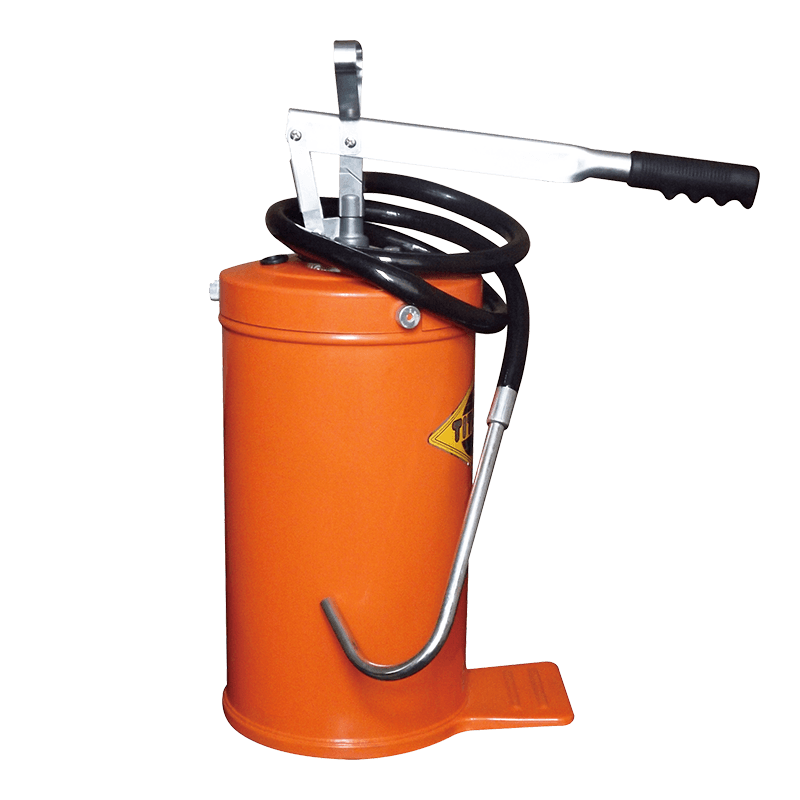
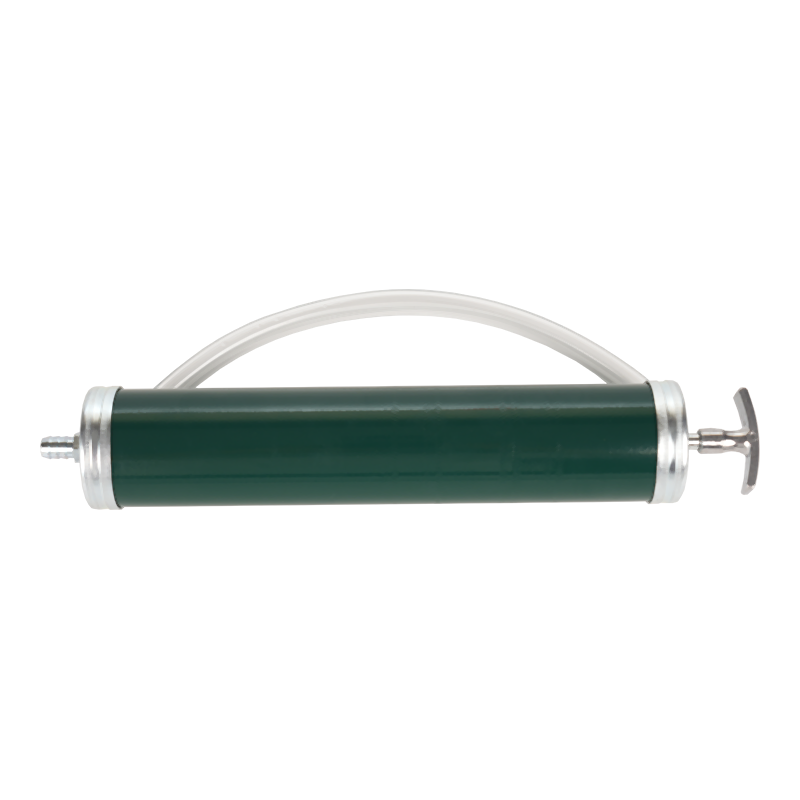
Hand pumps use a lever or plunger to draw oil from a container and push it through a spout or hose. They need no power source, which makes them useful in remote locations, but output depends on the operator's effort and stroke rate.
Electric Transfer Pumps
Electric transfer pumps use a motor to drive a gear, vane, or diaphragm mechanism. They provide steady flow with less effort and are common in shop and fleet use. Models designed for oil or fuel include features such as automatic shutoff nozzles, cords sized for the motor, and housings rated for the fluid being handled.
Diaphragm Transfer Pumps
Diaphragm pumps use a flexible membrane that moves back and forth, drawing fluid through one check valve and discharging it through another. They are often self priming and tolerate some air, which suits portable use, although they may pulse slightly during discharge.
Portable Oil Transfer Pump: Features That Matter
A portable oil transfer pump should be judged by its flow rate, lift capability, power source, materials, and safety features, because these determine whether it will handle the job without frustration or hazard.
Flow Rate and Hose Size
Flow rate determines how quickly a drum or tank empties. A pump rated near 15 gallons per minute will transfer a 55 gallon drum in roughly four minutes under ideal conditions, although real results are slower with longer hoses and fittings. Hose diameter should match the pump outlet to avoid bottlenecks.
Suction Lift and Self Priming
Suction lift is the height the pump can draw oil upward from the source. Self priming pumps can remove air from the suction line and start moving oil without manual priming, which saves time and reduces the risk of running dry.
Power Source and Electrical Safety
Twelve volt pumps suit vehicles and field work, while alternating current models suit shops with outlets nearby. Electrical components near flammable liquids must be rated for that environment, and the power cord should be in good condition with proper grounding.
Materials and Chemical Compatibility
Seals and hoses must match the oil type. Nitrile and fluorocarbon elastomers are common choices for petroleum products, while other fluids may need different materials. Incompatible seals can swell, harden, or leak, and the pump should be checked against the fluid supplier's compatibility data.
| Feature | Why It Matters | What to Check |
|---|---|---|
| Flow rate | Sets transfer speed | Rated flow at your hose length |
| Suction lift | Reach into deep containers | Maximum lift from manufacturer data |
| Self priming | Starts without manual filling | Stated self priming capability |
| Power source | Determines where it can operate | Voltage and cord condition |
| Seal material | Prevents swelling and leaks | Compatibility with your oil type |
| Shutoff nozzle | Stops flow at the target container | Automatic or manual shutoff included |
How to Choose the Right Portable Oil Transfer Pump
Selection should begin with the job itself, including the fluid, the container sizes, the distance and height involved, and how often the pump will run.
Define the Fluid and Its Viscosity
Thin oils flow easily through most transfer pumps, while heavy gear oils or cold oil require pumps with higher torque and larger passages. Measure or estimate the viscosity at the expected temperature, because cold weather can reduce flow substantially.
Estimate the Required Transfer Time
Divide the volume to be moved by the realistic flow rate, allowing for losses in hoses and fittings. A 20 liter container at a realistic 8 liters per minute takes about 2.5 minutes. Use realistic rather than maximum figures when planning work.
Check Lift and Reach
If the pump sits above the source, the lift is small and most pumps will handle it. If it must draw from a drum on the floor while discharging into a machine higher up, verify the total head rating so the pump does not stall.
- Identify the fluid, its viscosity, and the temperature range.
- Estimate the volume and realistic transfer time using a conservative flow figure.
- Confirm suction lift and total head fit the layout of containers and equipment.
- Verify power source, materials, and safety features before purchase.
Setup and Operating Procedure for Transfer Pumps
Correct setup prevents dry running, air leaks, and spills, and it takes only a few minutes when followed in sequence.
Preparing Hoses and Connections
Use hoses rated for the fluid and sized for the pump outlet. Keep the suction hose as short and straight as possible, because kinks and long runs reduce flow and increase the chance of air entering the line. Tighten fittings and check for leaks before starting.
Starting and Priming
For self priming pumps, start the motor and allow a short period for air to clear from the suction line. For non self priming pumps, fill the pump body and suction line with oil before starting to avoid damaging seals through dry running.
Stopping and Clearing the Line
Turn off the pump before disconnecting hoses, and close any shutoff valves first. Drain residual oil from hoses into an approved container, and store hoses so that the ends are capped to keep dirt out.
Safety Rules for Handling Oil and Fuel
Oils and fuels can be flammable, and transfer operations create risks of fire, static discharge, spills, and exposure, so safety must be part of every task.
Bonding and Grounding
When moving flammable liquids between metal containers, bond and ground both containers to reduce static buildup. Static charge can ignite vapors in some fuel transfer situations, so this step is especially important when handling gasoline or other light fuels.
Ventilation and Ignition Sources
Work in a well ventilated area, away from open flames, sparks, and hot surfaces. Keep portable electric pumps off the fluid path unless they are rated for the environment, and avoid running motors in enclosed spaces with fuel vapor present.
Personal Protective Equipment and Spill Response
Wear chemical resistant gloves and eye protection during transfer. Keep absorbent material and a spill kit within reach, and clean spills promptly to avoid slip hazards and environmental contamination.
Storage of Containers
Store oil and fuel containers in approved, labeled, sealed containers away from heat sources. Follow local regulations for storage quantities and secondary containment.
Maintenance and Troubleshooting Common Pump Problems
Most transfer pump failures trace back to air in the suction line, clogged strainers, worn seals, or running dry, and simple checks usually reveal the cause.
The Pump Will Not Prime
Check for air leaks at fittings and hose clamps, confirm that the suction hose is submerged in the oil, and inspect check valves for debris or damage. A worn diaphragm or gasket can also allow air to enter the system.
Flow Drops Over Time
Reduced flow often points to a clogged strainer, a kinked hose, or wear inside the pump. Clean the strainer, check hose condition, and measure the time to transfer a known volume to track changes in performance.
Motor Overheating or Stalling
Overheating can result from running dry, operating against excessive head, low voltage, or using oil that is too viscous for the pump. Stop the pump, identify the cause, and allow the motor to cool before restarting.
Leaks at Seals or Housing
Leaks suggest seal damage, incompatible materials, or loose housing bolts. Replace seals with parts specified for the oil being handled and torque housing bolts to the specified values.
- Flush the pump after use with a compatible solvent or light oil to prevent residue buildup.
- Inspect strainers and filters at regular intervals based on use.
- Store the pump clean and dry with inlet and outlet ports capped.
Common Applications for Oil Pumps and Transfer Pumps
Oil pumps and transfer pumps appear across automotive, industrial, marine, agricultural, and fleet settings, and each application places different demands on flow, pressure, and durability.
Automotive Service and Workshops
Workshops use transfer pumps to refill engine oil, move gear oil, and drain fluids into waste containers. Electric models speed up service work, especially when several vehicles are serviced in a day.
Farm and Equipment Fleets
Farms and fleets handle large volumes of lubricant and fuel. Portable pumps mounted on carts or pickup beds allow crews to service equipment in the field without moving containers to a central station.
Marine and Industrial Lubrication
Marine engines and industrial gearboxes rely on oil pumps for circulation and maintenance transfer. Positive displacement designs handle the higher viscosity of gear oils and provide steady pressure for lubrication circuits.
Frequently Asked Questions About How Oil Pumps Work and Portable Oil Transfer Pumps
Question: How do oil pumps work in simple terms?
Oil pumps trap a set volume of oil at the inlet, carry it through the pump, and push it out the outlet, creating flow and pressure.
Question: What is the difference between flow and pressure in an oil pump?
Flow is the volume moved per minute, while pressure is the force applied against resistance, and a pump can be designed to emphasize one over the other.
Question: Why do gear pumps handle thick oil better than centrifugal pumps?
Gear pumps mechanically trap and move fixed volumes, so they keep flowing when oil is thick, while centrifugal pumps lose flow because viscous oil resists acceleration.
Question: What does a relief valve do in an engine oil pump?
It opens when pressure exceeds a set value and returns oil to the sump or inlet side, preventing dangerous overpressure as engine speed and oil viscosity change.
Question: What is a portable oil transfer pump used for?
It moves oil or fuel from one container to another, often at low pressure, for servicing equipment, refilling tanks, and draining fluids in workshops and field work.
Question: How long will a 55 gallon drum take to empty with a transfer pump?
With a pump rated near 15 gallons per minute and a short, clean hose, the drum may empty in roughly four minutes, though longer hoses and fittings will extend the time.
Question: What causes a transfer pump to fail to prime?
Air leaks at fittings, a suction hose not submerged in the fluid, debris in check valves, or worn diaphragms commonly prevent priming.
Question: Why should containers be bonded and grounded during fuel transfer?
Bonding and grounding reduce static buildup that could ignite flammable vapors when liquid moves between metal containers.
Question: Can a transfer pump handle any type of oil?
Only if its seals, hoses, and housing are compatible with that oil and its viscosity is within the pump's rated range, so the manufacturer's data should always be checked.
Question: What maintenance extends the life of a portable oil pump?
Flushing after use, cleaning strainers, inspecting seals and hoses, avoiding dry running, and storing the pump clean with ports capped all extend service life.
Key Takeaways on Oil Pumps and Portable Transfer Pumps
- Oil pumps trap, carry, and discharge fixed volumes to create flow and pressure
- Positive displacement designs handle thick oil and build pressure better than centrifugal pumps
- Engine oil pumps rely on relief valves to keep pressure safe as speed and viscosity change
- Portable transfer pumps are judged by flow, lift, priming, power source, and seal compatibility
- Realistic flow estimates should account for hose length, fittings, and lift
- Bonding and grounding protect against static ignition when handling flammable fluids
- Routine cleaning and inspection prevent priming failures, flow loss, and leaks