English
 中文简体
中文简体

A maintenance supervisor at a fleet garage reads the daily fuel summary and watches diesel prices climb again. The shop burns through fuel in every service truck, and the monthly fuel bill says something about crude oil, but it never says exactly how much of a barrel became the fuel in those tanks. It is one of the most common questions in the energy industry, asked by drivers, workshop owners, procurement staff, and anyone who has ever stared at a price board: how much gas does a barrel of oil make?
Here is the direct answer before we unpack the details. One standard barrel of crude oil holds 42 US gallons. In a typical modern U.S. refinery, those 42 gallons produce roughly 19 to 20 gallons of finished motor gasoline, about 11 to 12 gallons of distillate fuel (mostly diesel and heating oil), close to 4 gallons of jet fuel, and roughly 8 to 10 additional gallons of asphalt, petrochemical feedstocks, residual fuel oil, lubricant base stock, refinery fuel, and other products. Because refining expands the volume of the original crude, the total output is usually about 44 to 45 gallons of finished product from a 42-gallon barrel.
These are average figures published by the U.S. Energy Information Administration (EIA), and they describe a typical complex refinery running on a light-to-medium crude slate. They are not a universal recipe. Refineries in other regions tune their units to different markets, and a simple refinery that lacks cracking capacity will produce much less gasoline and much more heavy residue. The same crude, run through different equipment, gives different answers. And the word "gas" needs one clarification up front: in most of the world, asking how much gas a barrel makes means gasoline, the thing you pump into a car. If the question means natural gas, that belongs to gas wells and associated production, not the refining barrel. This article focuses on the liquid fuels and products that come out of a barrel of crude oil.
The Direct Numbers: Gasoline From a Barrel
Let us put the key figure in context. The EIA's standard breakdown of a barrel of crude oil processed at U.S. refineries looks like this:
- Finished motor gasoline: 19 to 20 gallons
- Distillate fuel (diesel and heating oil): 11 to 12 gallons
- Jet fuel (kerosene-type): about 4 gallons
- Residual fuel oil: about 2 gallons
- Asphalt and road oil: about 1 to 2 gallons
- Petrochemical feedstocks: about 1 to 2 gallons
- Lubricant base stock: less than 1 gallon
- Still gas, petroleum coke, and other refinery products: about 3 to 4 gallons
The single most important number is the first one. Gasoline accounts for roughly 45 to 46 percent of the finished volume a typical U.S. refinery sends to market. Almost half of every barrel of crude becomes gasoline before it reaches a car, which is why gasoline prices track crude prices so closely and why global crude markets pay so much attention to the U.S. driving season.
The rest of the barrel is not waste. Diesel and jet fuel keep trucks rolling and airplanes flying. Asphalt builds roads. Petrochemical feedstocks become plastics, synthetic rubber, and synthetic fibers. Even residual fuel oil, which often looks like a low-value leftover, has industrial uses in marine fuels, power generation, and refinery upgrading units. And a small but valuable stream of lubricant base stock becomes engine oil, gear oil, hydraulic fluid, and industrial grease, products that deserve more attention than their tiny share of the barrel suggests.
By energy content, the same relationship holds in a different form. A barrel of crude contains roughly 5.8 million British thermal units of energy, and the gasoline drawn from it represents about two-fifths of that energy content. A gallon of gasoline in the United States also contains about 10 percent ethanol in the standard E10 blend, which is added after refining; the purely petroleum-derived component of those 19 to 20 gallons is closer to 17 to 18 gallons, with ethanol filling the rest.
A U.S.-specific answer makes sense because the question is usually driven by U.S. pump prices and the American light-duty car fleet. But the global average looks different. In Europe, refiners produce much more diesel than gasoline because passenger cars there run heavily on diesel. In Asia, demand for naphtha and jet fuel shifts the mix further. The barrel itself is the same size everywhere, but its contents depend on where it is refined and for which market.
Why a Barrel Is 42 Gallons
Before barrels were a unit of accounting, they were actual wooden containers, and there was no standard size at all. In the early 1860s, when the first oil boom started in western Pennsylvania after Edwin Drake's discovery at Titusville in 1859, producers stored and shipped crude in whatever barrels they could find: whiskey barrels, beer barrels, fish barrels, and molasses hogsheads. Those ranged from 31 to 50 gallons. Buyers and sellers had to agree on the volume for every single transaction, which was as inefficient as it sounds.
The young oil industry needed kerosene for lamps, at a time when whale oil was expensive and scarce. Producers quickly learned that a consistent container made trading easier, and the 42-gallon tierce, a wine cask common in the region, became the de facto shipping unit by around 1866. A barrel of that size held about 290 to 300 pounds of crude oil. That weight was heavy but manageable for the teamsters who hauled it on horse-drawn wagons, and two barrels sat comfortably on a standard wagon. A smaller barrel meant more trips; a larger barrel meant wagons and men that could not handle the load.
In 1872, the Petroleum Producers' Association formally adopted 42 gallons as the standard barrel, and the young Standard Oil organization followed the same convention. When railroads and then pipelines replaced wagons, the barrel stayed on as the accounting unit. Today, nobody puts crude oil in wooden barrels, but the 42-gallon measure remains the basis of pricing for West Texas Intermediate, Brent, and the OPEC basket. In metric terms, one barrel equals 158.99 liters or 34.97 imperial gallons.
One practical confusion comes from the fact that people still use the word "barrel" for steel drums. If you walk into an industrial maintenance shop and see a 200-liter steel drum labeled as engine oil, that drum holds 55 U.S. gallons. The crude-oil barrel and the industrial oil drum are different things. The 42-gallon measurement is a pricing and refining unit; the 55-gallon drum is a shipping and storage container. This distinction matters when you are buying lubricants or fuel storage equipment. The mix-ups on the shop floor usually happen because someone expects a drum to hold what an oil barrel nominally contains, and the two are not the same.
What Else Comes Out of the Barrel
The EIA numbers become clearer when arranged in a table. The following figures are rounded averages for a typical U.S. refinery. Individual refineries report different yields, and seasonal demand shifts the numbers a little, but the order of magnitude is reliable.
| Product | Gallons per barrel | Share of output |
|---|---|---|
| Finished motor gasoline | 19–20 | about 45% |
| Distillate fuel (diesel, heating oil) | 11–12 | about 27% |
| Jet fuel (kerosene-type) | 3–5 | about 9% |
| Residual fuel oil | 1–2 | about 4% |
| Asphalt and road oil | 1–2 | about 4% |
| Petrochemical feedstocks | 1–2 | about 3% |
| Lubricant base stock | below 1 | about 1% |
| Still gas, coke, and other products | 3–4 | about 7% |
Gasoline, the largest stream, is the fuel for spark-ignition engines in cars, light trucks, and motorcycles. It is a blend of hundreds of hydrocarbon compounds that boil between roughly 30 and 200 degrees Celsius, and it must meet octane, volatility, and sulfur specifications that change by season and by country. Regular-grade gasoline in the United States typically carries an octane rating of 87, while premium grades sit at 91 to 93. European pump gasoline often starts at 95 research octane.
Distillate fuel covers diesel and heating oil, the middle of the boiling range. Diesel powers long-haul trucks, farm tractors, construction machines, ships, and many backup generators, and its cetane number and cold-flow properties matter far more than octane. In cold climates, the same general cut supplies heating oil for homes and businesses. Ultra-low-sulfur diesel, with a maximum of 15 parts per million of sulfur in the United States and 10 parts per million in the European Union, is the environmental standard refiners now meet.
Jet fuel, kerosene-type, is the fuel for commercial and military aviation. It sits in a narrow boiling band above gasoline and below diesel, with strict freezing-point and combustion specifications. Jet A, the U.S. standard, and Jet A-1, the global standard, must remain fluid at temperatures far below the cruising altitudes where outside air can fall below minus 50 degrees Celsius.
Residual fuel oil is the heavy bottom of the atmospheric distillation tower. It powers the engines of large ocean-going vessels where sulfur scrubbers are installed, feeds industrial boilers and power plants, and can be sent to a cracking unit to produce more valuable light products. Its high viscosity and high sulfur content make it the least glamorous stream in the barrel, but it is far from useless.
Asphalt and road oil represent the heaviest practical products of the barrel. They are what remains after the lighter fractions have been removed, then processed into road-paving material, roofing membranes, and waterproofing coatings. Every kilometer of paved road represents, in a very real sense, a barrel of oil that was converted into a solid.
Petrochemical feedstocks are the chemical bridge between fuel and manufactured goods. Naphtha and gas oils from the refinery become ethylene, propylene, benzene, and other base chemicals, which in turn become plastics, synthetic fibers, synthetic rubber, detergents, and fertilizers. A barrel of oil is therefore also a barrel of materials, not just a barrel of fuel.
Lubricant base stock is a small stream by volume, often less than a gallon per barrel in a fuels-focused refinery, but it carries an outsized economic value. Base oils must meet viscosity, oxidation stability, and pour-point specifications, and they are the foundation of engine oils, transmission fluids, hydraulic fluids, and greases used in vehicles and industrial machines. For anyone who operates heavy equipment, the quality of this fraction directly affects maintenance costs and equipment life.
Still gas, petroleum coke, waxes, solvents, and miscellaneous products close out the mass balance of the barrel. Still gas is burned inside the refinery to generate heat and power, petroleum coke finds use in metallurgy and power generation, and waxes appear in packaging, candles, and coatings. Together they ensure that almost nothing in the original crude is wasted.
Processing Gain: Why 42 Gallons Can Become More Than 42
First-time readers usually stop at the same sentence: a 42-gallon barrel produces 44 or 45 gallons of product. How does a barrel produce more volume than it contains? It does so through processing gain, a well-understood phenomenon in refining.
Cracking is the main reason. In a fluid catalytic cracker or a hydrocracker, heavy hydrocarbon molecules are broken into lighter ones. A large molecule that occupied a certain volume in the crude can split into two smaller molecules that together occupy more volume than the original, because smaller hydrocarbons are less dense. Volume is not created out of nothing; density is converted into volume. The same mass of material takes up more space when it is split into lighter fractions.
Hydrogen also plays a role. Many refinery units add hydrogen to upgrade heavy residues and remove sulfur. The hydrogen comes mainly from natural gas reforming or catalytic reformers, and it adds mass to the final products. More mass at a lower density means more measured volume at the refinery gate. A hydrotreater that removes sulfur from diesel also slightly raises the volume of the diesel stream, which is why refiners track processing gain as part of their normal yield accounting.
There is also a blending effect that belongs specifically to finished gasoline. In the United States, nearly all motor gasoline sold today is E10, containing about 10 percent ethanol. Ethanol is produced in corn mills, not in refineries, and it is blended in at distribution terminals. The 19 to 20 gallons of finished gasoline out of a barrel includes that ethanol. The petroleum-derived gasoline blendstock itself is a bit less, around 17 to 18 gallons, with ethanol added downstream. Refiners measure what they actually ship, which is why finished gasoline volumes include the blending component.
Temperature and measurement practice add a final layer of nuance. Refinery volumes are usually corrected to a standard temperature, but terminals and pipelines may use slightly different protocols for commercial custody transfer. The processing gain figure cited by the EIA is the product of thousands of refinery throughput measurements, and it consistently sits in the range of 5 to 7 percent by volume. That is why a barrel of oil "makes" more than 42 gallons of product: the molecules have simply been rearranged into forms that occupy more space.
How the Same Barrel Makes Different Amounts of Gas Around the World
The U.S. gasoline number of 19 to 20 gallons per barrel is at the high end of the global range. Most of the world's refineries are configured for a different product mix, and their gasoline yields are lower as a share of the barrel while their diesel, jet fuel, and fuel oil shares are higher.
Europe is the clearest example. For decades, European tax policy favored diesel over gasoline, so consumers bought diesel cars in large numbers. European refiners responded by building hydrotreaters and hydrocrackers that maximize middle distillates. In many European refineries, diesel yield exceeds gasoline yield, which is the opposite of the U.S. pattern. The same barrel of crude, running through a European plant, might produce 10 to 12 gallons of gasoline and 15 or more gallons of diesel, depending on the crude and the season.
Asia and the Middle East are different again. Rapid industrialization across China, India, and Southeast Asia has created enormous demand for diesel, jet fuel, naphtha, and petrochemical feedstocks. Refineries in these regions often run heavy sour crudes and operate complex conversion units, but their output is weighted toward middle distillates and chemical feedstocks rather than gasoline. In some Middle Eastern countries with young refining systems, residual fuel oil still accounts for a meaningful share of output when upgraded conversion capacity is limited.
Crude quality explains part of the difference. Light sweet crudes with high API gravity and low sulfur content naturally contain more light molecules, so they yield more gasoline and diesel with less processing. Heavy sour crudes contain more residue and require more hydrotreating and coking capacity to upgrade. A refinery running mostly heavy Canadian or Venezuelan grades will report lower gasoline yields per barrel than a Gulf Coast refinery running light sweet U.S. shale crude, even with identical equipment.
The practical lesson is that "how much gas does a barrel make" has no single global answer. The United States happens to produce about 19 to 20 gallons of gasoline per barrel because its refining system, crude slate, and consumer fleet are all aligned around gasoline. In other markets, the barrel performs different work. What matters for international fuel pricing is the whole product slate, not a single stream.
Why Different Refineries Produce Different Amounts of Gas
Simple vs. complex refineries
A simple topping refinery only distills crude into its natural fractions: straight-run gasoline, kerosene, gas oil, and an atmospheric residue. Left at that, a barrel might produce only 25 to 30 percent gasoline, plus a large amount of heavy residue with weak markets. Most world-class refineries are far more complex. They add vacuum distillation, fluid catalytic cracking, hydrocracking, coking, alkylation, and catalytic reforming units to convert heavy fractions into light products. Refinery complexity is the reason a modern barrel can push gasoline yield above 45 percent while still producing diesel, jet fuel, and petrochemical feedstocks.
| Product stream | Simple topping refinery | Complex conversion refinery |
|---|---|---|
| Gasoline | 10–12 gallons | 19–21 gallons |
| Distillate (diesel, heating oil) | 8–10 gallons | 11–13 gallons |
| Jet fuel / kerosene | 2–3 gallons | 3–5 gallons |
| Heavy residue, asphalt, fuel oil | 14–18 gallons | 4–6 gallons |
| Petrochemical feedstocks | small | 3–5 gallons |
Crude quality changes the starting point
Light sweet crude contains more light molecules and less sulfur, so it naturally yields more gasoline, diesel, and jet fuel with less processing. Heavy sour crude yields more residue and demands more hydrogen and coking capacity to upgrade. The same refinery swapping from a light North Sea grade to a heavy Canadian blend will see gasoline and diesel yields drop and the load on its upgrading units rise. API gravity, sulfur content, and the distribution of heavy molecules all influence how a barrel behaves in the distillation tower.
Markets and seasons decide the target mix
The refinery's goal is not maximum gasoline; it is maximum profit. When diesel prices are strong in winter, refiners run their cracking units to maximize distillate. In summer, when the U.S. driving season raises gasoline demand and government regulations require a summer-grade gasoline blend with lower volatility, refiners shift the balance toward gasoline. They can also adjust their product slate by changing cracking severity, feed selection, and blending decisions. This flexibility is why the phrase "a barrel of oil makes about 20 gallons of gasoline" is a snapshot of average behavior, not a law of nature. In any given week, a specific refinery can be making 17 gallons of gasoline from a barrel or 22 gallons, depending on what the market pays.
From Barrel to Pump: What a Barrel Actually Costs the Driver
When crude oil trades at a certain price per barrel, drivers want to know how much of that barrel shows up in a gallon of gasoline. The arithmetic is simple: divide the barrel price by 42. At $80 per barrel, the crude component of one gallon is about $1.90. At $60 per barrel, it is about $1.43. At $100 per barrel, it is about $2.38. That is the incompressible part of the pump price, and it explains why fuel prices track crude markets so visibly.
Then the rest of the supply chain adds its own layers:
- Crude acquisition and shipping: moving oil from the well to the refinery by pipeline, tanker, truck, or rail, including storage and trading costs.
- Refining margin: the cost of processing plus the refiner's profit, which varies with plant complexity, utilization rate, and the difference between crude price and product prices.
- Distribution and retail: pipelines, terminals, tank trucks, and the service station's own operating costs and margin.
- Taxes: excise taxes, sales taxes, and sometimes carbon levies, which vary enormously by country and by state within the United States.
Refiners track their margin using crack spreads. The classic 3-2-1 crack spread assumes a refiner buys three barrels of crude and sells two barrels of gasoline plus one barrel of diesel. The gross margin is the value of those products minus the cost of the crude. When gasoline is the question on the table, the 3-2-1 spread is a good proxy for how much money the barrel makes before distribution and taxes enter the chain.
A common rule of thumb in mature markets is that crude oil accounts for roughly 50 to 60 percent of the pump price, refining adds 10 to 20 percent, distribution and retail marketing add another 10 to 20 percent, and taxes make up the rest. Consider an $80 barrel and a U.S. gasoline price around $3.50 per gallon: the crude share is about $1.90, refining might add $0.45 to $0.60, distribution and retail add about $0.45, and taxes add $0.50 to $0.70. In countries with heavy fuel taxes, the tax share can be larger than the crude share.
One practical lesson comes out of this breakdown. When oil prices fall, gasoline prices fall slowly and partially because the other cost layers do not shrink with crude. When oil prices rise, gasoline prices react quickly upward. The barrel is the raw-material anchor of fuel pricing, but it is not the only component. For a fleet operator, the same logic applies to lubricants: crude price drives base oil cost, but blending, additives, packaging, and distribution set the final drum price.
The Barrel's Hidden Jobs: Petrochemicals, Asphalt, and Lubricants
People who think of crude oil only as a fuel forget that a large share of the barrel never burns. The petrochemical industry takes naphtha, ethane, and gas oils out of the refining mix and converts them into the basic building blocks of modern manufacturing. Ethylene becomes polyethylene, the world's most common plastic. Propylene becomes polypropylene, used in everything from packaging to automotive parts. Benzene and its derivatives become styrene, nylon, polyester, and many other polymers. A typical barrel contributes feedstock for a significant amount of plastic goods, although the exact amount depends on how much of the refinery's output is directed to petrochemical units instead of fuel.
Asphalt is the barrel's contribution to civil engineering. After all the fractions that boil below roughly 500 degrees Celsius have been removed, the heavy residue that remains, properly oxidized and blended, becomes the binder in road surfaces, airport runways, and roofing systems. A paved highway consumes thousands of barrels' worth of asphalt over its lifetime. When you drive on a fresh road surface, you are driving on the heaviest tail of the same barrel that produced the fuel in your tank.
Lubricants are the smallest stream in the table but the most important for every owner of machinery. Base oil production begins with selected crude fractions, usually vacuum gas oils and certain residues that still have the right molecular structure, and treats them with solvent extraction, hydrogenation, and dewaxing to reach the viscosity and purity that engine builders require. The finished base oil is then blended with additives to become engine oil, transmission fluid, hydraulic oil, gear oil, and grease. Base oils are classified into groups from Group I to Group III plus synthetic Group IV polyalphaolefins and Group V esters, with higher groups generally offering better oxidation stability, low-temperature performance, and longer drain intervals.
For a fleet garage or a factory maintenance department, this is the part of the barrel that never appears in a fuel tank but determines whether an engine goes 500,000 kilometers or fails at 150,000. The same barrel that made 19 gallons of gasoline made perhaps half a gallon of lubricant base stock, and that half-gallon lingers in an engine long after the gasoline has been burned and exhausted. Choosing an honest lubricant is not a brand preference; it is a way of protecting the value of the whole barrel's work. Storing that lubricant without water or dust contamination, transferring it without cross-contamination, and applying it with clean, properly calibrated equipment is how operators protect the most heavily stressed parts of their machines.
Handling the Barrel's Products in the Workshop
None of those products are useful until they are stored, measured, transferred, and applied. Fuel moves from the refinery to bulk plants, then to storage tanks, and for many workshops and farms it ends up in portable containers and drums. Lubricants spend almost their entire working life in drums. For a maintenance operation, the drum is not a trivial container; it is the last sealed environment between the refinery and the machine.
Consider what actually happens in a typical service bay. A 55-gallon drum of engine oil arrives on a pallet. A technician needs to transfer a few liters into a measuring jug, then into an engine. Without a proper pump or pourer, the job becomes messy, the oil picks up dirt, and the risk of cross-contamination jumps. Meanwhile, a grease gun sits in a toolbox, ready to inject fresh grease into a ball joint, a bearing hub, or a hydraulic pin. The equipment between the drum and the fitting is exactly where the barrel's value is won or lost.
Readers who want to understand why industrial lubricant drums differ from crude-oil barrels, and how those differences affect material choice and sealing, will find a longer treatment in our industrial oil barrel guide.
Drum storage: keeping the product clean
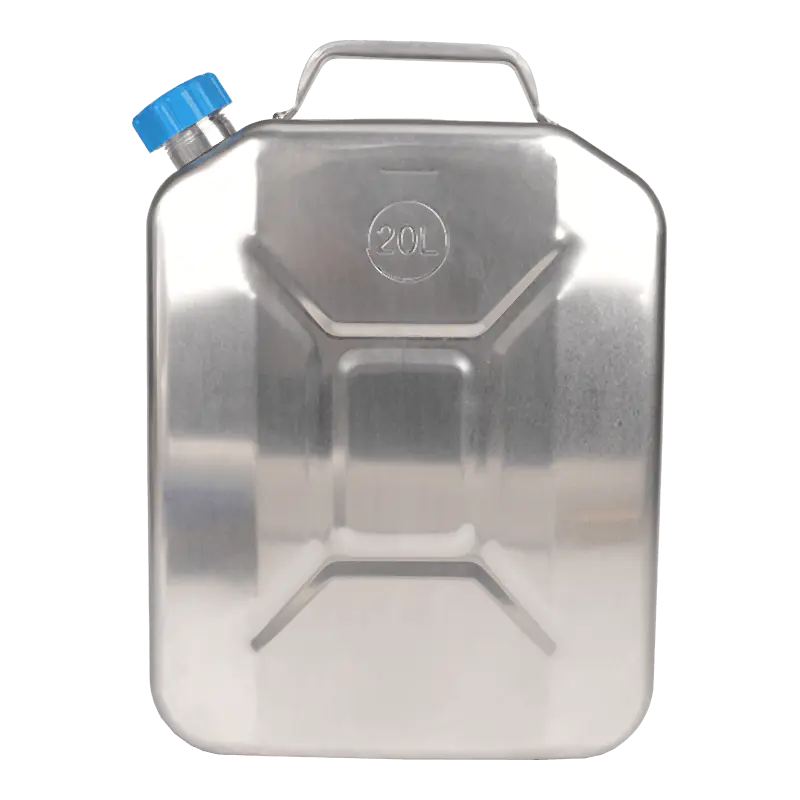
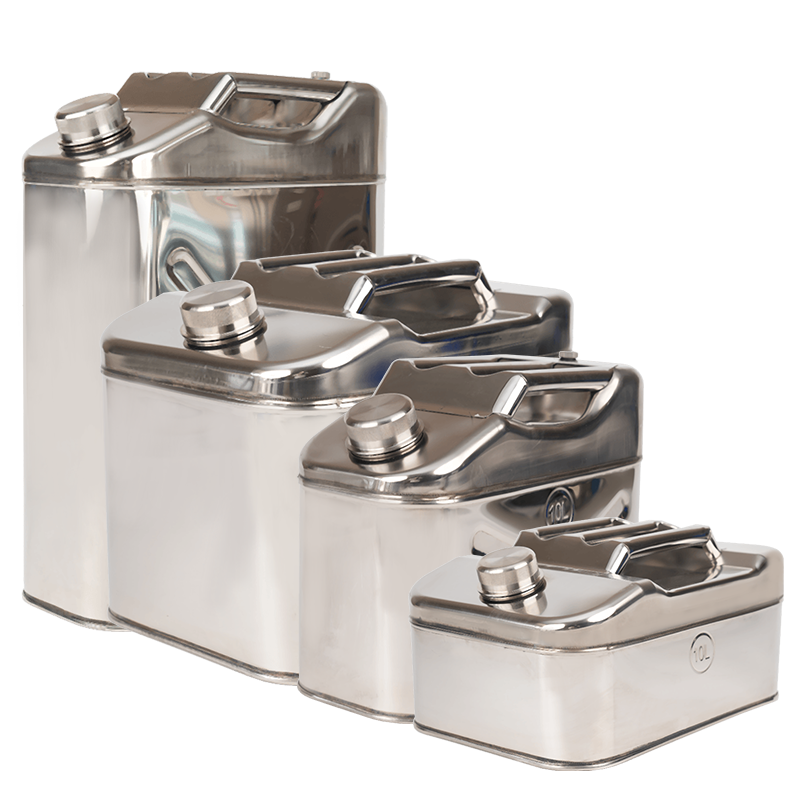
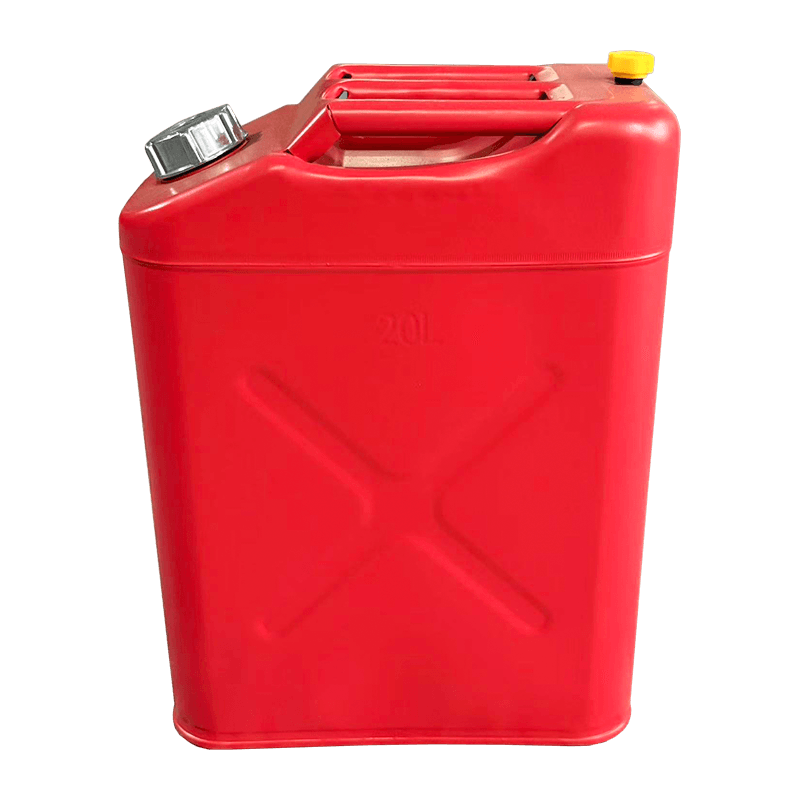
The material of a drum is not a cosmetic choice. Aluminum drums resist corrosion and are light enough for portable use, which is why 5-liter, 10-liter, and 20-liter aluminum oil barrels are common in workshops that move oil between bays. Plastic drums offer chemical compatibility and reduced weight, and features such as child locks and pour spouts make them practical for controlled dispensing. Stainless steel drums add durability and easy cleaning for applications where purity cannot be compromised. A workshop that stores diesel for generators, waste oil for collection, and fresh engine oil for services needs a different container for each duty, because mixing them contaminates the product and damages the machine.
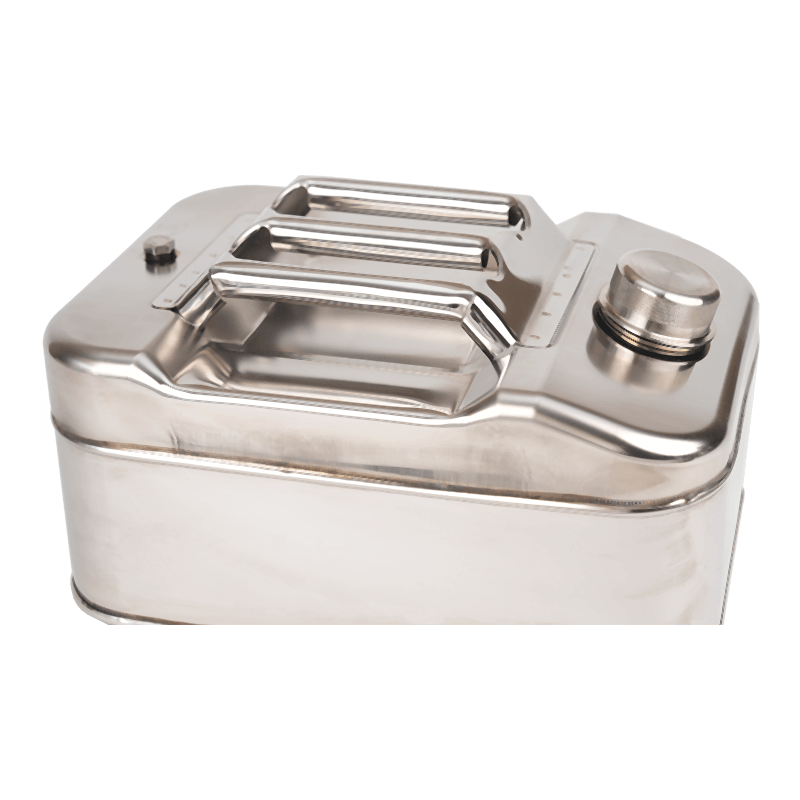 304 Stainless Steel Oil Drums in 5L to 40L CapacitiesThese stainless steel drums resist corrosion and are easy to clean, making them suitable for storing fresh oil where purity matters. Multiple capacities allow matching the container to the specific lubricant or fuel duty.View Product →
Pumping and transfer: moving the barrel's contents
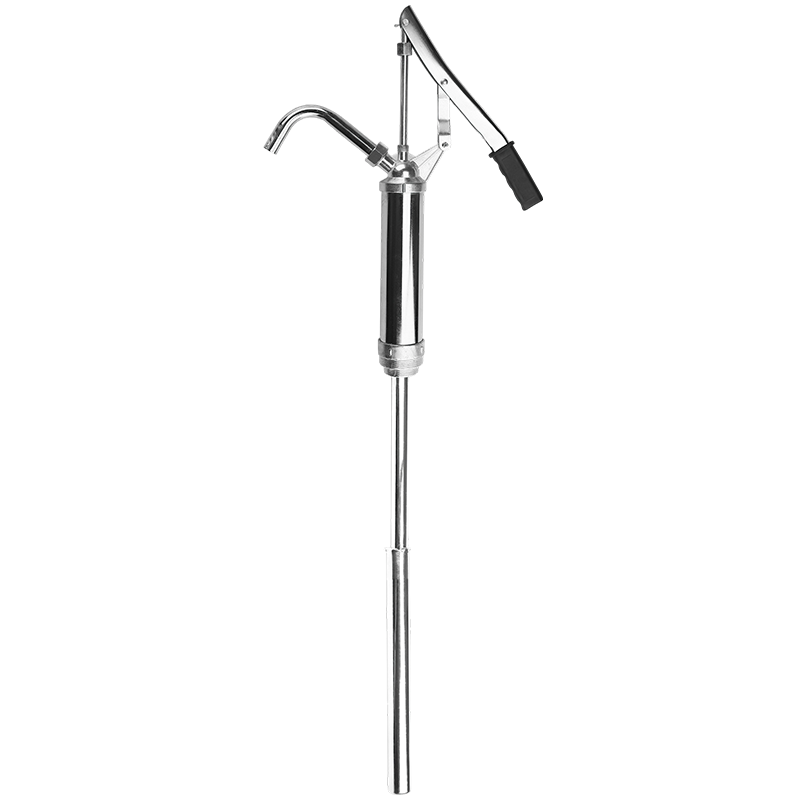
Once a drum is opened, the fastest way to compromise the oil inside is to let the environment in. Dirt, water, and air all degrade lubricants and fuels. A manual pump with a hose and a sealed dip tube keeps the drum closed while oil is withdrawn, which is why fuel and lubricant drums are rarely stored without a pump fitted to the bung. The pump is also the metering device; a pump with poor seals drips, creates slip hazards, and introduces air into the oil. For a 25-kilogram drum, a simple hand pump with a hose is enough to fill measuring jugs, oil cans, and small equipment without lifting the entire drum.
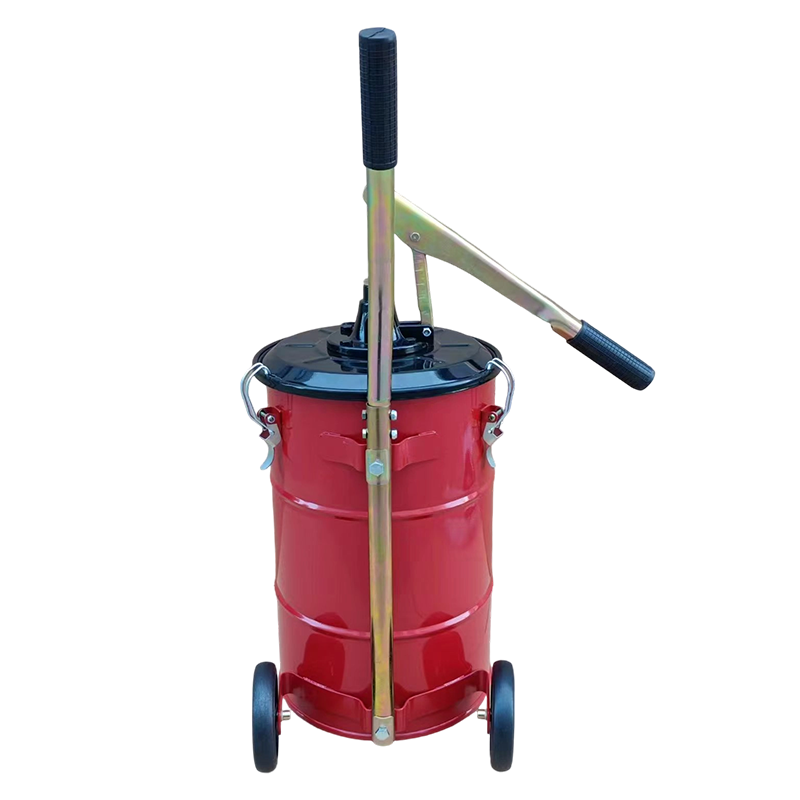 25kg Manual Oil Pump with Flexible HoseThis manual pump fits a 25kg drum and withdraws oil or grease while keeping the container sealed. Its hose enables controlled filling of jugs and small equipment without lifting the drum.View Product →
Applying lubricant under pressure: the final step
The last few centimeters between the grease gun and the fitting are where lubrication either protects or fails. A grease gun must generate enough pressure to push grease through narrow fittings while giving the operator control. Heavy-duty hand-operated grease guns with hardened barrels and spring-loaded handles deliver consistent pressure for chassis points, wheel bearings, and equipment pins. Higher capacity matters when a maintenance route includes dozens of fittings in one work session. A 500cc or 900cc grease gun reduces refill stops, and lever-action models make repeat strokes easier for large jobs.
 500cc Heavy-Duty Grease Gun with 7000 PSI PressureThis 500cc grease gun delivers high working pressure for reliable lubrication of chassis points and bearings. Its large capacity reduces refill stops, and the cartridge option suits heavy maintenance sessions.View Product →
This is the logic behind the company producing the equipment referenced in this article. Yangzhou Qionghua Tools, a Chinese manufacturer operating since 1993, builds oil drums, grease guns, oil pumps, grease injectors, and toolboxes as a coordinated system. Its workshop in Yangzhou's riverside development zone spans more than 30,000 square meters, with over nine assembly lines and a workforce of more than 200 engineers and operators. The product range is organized around the full lubrication sequence: storing oil in a barrel, pumping it out, transferring it to a gun, applying it to a fitting, and keeping the whole set organized in a toolbox. The complete line of aluminum and plastic oil barrels, hand-operated and lever grease guns, suction guns, barrel pumps, rotary pumps, electric and pneumatic grease injectors, and steel toolboxes is documented in the current product catalogue, which is updated on a regular cycle.
For three decades, that same product logic has served European retail chains and industrial companies, where buyers value completeness as much as individual product quality. A maintenance operation that orders drums, pumps, and grease guns from one manufacturer simplifies spare parts, training, and quality control. When the barrel's products are handled correctly, the entire chain from refinery to machine works the way the refiner intended.
The Bottom Line: What Anyone Buying Fuel or Lubricants Should Remember
The clean answer to the question is this: in a typical U.S. refinery, one 42-gallon barrel of crude oil makes about 19 to 20 gallons of finished motor gasoline, plus roughly 11 to 12 gallons of diesel and heating oil, about 4 gallons of jet fuel, and another 8 to 10 gallons of asphalt, petrochemical feedstocks, residual fuel, lubricant base stock, and other products. Because of processing gain, the total volume leaving the refinery is about 44 to 45 gallons, slightly more than the barrel itself contained.
The more useful answer is the structure behind those numbers. Yield depends on refinery complexity, crude quality, seasonal demand, and regional markets. A simple refinery on a heavy crude might produce less than half that amount of gasoline. A complex refinery running light sweet crude can push gasoline toward half the barrel. That is why a barrel does not have a single fixed output; it has a range of possible outputs bounded by physics and economics.
For buyers of fuel and lubricants, the practical takeaways are simple. Crude cost is the anchor of fuel prices, but refining, distribution, and taxes make up the rest. Diesel and jet fuel carry a large share of the barrel's energy even where gasoline gets the attention, and the smallest stream in the barrel, base oil, becomes the lubricants that decide whether machinery lasts or fails early. Storing those lubricants in clean, properly selected drums, pumping them with sealed, reliable pumps, and applying them with well-maintained grease guns is how a workshop converts the barrel's value into machine uptime.
The next time you look at a fuel price board or order a drum of grease, the numbers will mean more. Crude oil is not a single fuel; it is a flexible mountain of molecules that refiners split into transportation fuel, materials, and maintenance products. The question "how much gas does a barrel make" has a solid answer, about 19 or 20 gallons at a typical U.S. refinery, but the complete answer includes diesel, jet fuel, asphalt, feedstocks, and that small, valuable trickle of lubricants that keeps every engine turning.