English
 中文简体


Two purchase orders can both say "one barrel" and still describe different amounts of liquid: 158.987 litres of crude oil, 163.66 litres of UK beer, or 208 litres in a 55-gallon steel drum. The difference is not academic. It changes freight weight, tank calibration, pump run time and the price on a cargo of several hundred thousand tonnes. So here is the number to start with: one barrel of crude oil is exactly 42 US gallons, which equals 158.987 litres, 9,702 cubic inches or 0.158987 cubic metres. A typical medium crude at about 32 degrees API weighs roughly 137 kg in that volume, and contains around 5.8 million British thermal units of energy.
Everything else in this article follows from that fixed figure. The barrel is a unit of volume with a legal, historical definition, not a physical container you can pick up. Refiners buy crude by the barrel, ship it by the tonne, and sell the products by the litre or gallon at the pump, and each of those steps uses a different measurement convention. If you specify drums, pumps, filling equipment or storage tanks, understanding where the 42-gallon barrel sits relative to the 200-litre drum, the 55-gallon drum and the cubic metre will save you from specification errors that are expensive to correct after the containers are loaded.
The Fixed Number: 42 US Gallons and 158.987 Litres
The standard crude oil barrel, usually written bbl, is defined as 42 US gallons at a reference temperature of 60 degrees Fahrenheit (15.56 degrees Celsius). Because the US gallon is legally 3.785411784 litres, the barrel works out at 158.987294928 litres. For practical purchasing work, 158.987 litres is the figure to carry, and 159 litres is an acceptable shorthand for casual conversation only. The difference between the two is 0.013 litres, which sounds trivial until it is multiplied across a large transaction.
The cubic inch figure is exact by definition: 42 gallons multiplied by 231 cubic inches per gallon gives 9,702 cubic inches. That is useful when you are checking whether a custom tank or a small fabricated container genuinely holds a barrel, because tank dimensions in inches are often easier to verify on a workshop drawing than litres.
| Quantity | Equivalent volume |
|---|---|
| 1 barrel (bbl) | 42 US gallons |
| 1 barrel | 158.987 litres |
| 1 barrel | 9,702 cubic inches |
| 1 barrel | 5.6146 cubic feet |
| 1 barrel | 0.158987 cubic metres |
| 1 cubic metre | 6.2898 barrels |
| 1 barrel per day | 0.006624 cubic metres per day, about 6.6 litres per day |
| 1 million barrels per day | 158,987 cubic metres per day |
The prefix conventions cause real confusion in international tenders. In oil industry usage, M usually means thousand and MM means million, so Mbbl is a thousand barrels and MMbbl is a million barrels. Buyers outside the industry often read M as million, which turns a 50 Mbbl enquiry into a 50 million barrel enquiry, a difference of three orders of magnitude. When a specification or a tender document arrives, confirm the prefix convention in writing before you quote. Daily production and flow rates use the same logic: bpd or bbl/d means barrels per day, and kb/d means thousand barrels per day.
The abbreviation bbl itself has no fully documented origin. The popular story is that the second b stood for "blue barrel", a marking used by a large early refiner to identify its own stock, but there is no firm documentary proof. What is documented is the volume: 42 US gallons, adopted as the trade standard in the Pennsylvania oil region in the 1860s and carried forward by custom, railway tariffs and later pipeline practice.
Why 42 Gallons and Not 55: A Short History
When the first commercial oil well was drilled in Pennsylvania in 1859, there was no pipeline network and no tanker fleet. Crude moved in wooden barrels made by coopers, and those barrels were not made to a single size. Whiskey barrels held about 40 gallons, and other trades used their own dimensions. Because oil was sold by the barrel, the buyer and the seller each had an incentive to prefer a different definition, and disputes were common.
The compromise that stuck was to take the familiar 40-gallon barrel and add 2 gallons to cover leakage, evaporation and the natural shrinkage of wooden staves as the barrel dried. That gave 42 gallons, and the Petroleum Producers' Association of Pennsylvania adopted it as the standard in 1866. Railway freight rates, which were quoted per barrel, then fixed the number in commercial practice. When steel tanks, tank cars and pipelines replaced wooden barrels, the 42-gallon unit survived as an accounting and pricing measure even though the physical barrel disappeared from the supply chain.
The 55-gallon steel drum that most people picture when they hear the word barrel arrived later, as welded steel sheet replaced wooden staves in the early twentieth century. It was designed as a robust industrial package, not as a unit of trade, and its 55 US gallons equal 208.2 litres. That is 49.2 litres, or about 31 percent, more than a 42-gallon oil barrel. It is also 8.2 litres more than a nominal 200-litre drum, which is the standard package across most of Europe and Asia.
What This Means When You Buy Containers
If a customer asks for "oil barrels" and expects 200-litre steel drums, confirming the intended volume before quoting avoids a shipment that is 4 percent short or 31 percent long. The same applies to pumps and closures: a pump designed for the 2-inch and 3/4-inch bungs of a 200-litre drum will not fit a small 10-litre workshop container, and a suction lance cut for a 208-litre drum will not reach the bottom of a taller or shallower vessel. Volume, closure type and container geometry have to be specified together.
From Volume to Weight: API Gravity and How Heavy a Barrel Is
A barrel is a volume, but freight, customs duty, tanker deadweight and road axle limits are all measured in mass. Converting between the two requires the density of the specific crude, which the industry expresses as API gravity. The relationship is simple: specific gravity equals 141.5 divided by (131.5 plus API gravity). A high API number means a light, low-density crude; a low API number means a heavy, dense crude. Weight per barrel is then the specific gravity multiplied by 158.987 litres.
| API gravity | Approximate specific gravity | Kilograms per barrel | Barrels per metric tonne |
|---|---|---|---|
| 45 (very light condensate) | 0.802 | 127 | 7.85 |
| 40 (light crude) | 0.825 | 131 | 7.62 |
| 35 (light crude) | 0.850 | 135 | 7.40 |
| 32.5 (medium crude) | 0.863 | 137 | 7.29 |
| 30 (medium crude) | 0.876 | 139 | 7.18 |
| 20 (heavy crude) | 0.934 | 148 | 6.73 |
| 10 (extra heavy) | 1.000 | 159 | 6.29 |
The working conversion used across the industry is that one metric tonne of average crude equals about 7.33 barrels. That figure is only an average. A cargo of light condensate at 45 API comes closer to 7.85 barrels per tonne, while a heavy crude at 20 API gives about 6.73. On a 500,000-barrel cargo, the difference between those two crudes is roughly 11,000 tonnes of deadweight. That is a meaningful change in freight cost, port draft and storage tank allocation, and it is a common source of mismatch between a volume-based purchase contract and a weight-based shipping document.
Practical purchasing consequences follow directly. A 25-tonne road tanker carries about 180 barrels of 32.5 API crude before it reaches its weight limit, not the 200 barrels a simple volume calculation would suggest. A container payload limit can be reached before the container is volumetrically full when the product is dense, and the reverse happens with light products such as gasoline or solvents. Customs authorities in many countries assess duty on mass or on a declared density conversion, so an API gravity stated on the certificate of quality is not optional paperwork; it determines the duty base.
What One Barrel Actually Yields at the Refinery
A barrel of crude does not become a barrel of one product. It is separated and converted into a slate of fuels and feedstocks, and the mix depends on the crude and on the refinery configuration. A simple refinery with distillation and reforming produces more heavy fuel oil and less gasoline, while a complex refinery with cracking, hydrocracking and coking converts more of the barrel into light products. The US Energy Information Administration publishes a commonly cited summary: US refineries produce roughly 19 to 20 gallons of motor gasoline and 11 to 13 gallons of ultra-low-sulfur distillate fuel oil from each 42-gallon barrel of crude oil.
| Product group | Approximate US gallons per barrel | Notes |
|---|---|---|
| Motor gasoline | 19 to 20 | Includes ethanol blended downstream, which is not refinery output |
| Distillate, mainly ultra-low-sulfur diesel and heating oil | 11 to 13 | Varies with season and refinery upgrading |
| Jet fuel and kerosene | About 4 | Higher in refineries serving major airports |
| Liquefied petroleum gases | About 2 | Propane, butane and refinery fuel gas |
| Residual fuel oil, asphalt, coke and other | About 5 to 7 | Larger share in simple refineries |
The rows do not add up neatly to 42 gallons, and that is not an error. Refineries experience processing gain: the output volume is slightly larger than the input volume because the density of the products is lower than the density of the crude. The gain is typically in the range of 1 to 3 percent by volume. Buyers who reconcile a refinery's input and output volumes for the first time often treat this as a measurement loss or a stock error, when it is a normal physical consequence of conversion.
For anyone specifying equipment, the refinery slate matters in a different way. A barrel of crude becomes many separate streams, each handled at a different temperature, pressure and viscosity, and each needing its own pumps, valves and storage. The volume unit stays constant, but the physical properties of the fluid do not. That is why a pump rated at a certain flow for diesel cannot be assumed to deliver the same flow on a heavy residual stream, and why lubricant handling equipment for workshops and small plants has to be selected against the product's viscosity rather than against the barrel number alone.
Barrel Volume Versus Drum Volume: What to Verify on an Order
The word barrel covers at least three different containers in everyday purchasing, and mixing them up is one of the most common specification errors in oil-handling equipment. The 42-gallon oil barrel is a unit of account. The 55-gallon steel drum is a physical package that holds 208.2 litres. The 200-litre drum, standard across Europe and much of Asia, holds 200 litres exactly at its nominal reference temperature, which is 52.8 US gallons. The last two differ by 8.2 litres, nearly 4 percent, and that difference multiplies quickly across a pallet or a container load.
| Container | Nominal volume | US gallons | Typical use |
|---|---|---|---|
| Oil barrel, trade unit | 158.987 litres | 42 | Pricing and accounting, not a physical package |
| Standard 55-gallon steel drum | 208.2 litres | 55 | Bulk liquids, tight-head or open-top |
| 200-litre steel drum | 200 litres | 52.8 | Lubricants, solvents, export packing |
| 20-litre workshop container | 20 litres | 5.3 | Top-up filling, mobile service |
| 10-litre workshop container | 10 litres | 2.6 | Small-quantity transfer and storage |
Two tolerances deserve attention before you approve a drawing or a purchase order. The first is capacity tolerance. A pressed steel drum is not a calibrated volumetric instrument; manufacturing tolerances of 1 to 2 percent are normal, and a drum sold as 200 litres may hold slightly more or less when filled to the recommended level. If the container is used for custody transfer or for a regulated fill, it needs to be calibrated or checked by the fill-line method rather than assumed to be exact. The second is ullage, the empty space left above the liquid. Thermal expansion of a medium crude or lubricant base oil is roughly 0.07 to 0.08 percent per degree Celsius, so a 200-litre drum filled to the neck at 15 degrees Celsius and then warmed to 35 degrees Celsius will gain about 3 litres of volume. Leave at least 2 percent headspace, and more if the product will be stored in direct sun or transported through hot climates.
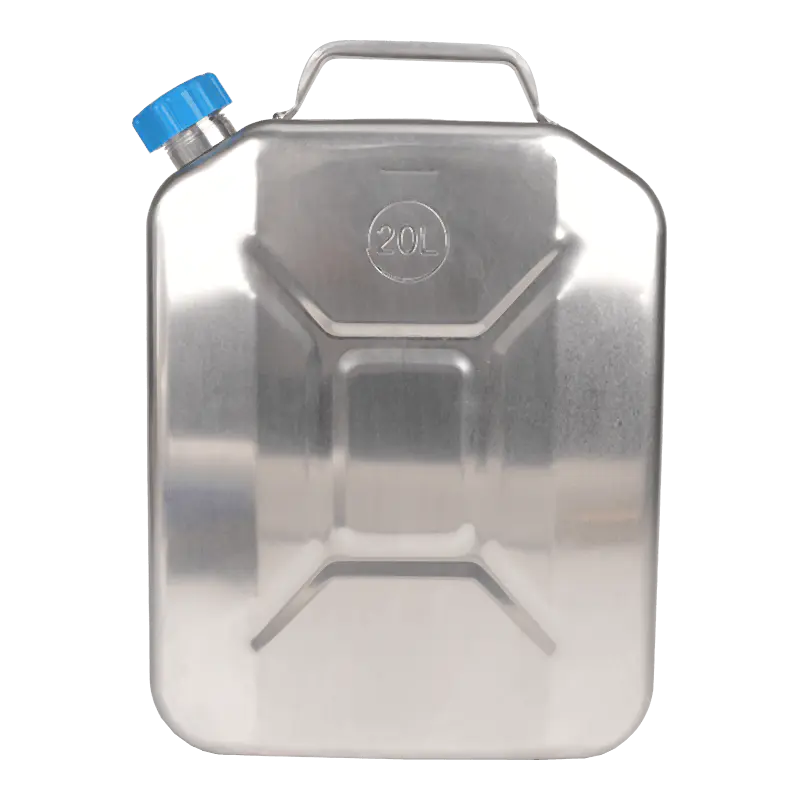
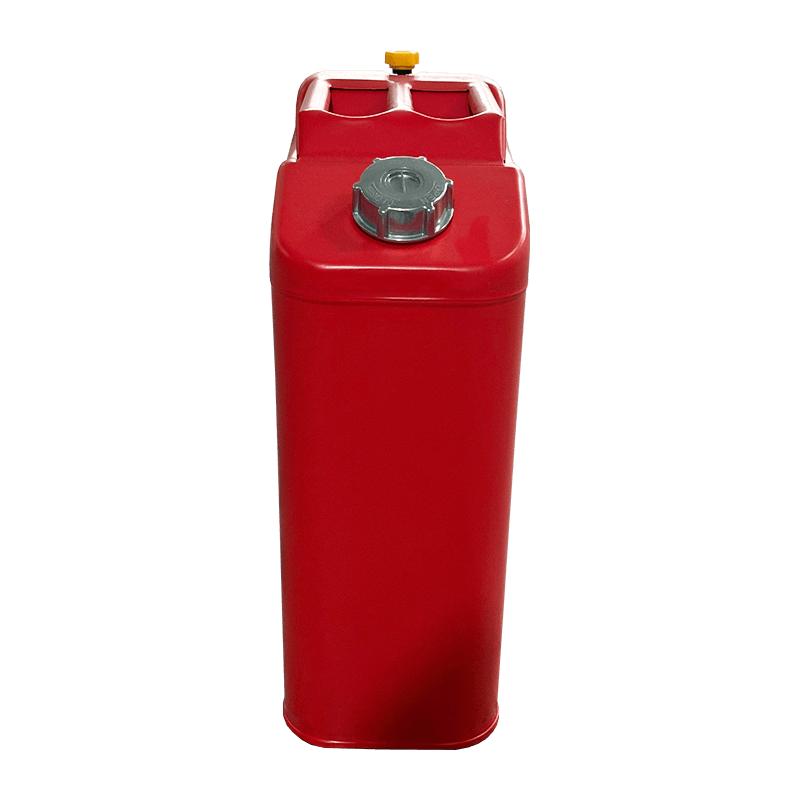 10L/20L Matte Red Oil Drum with Aluminum CapFor smaller workshop top-up containers, this 10L/20L drum offers 0.6 mm or 0.8 mm walls and an aluminum cap; check closure and emptying method.View Product →
Smaller containers follow the same rules at a different scale. A 10-litre or 20-litre container used for workshop top-up filling needs a closure that seals against vibration, a spout that pours without dripping, and a wall thickness that survives repeated handling. A container with a screw cap and an internal seal is a different product from a lever-lid can, and the choice should be driven by how the container will be emptied, not only by its volume.
Barrels Per Day: Flow Rates, Pump Sizing and Run Time
Oil field and refinery flow rates are quoted in barrels per day, which converts cleanly once the 42-gallon definition is fixed. One barrel per day is 158.987 litres per day, or about 6.6 litres per day. One million barrels per day is 158,987 cubic metres per day, or about 58 million cubic metres per year. Those numbers are useful sanity checks when a tender, a pipeline capacity figure or a terminal throughput claim seems implausibly large or small.
At the equipment level, the same arithmetic governs how long a pump takes to empty a container. A 200-litre drum emptied at 20 litres per minute takes about 10 minutes. A 42-gallon barrel, if you were pumping from a vessel of that exact capacity, would take about 8 minutes at the same rate. Those times matter for workshop labour planning and for filling line throughput, but published pump flow rates should be treated with caution. They are usually measured on water or diesel at a stated speed and a stated discharge head. A hand rotary pump lifting viscous gear oil from a drum on a cold morning will move far less per minute, and a pump with a long suction line and a high lift may lose prime altogether.
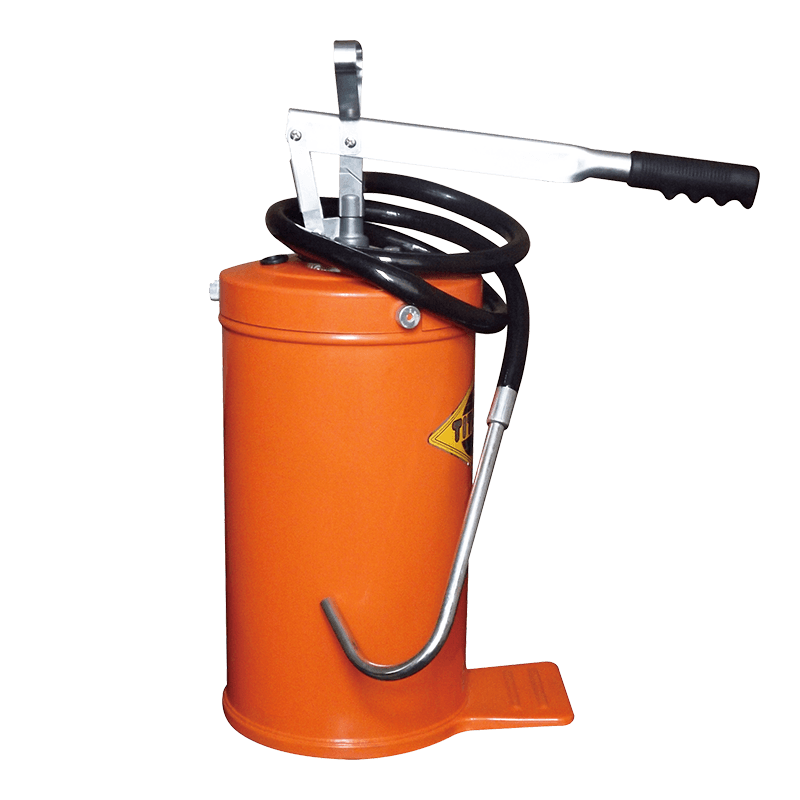
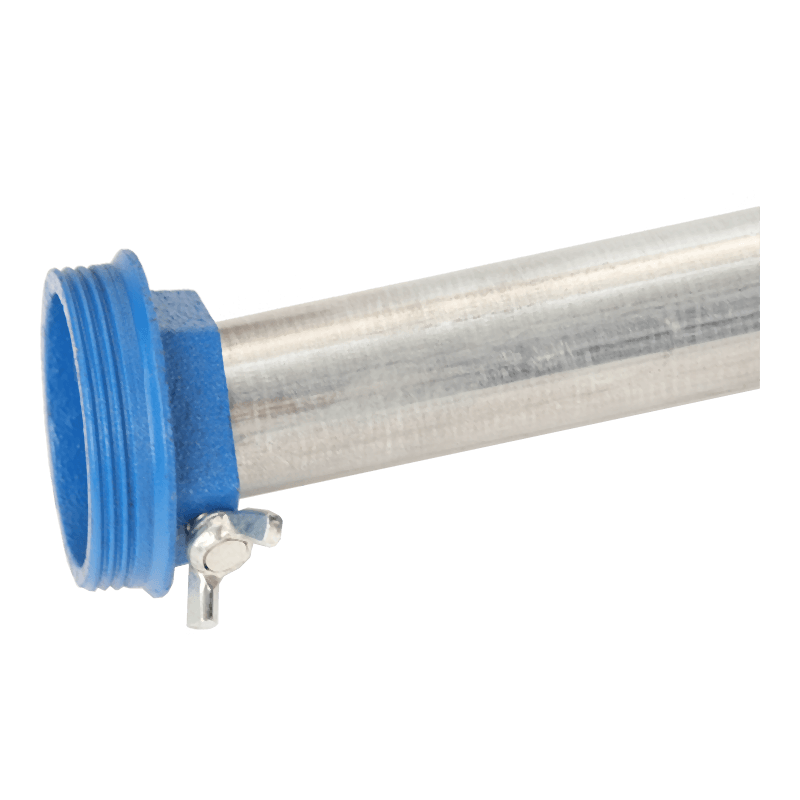 Cast Iron Rotary Barrel Pump 25/32 TypeHand-cranked cast iron barrel pump with fixing buckle and sealing; check viscosity, suction lift, and discharge head for the liquid.View Product →
Three variables decide whether a drum pump will work in practice. Viscosity sets the resistance through the suction pipe and the discharge hose, and it rises steeply as temperature falls. Suction lift sets how hard the pump has to pull the liquid up to the inlet, and most hand pumps have a practical limit well below their theoretical maximum. Discharge head sets the pressure the pump must generate to push the liquid to the height of the receiving vessel. Check all three against the product you actually intend to move, and add a margin for cold starting.
For larger volumes, the barrel-per-day figure also affects tank sizing. A terminal receiving 10,000 barrels per day needs 1,590 cubic metres of daily throughput, which is a small tank farm by refinery standards but a substantial installation for a distribution depot. Tank calibration tables, high-level alarms and secondary containment all follow from that volume, and a 1 percent error in the nominal tank capacity is 15.9 cubic metres per day of unaccounted stock.
Measuring Barrel Volumes On Site: Temperature, Water and Sediment
Because the barrel is defined at 60 degrees Fahrenheit, any volume measured at another temperature has to be corrected before it is compared with a contract, a tank table or an invoice. The correction procedure is set out in the API Manual of Petroleum Measurement Standards, Chapter 11.1, and the older ASTM D1250 tables remain in use in many locations. The principle is straightforward: multiply the observed volume by a volume correction factor to bring it to the reference temperature. The effect is not negligible. A medium crude expands by roughly 0.07 to 0.08 percent per degree Celsius, so a cargo measured at 30 degrees Celsius rather than 15 degrees Celsius will show about 1.1 percent more volume before correction. On two million barrels, that is around 22,000 barrels of apparent difference, and at 70 US dollars per barrel it is a commercial issue worth resolving properly.
The reference temperature itself differs between contracts. US customary contracts use 60 degrees Fahrenheit, which is 15.56 degrees Celsius, while metric contracts commonly use 15 degrees Celsius. The gap is 0.56 degrees Celsius, which corresponds to about 0.045 percent in volume for a medium crude. On a two-million-barrel cargo that is around 900 barrels, or roughly 63,000 US dollars at 70 dollars per barrel. Neither reference is wrong, but the contract has to say which one applies.
Volume alone is also not enough to establish how much saleable crude is in a tank or a cargo. Water and sediment settle or remain suspended, and the net volume of dry crude is the gross volume minus the bottom water and the basic sediment and water content. A tank dipped to a total depth of 10 metres may have 20 centimetres of water beneath the oil, which is 2 percent of the nominal volume. Custody transfer procedures therefore combine a level measurement, a temperature measurement, a density or API gravity measurement, and a laboratory determination of sediment and water.
For smaller containers, the practical checks are simpler but still worth doing. Use a dipstick or a calibrated sight glass rather than estimating from the fill line, weigh a sample if a mass-based check is available, and record the temperature at the time of filling. The principles behind industrial oil barrel handling, including the difference between nominal and actual capacity and the importance of closure integrity, are set out in more detail in this guide to industrial oil barrels. Getting the measurement discipline right at the small-container level prevents the same errors from being scaled up into a terminal operation.
A Procurement Checklist for Barrel-Scale Storage and Transfer
Once the volume question is settled, the remaining decisions are about materials, closures, compatibility and the way the product will be moved. The checklist below reflects the issues that most often cause returns, leaks or rejected shipments in oil-handling equipment.
- Confirm the intended volume in litres, US gallons and, where relevant, barrels, and state the reference temperature in the specification.
- Match the container material and coating to the product. Aluminium is light and corrosion-resistant for many oils but is not suitable for strongly alkaline fluids. Powder-coated steel offers good exterior durability but the coating must be compatible with the contents if it extends inside. Stainless steel is the safer choice for water-based or aggressive products.
- Specify the closure type and thread. Standard drums use a 2-inch and a 3/4-inch bung, and pump adapters, pourers and vent caps must match both.
- Check seal material against the fluid. Nitrile seals suit mineral oils and greases; fluoroelastomer seals are needed for some synthetic oils and aggressive solvents.
- Confirm ullage and fill level, especially where the container will be transported or stored in high temperatures.
- Check the pump's rated flow at the actual viscosity and lift, not only at the headline figure.
- Provide grounding and bonding for flammable liquids, and confirm that the container and pump arrangement allows it.
- Ask for dimensional drawings, tare weight and stacking load, because container loading plans depend on all three.
- For export, confirm the packaging standard, the marking and, where dangerous goods are involved, the UN certification required by the carrier.
- Agree spare parts and consumables, including seals, hoses, nozzles and locking clamps, so that a worn part does not take the whole set out of service.
The same discipline applies when the containers are part of a larger tool set. A workshop that stores oil in 20-litre containers, transfers it with a hand pump, and applies grease with a lever gun is buying three different products that have to work together. The full range of oil barrels and drums covers metal, aluminium and plastic containers in several capacities, and the accessories range includes pourers and adapters that match the standard bung sizes.
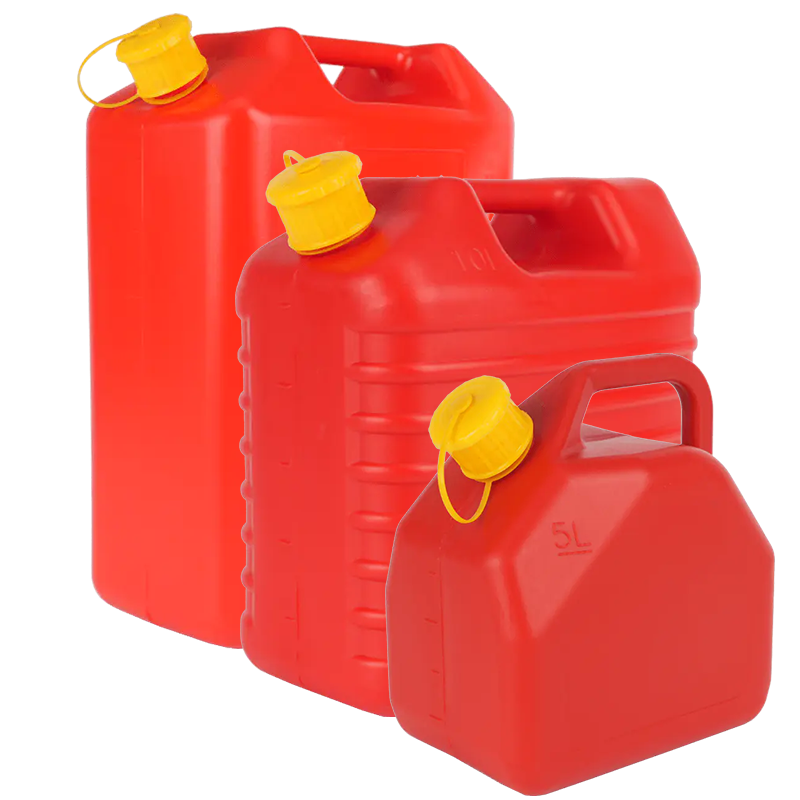
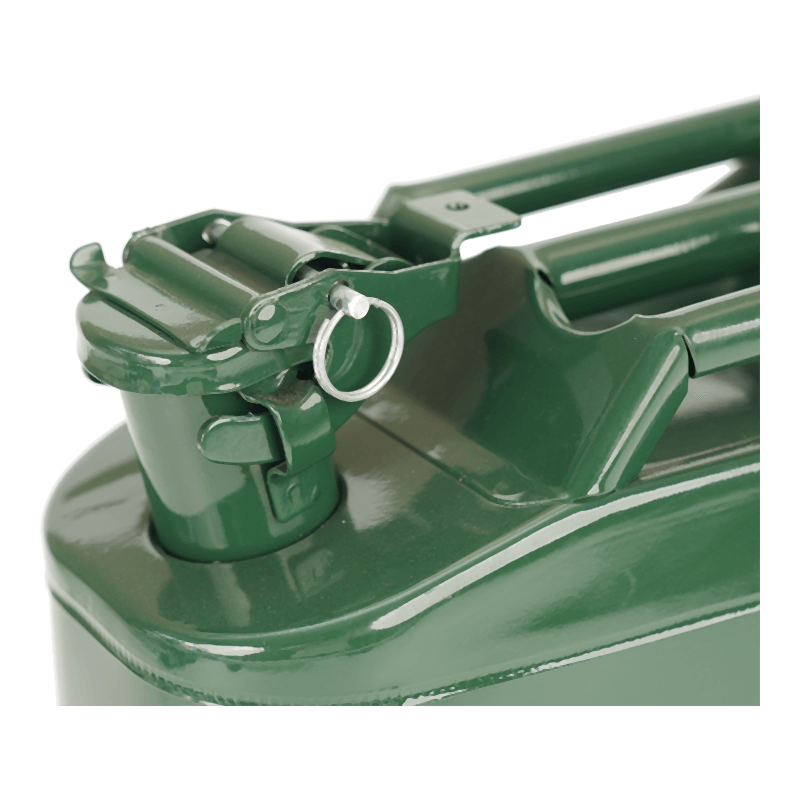 Wholesale 5L/10L/20L Portable Jerry CanPortable jerry can in 5L, 10L and 20L sizes with plastic powder surface treatment, useful for carrying oil to field top-up points.View Product →
Portability is often the deciding factor for field service. A 20-litre jerry can with a secure cap and a moulded handle is easier to carry to a machine than a 200-litre drum, and it reduces the risk of spills during top-up. The trade-off is more frequent refilling and more containers to track. Neither choice is universally better; the right answer depends on the distance between the store and the point of use, the number of machines served, and whether the product is dispensed by gravity, by hand pump or by a powered system.
Conversion Mistakes That Cost Money
The most expensive errors are rarely arithmetic errors. They are unit errors, made once and then repeated across a whole document set.
Using 159 Litres Instead of 158.987
Rounding to 159 litres overstates a barrel by 0.013 litres. On one million barrels that is 13,000 litres, or about 82 barrels. At 70 US dollars per barrel, the rounding is worth roughly 5,700 dollars. Use the exact figure for contracts, invoices and tank calibration, and keep the rounded figure for conversation.
Confusing US and Imperial Gallons
An imperial gallon is 4.54609 litres, not 3.78541. A UK beer barrel of 36 imperial gallons is 163.66 litres, which is 4.7 litres more than a crude oil barrel. US dry gallons, US liquid gallons and imperial gallons are three different units, and a specification that says only "gallon" is ambiguous.
Mixing Tonnes and Short Tons
A metric tonne is 1,000 kg. A short ton is 907.18 kg, and a long ton is 1,016.05 kg. In a 10,000-tonne cargo, confusing a metric tonne with a short ton changes the mass by about 930 tonnes, which is roughly 6,800 barrels. Freight and storage contracts almost always state which ton is meant, and the purchase order should too.
Treating Barrels of Oil Equivalent as a Volume
The barrel of oil equivalent is an energy measure, not a volume. It is defined as approximately 5.8 million British thermal units, roughly the energy content of one barrel of crude. Gas volumes are converted into barrels of oil equivalent using their energy content, typically with a factor of about 5.8 to 6.0 thousand cubic feet of gas per barrel of oil equivalent. A gas field's production quoted in barrels of oil equivalent cannot be converted into litres of crude without going through energy content, and the result would not be a physical quantity of oil in any case.
Ignoring Processing Gain and Sediment
Refinery output volume can exceed input volume by 1 to 3 percent, and crude contains water and sediment that reduce the net dry volume. Comparisons that ignore either effect will show a discrepancy that is not a loss. Build both into the reconciliation method before investigating a stock difference.
The Numbers to Keep on the Purchasing Desk
The volume of a barrel of crude oil is fixed at 42 US gallons, 158.987 litres, 9,702 cubic inches or 0.158987 cubic metres, and that definition does not change with the crude, the market or the contract. What changes is the mass that volume represents, because API gravity varies from about 10 for extra heavy crude to more than 45 for condensate, and the mass moves from roughly 127 kg to 159 kg per barrel across that range. Keep the conversion of about 7.33 barrels per metric tonne for average crude, but replace it with the calculated figure whenever the API gravity is known.
For equipment buyers, the practical rule is to specify three things together: the volume at a stated reference temperature, the container or connection geometry, and the fluid properties the equipment will actually see. A drum that holds 208 litres and a drum that holds 200 litres look similar on a loading dock and behave very differently in a filling line. A pump rated on water and a pump running on cold gear oil share a model number and not much else. Getting those details onto the enquiry prevents the returns, spillages and capacity disputes that follow a vague specification.
Thirty years of supplying oil-handling tools to European retail chains and industrial buyers tends to teach the same lesson: the technical facts are simple, and the errors come from the gaps between them. The barrel is 42 gallons, the drum is 55 gallons or 200 litres, and the tonne depends on the crude. Write all three on the specification sheet, and the rest of the transaction follows.