English
 中文简体
中文简体

During a procurement meeting, you will often hear the term "BBL" used in oil trading. On paper, a headline may say that a shipment contains 300,000 BBL of crude. That number tells you a lot if you know how to read it. If you do not, it can still look like a simple count of physical barrels. The fact is BBL is not a count of steel drums. It is a standard volume unit used by the petroleum industry to measure crude oil and its products. The value is fixed at 42 U.S. gallons, which is equal to approximately 158.987 liters. This is the definition you need before you can evaluate a quote, a contract, or a production figure.
Direct Answer: What BBL Means
BBL is an abbreviation for "barrel." In the oil and gas industry, it refers to a unit of liquid volume. The unit is based on the historical wooden barrel that carried crude oil, but the modern definition is not tied to any physical container. One BBL is defined as exactly 42 U.S. gallons. In liters, that is 158.987294928 liters, which is often rounded to 159 liters.
The use of the abbreviation "bbl" has historical roots. The common explanation is that the abbreviation has been used for barrel since long before the petroleum era. It first appeared in British and American trading records for dry goods and liquids. When the petroleum industry needed a standard unit, the abbreviation "bbl" was already in use. The lowercase "bbl" is the standard in technical writing, while uppercase "BBL" is commonly used in headlines and investment summaries. The meaning is the same. Both forms are accepted in industry documents.
One key point is that BBL is a volume unit, not a mass unit. This distinction is not always obvious. A barrel of light crude weighs less than a barrel of heavy crude, but both take up the same space. Because oil is sold by volume, the density and temperature of the crude become the next layer of complexity. Standard conditions for reporting BBL are measured at 60 degrees Fahrenheit, which is about 15.6 degrees Celsius. When oil is loaded at a different temperature, the volume is adjusted to that standard to avoid disputes.
For a new buyer, it is critical to remember this: BBL refers to volume, not weight. It is not a measure of how much the oil weighs, but how much space it occupies. The weight only becomes clear once you know the API gravity and the temperature at which the oil is measured. This is why two contracts with the same barrel count may not represent the same mass of material.
Why BBL Is Exactly 42 Gallons
The 42-gallon barrel did not appear because of a scientific decision. It came out of practical experience in the early American oil industry. In the 1850s and 1860s, oil producers in Pennsylvania began shipping crude oil in wooden barrels. At the time, barrels were common containers for many goods. Not every barrel had the same size. Some held 40 gallons, some held 42, and some held 50. As trade expanded, buyers and sellers needed a standard to avoid confusion.
There is a widely repeated story that the 42-gallon standard came from a simple accounting practice. Producers and merchants used a 40-gallon barrel for oil, but the barrel had to be filled to 42 gallons because the oil would seep into the wood and leak during transport. The extra 2 gallons were seen as an allowance for leakage. Whether this story is precisely true or not, the result was consistent with the eventual standard. A different version of the story mentions that early oil containers were 40-gallon barrels made by coopers, and the extra 2 gallons covered the "shrinkage" caused by the wooden staves absorbing oil.
The more reliable historical fact is that a 42-gallon barrel became a recognized standard in the Pennsylvania oilfields. In 1872, the Pennsylvania Geological Survey helped formalize the 42-gallon barrel as the standard oil barrel. From that point, the unit spread to refineries, pipelines, tankers, and exchanges. The standard was later adopted globally by the petroleum industry, even in countries that use the metric system for most other measurements.
There is also a popular myth about the "blue barrel." Some people claim that Standard Oil Company painted barrels blue to distinguish them from other barrels, and the abbreviation "BBL" came from "blue barrel." This story is not supported by evidence. The abbreviation "bbl" existed centuries before Standard Oil. But the color blue does appear in some early oil transportation history, and the story persists because it is easy to remember. The practical truth is simpler: the barrel was an established unit of trade, and the petroleum industry chose it as its volume standard.
The 42-Gallon Standard in Modern Trade
Today, the 42-gallon barrel remains the official unit in international petroleum contracts. It is used even when oil pipelines and storage tanks are linked to automated measurement systems that operate in liters or cubic meters. This seeming contradiction is a fact of the industry. A pipeline may measure flow in cubic meters, but the commercial settlement is eventually converted to barrels. The conversion is accepted because both sides know the same formula: 1 cubic meter equals about 6.2898 barrels.
In practice, this creates a link between metric infrastructure and imperial commercial terminology. Buyers in Europe, Asia, and the Americas all settle contracts in barrels, even though most of the world measures in liters. Understanding this dual system is what separates a good buyer from one who is easily confused.
Converting BBL to Metric and Tons
Because BBL is a volume unit, converting it to ordinary units is straightforward for volume but requires extra information for mass. The following table shows the exact conversions for one BBL.
| Unit | Value |
|---|---|
| U.S. Gallons | 42 |
| Imperial Gallons | 34.97 |
| Liters | 158.987294928 |
| Cubic Meters | 0.158987294928 |
| Cubic Feet | 5.6146 |
The volume numbers are exact. The mass, currently, is the part that varies. Crude oil density is normally expressed through the API gravity scale. The API gravity is a measure of how heavy or light a petroleum liquid is compared to water. The formula is:
API gravity = (141.5 / specific gravity) - 131.5
Where specific gravity is the density of the oil divided by the density of water at the same temperature. Water itself has an API gravity of 10. Higher API numbers mean lighter oil, and lower numbers mean heavier oil. For example, a typical light sweet crude may have an API gravity of 39. Heavy crude might have an API gravity of 20 or even lower.
To find the mass of one barrel, we use the formula:
Mass per barrel (kg) = 158.9873 x density (kg/m³)
Density is calculated from API using the formula:
Density (kg/m³) = 141.5 / (API + 131.5) x 1000
For example, for an oil with API 35, the density is 141.5 / (35 + 131.5) x 1000 = 141.5 / 166.5 x 1000 = 849.8 kg/m³. This means one barrel weighs 158.9873 x 849.8 / 1000 = about 135.1 kg. A barrel of API 20 crude has density 141.5 / (20 + 131.5) x 1000 = 933.7 kg/m³. One barrel would weigh 158.9873 x 933.7 / 1000 = about 148.4 kg.
| API Gravity | Density (kg/m³) | Weight per BBL (kg) |
|---|---|---|
| 10 | 1000.0 | 159.0 |
| 15 | 965.9 | 153.6 |
| 20 | 933.7 | 148.4 |
| 25 | 903.9 | 143.7 |
| 30 | 876.2 | 139.3 |
| 35 | 850.5 | 135.2 |
| 40 | 826.5 | 131.4 |
| 45 | 804.0 | 127.8 |
In the oil trade, the most common conversion factor for crude oil is about 7.33 barrels per metric ton. This average is based on the global mix of crude qualities. If a buyer is dealing with a specific cargo, the actual conversion factor depends on the API gravity. Heavy crude yields fewer barrels per ton, while light crude yields more.
Temperature also enters the equation. Crude oil expands when heated and contracts when cooled. To avoid disputes, contracts often specify the "net barrel" volume, which is the volume corrected to the standard temperature of 60 degrees Fahrenheit. If the loaded oil is warmer than 60 degrees Fahrenheit, it occupies more space, so the volume must be corrected downward. The correction factor is defined in standards such as the American Petroleum Institute (API) Manual of Petroleum Measurement Standards.
For a buyer, the implication is real: a cargo of 500,000 BBL at a temperature of 75 degrees Fahrenheit is not the same quantity of material as 500,000 BBL at 60 degrees Fahrenheit. The warmer cargo has a lower density and therefore less mass. The purchase contract must state whether the BBL volume is corrected to a standard temperature or measured at the actual temperature. This is one of the most common mistakes for new buyers.
How BBL Is Used in the Oil and Gas Industry
The abbreviation BBL is not confined to contract language. It is the backbone of daily reporting. Production, sales, reserves, and prices are all expressed in barrels or multiples of barrels.
Production: Barrels per Day
Production is often quoted in barrels per day, abbreviated BPD, bbl/d, or bpd. When you see "1 million bbl/d," it means one million barrels of crude oil are produced every day. This measure is used for individual wells, fields, companies, and entire countries. It is also used for refining capacity, where "2 million bbl/d" means a refinery can process two million barrels of crude oil per day.
Reserves: Barrels in the Ground
Oil companies report their proven reserves in barrels. A common headline might say a company has 5.6 billion barrels of proven reserves. This is often stated as "5.6 billion BBL." The reserve number helps investors understand the long-term value of a company. It is important to note that reserves are estimates based on geology and economics, not exact quantities.
Prices: Dollars per Barrel
Crude oil prices are quoted in U.S. dollars per barrel. A headline like "Crude closes at $82.50 per barrel" means the price of one BBL of a specific benchmark crude grade. Prices are set by supply and demand, and they move quickly. The dollar-per-barrel figure is the single most watched number in the energy industry. It directly affects fuel costs, transportation, and industrial input prices.
Barrel of Oil Equivalent (BOE)
BOE stands for "barrel of oil equivalent." It is a way to compare oil with natural gas by converting natural gas volumes into their energy equivalent in oil. The most common conversion is based on the energy content: one BOE equals roughly 6,000 cubic feet of natural gas, although the exact value can vary. BOE is used to aggregate different energy resources into a single metric. It is not the same as BBL. BOE is an energy unit, while BBL is a volume unit. Confusing these two can lead to major errors when comparing production or reserves across different fuel types.
Multiples: Mbbl and MMbbl
In industry reports, you will see small and large multiples. Mbbl means one thousand barrels, while MMbbl means one million barrels. The "M" is the Roman numeral for one thousand, and "MM" is two Rs, meaning one thousand times one thousand, or one million. So 500 Mbbl is the same as 500,000 BBL. A reservoir of "10 MMbbl" contains ten million barrels. Because these multiples are not always obvious to readers, many publications now spell out "thousand barrels" and "million barrels." But the abbreviations are still common in technical documents.
Refinery Inputs and Products
Refineries use barrels as the standard input measure. When a refinery says it processes 250,000 bbl/d, it is describing how much crude oil flows through its units each day. Refinery output is also measured in barrels, but the product mix changes. A barrel of crude does not produce exactly one barrel of gasoline. Some of the barrel becomes gasoline, some becomes diesel, some becomes jet fuel, and a portion is used as refinery fuel or becomes the feedstock for chemical production. The output is measured in barrels, but the composition varies by crude type and refinery configuration.
Reading BBL Data as a Buyer
When a supplier sends a quote or a shipping document with a BBL figure, you need to ask a few questions before you can make a purchasing decision. The first question is what quality of crude you are dealing with. The second is what temperature condition is used. The third is how the volume was converted from the actual measured quantity. These factors determine the real cost and mass of what is being bought.
Imagine that a supplier offers 100,000 BBL of a heavy crude with an API gravity of 21. In metric tons, this would be roughly 14,800 tons, because the density is high. If you assumed a standard conversion factor of 7.33 barrels per ton, you would expect about 13,640 tons. The difference is substantial. The actual tonnage matters for shipping, storage, and blending.
Similarly, if the crude is being loaded from a tank at a temperature of 85 degrees Fahrenheit, its measured volume is larger than the corrected volume at 60 degrees Fahrenheit. Without temperature correction, your report may show more barrels than the mass actually corresponds to. This affects your inventory records and your cost per ton.
For buyers who are not familiar with oil trading, the easiest approach is to specify in the contract that the quantity is "net barrels at 60 degrees Fahrenheit" and to require a certificate showing the API gravity of the cargo. That one clause clarifies both temperature and quality. The certificate of quality, usually issued by an independent inspection company, also gives the API gravity and the exact density.
Another practical factor is the physical handling of oil. If you buy 10,000 barrels of lubricant base oil, you are not going to receive 10,000 steel drums. The "barrel" is a unit of measure, not a container. Your actual delivery will arrive in a tanker, railcar, or a large ISO container. These forms of transport are measured in metric tons or liters, but the contract language may still use barrels. A purchasing manager who understands this dual reality can avoid confusion in documentation.
In a factory or workshop setting, the "barrel" becomes physical once again. This is where your equipment choices come into play. For example, 20-liter pails and 200-liter drums are common containers for lubricants. The oil in a 200-liter drum is a fraction of a BBL. This means daily handling is done with pumps, pourers, and grease guns, not with pipeline metering systems.
What BBL Means for Practical Oil Handling and Equipment
For a tool manufacturer serving industrial customers, the concept of a barrel has two layers. In the commercial world, one BBL is 42 gallons. In the physical world, oil has to be moved from a drum or container to a machine. That is where the equipment becomes essential. The connection between the BBL unit and the daily reality of oil and grease handling is what makes this distinction important.
Let us look at a real customer scenario. A maintenance manager in a car repair shop uses a 20-liter oil can to store diesel oil. A BBL is about 159 liters, so the can holds roughly 12.5% of a BBL. When the manager transfers oil from a 200-liter drum into a smaller container, the equipment must be rugged and easy to use. It also needs to minimize splashing, waste, and the risk of dirt entering the oil.
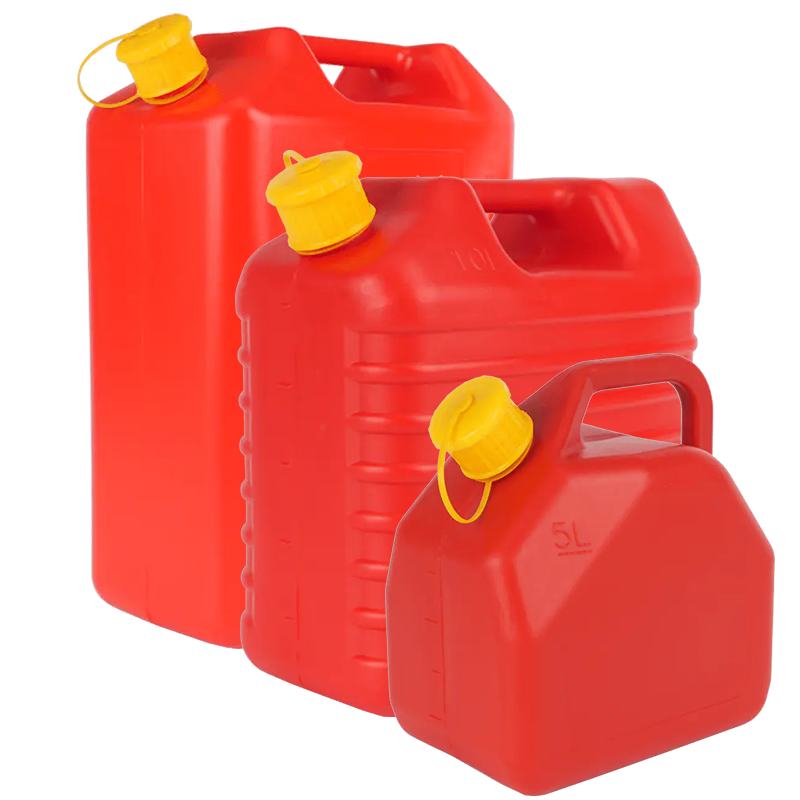
This is where the product range of a manufacturer like Yangzhou Qionghua Tools Co., Ltd. becomes relevant. Their product line includes aluminum oil barrels, portable jerry cans, manual oil pumps, rotary pumps, hand-operated grease guns, and a wide range of accessories. These are the physical objects that make the "barrel" concept practical at a workshop level. They are not used for measuring crude oil, but they solve the same problem that the early oil producers faced: how to store, move, and apply oil without losing it.
The critical consideration for buyers is not only the definition of a barrel but also the efficiency and durability of the equipment used to handle it. A leaking pump or a poorly sealing can waste product and creates safety hazards. This is why industrial buyers pay attention to material thickness, seals, and construction quality. For a workshop that processes several barrels of lubricant per week, the difference between a cheap plastic pourer and a durable aluminum rotary pump can be the difference between a clean operation and a messy floor.
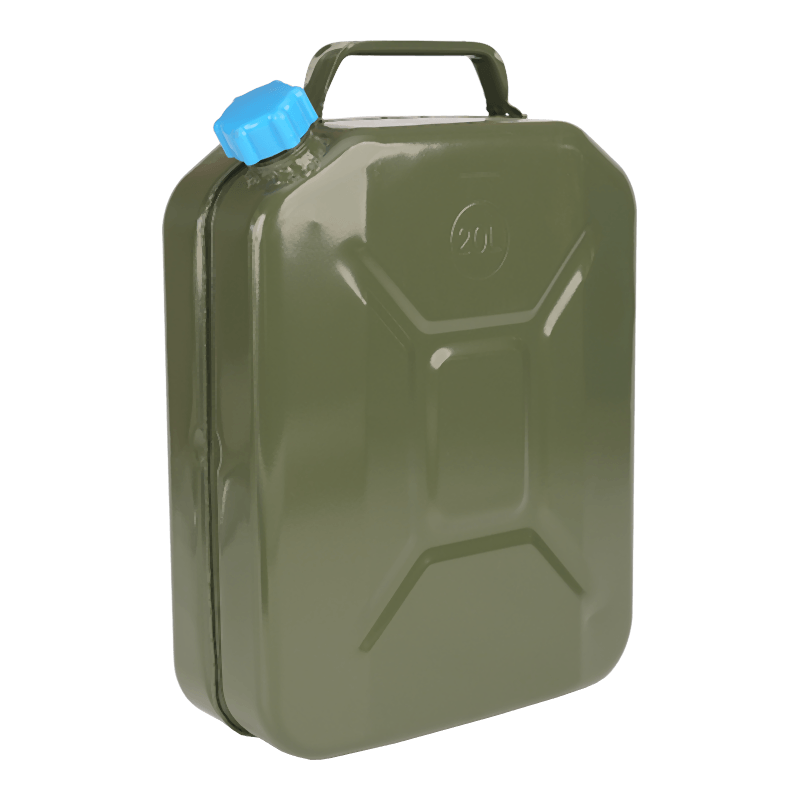
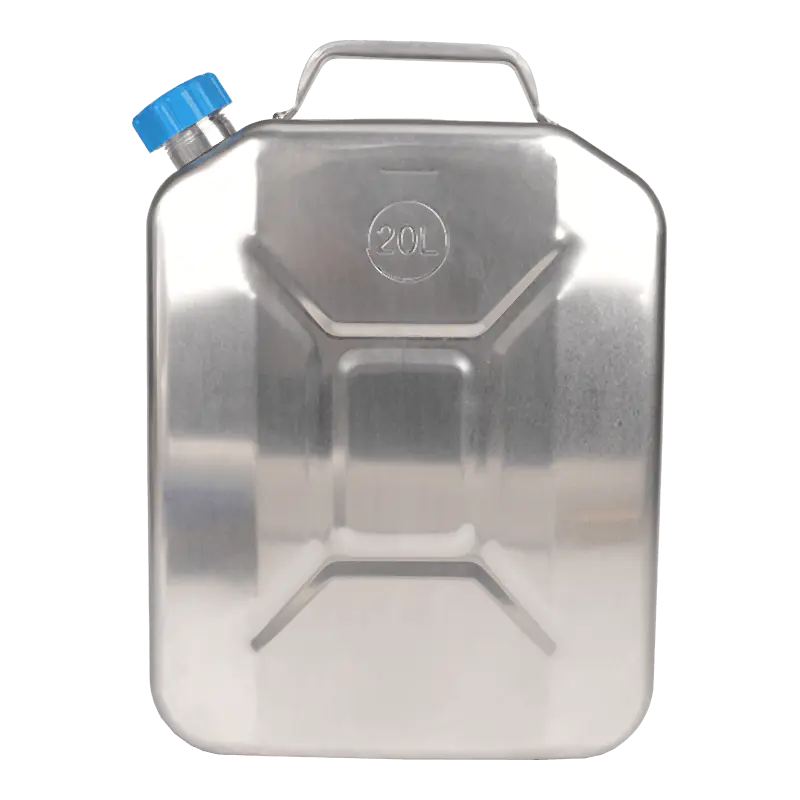
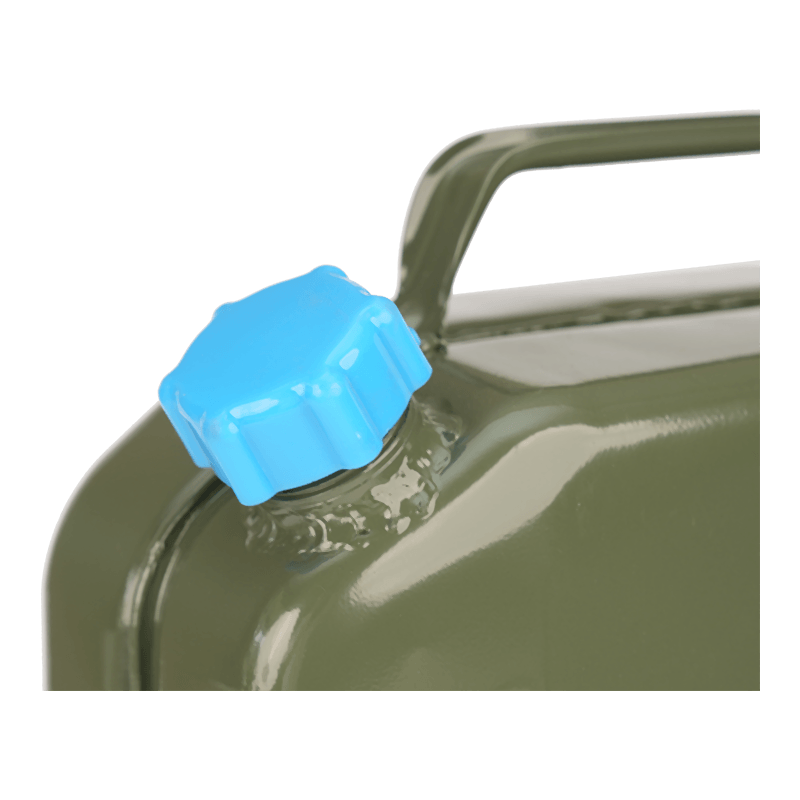 10L/20L Aluminum Oil Barrel with Surface Powder CoatingThe natural aluminum oil drum is made of thickened pure aluminum material, combined with high-quality PVC barrel cover design, which is light and durable, rust-proof, ...View Product →
When handling a full barrel of oil, the next step is to move the oil to the point of use. Manual and rotary pumps are designed for exactly this. A barrel-mounted pump sits on the top of the drum and dispenses oil with a simple handle motion. A rotary pump built from aluminum alloy is non-corrosive and works well with common industrial oils. This reduces the physical effort required to empty a drum, which is an important factor in a labor-intensive workshop.
The same reasoning applies to grease. A grease gun is not a barrel, but it is the final step in applying a lubricant. In a typical plant, maintenance workers use grease guns to lubricate bearings, pins, and moving parts. The grease may come from a 40-liter pneumatic grease injector or a smaller portable can. The choice of equipment affects the speed of maintenance and the quality of lubrication.
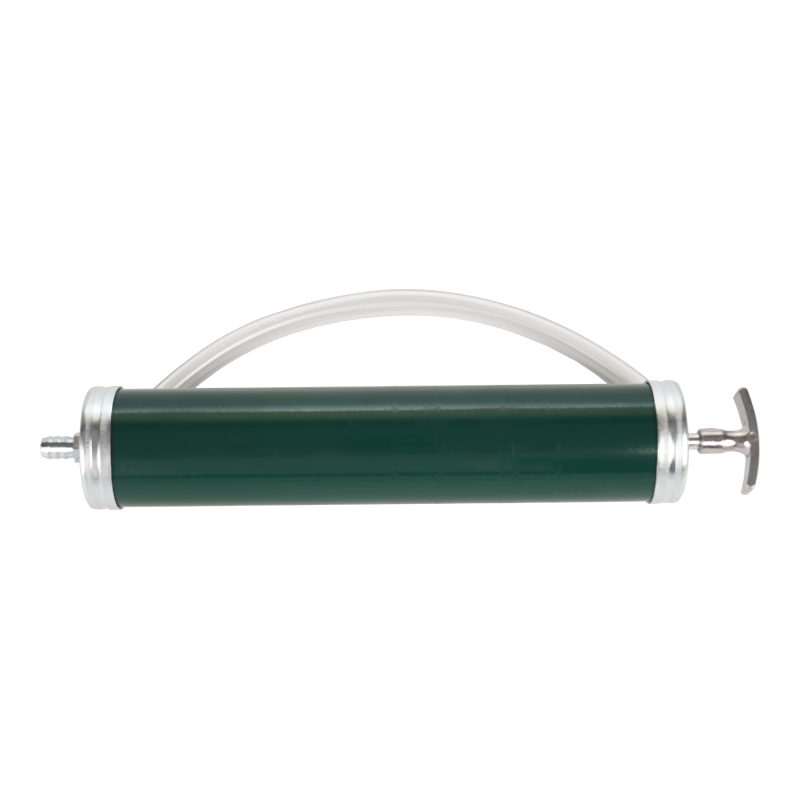
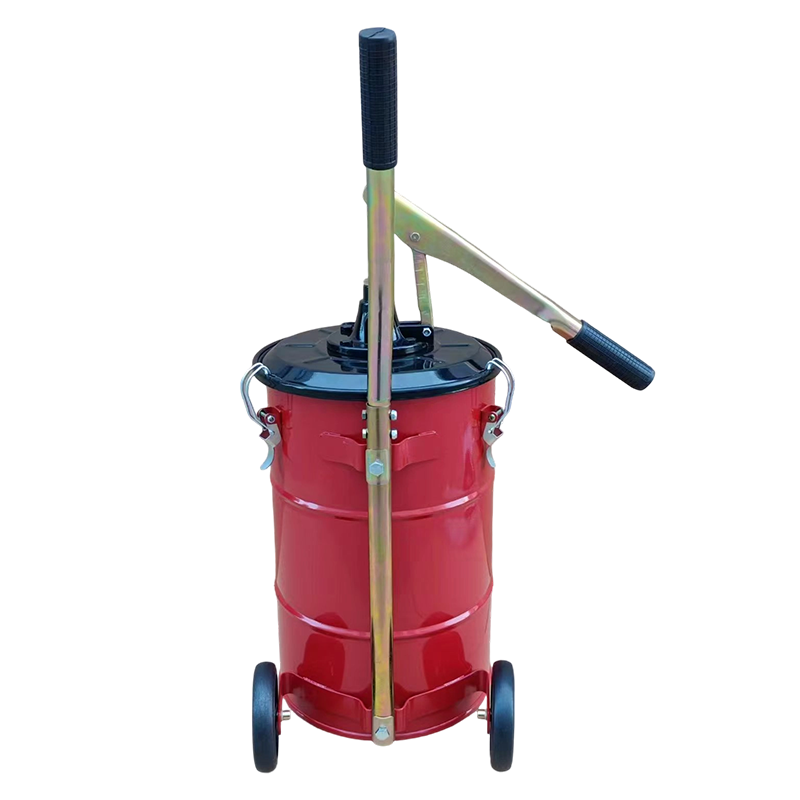 25kg Manual Pump With HoseSuitabel for using grease or oilView Product →
The industrial user should think about barrel volume in terms of total throughput. If a workshop consumes 20 barrels of engine oil per month, the handling equipment must match that workload. A manual pump is adequate for small barrels, but a larger drum may require a lever-operated pump or an electric injector. The goal is to minimize downtime and maintain a consistent flow of lubricants to the machines.
Selecting Equipment for Drums and Barrels
When you buy an oil drum or a barrel pump, you are not buying a "BBL." You are buying a container or a pump that holds or moves a fraction of a BBL. The physical measurements that matter are the capacity in liters, the seal quality, the material, and the compatibility with the fluid. For example, an aluminum oil barrel with a PVC cover provides good corrosion resistance for stored oil. A stainless steel oil drum offers superior durability but at a higher cost. The buyer has to balance the budget with the expected service life.
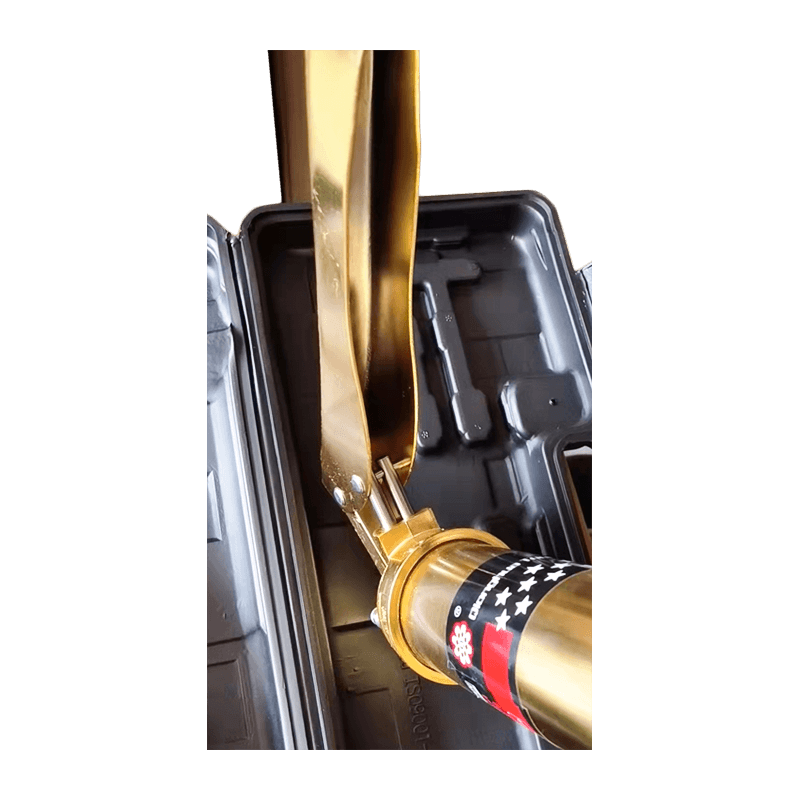 900CC Heavy-duty Grease GunBulk capacity: 500cm³View Product →
Grease guns also need to be matched to the application. A heavy-duty grease gun with a working pressure of 8500 psi or more is used for demanding equipment. A lighter and more compact grease gun is easier to use for tight areas. The type of grease fitting, the hose length, and the user's physical strength all influence the decision. A high-quality grease gun pays for itself through reliable operation and fewer maintenance interruptions.
Choosing the right tools is not just about convenience. It impacts the safety of the workers, the waste of expensive lubricants, and the overall efficiency of the operations. In the same way that a BBL is a standard in oil trading, the equipment used in the workshop has its own standards and specifications. Both the commercial unit and the physical tools are part of the same chain.
Understanding the full range of industrial oil barrels is the first step for any maintenance team working with oil handling. Once you know the sizes and materials available, you can match the container to the fluid. Then you need to select the right pump or grease gun. See our practical guide to hand-operated grease guns for choosing the right model.
Common Mistakes When Interpreting BBL
Several misunderstandings about BBL can lead to costly errors. The most common one is treating BBL as a fixed mass or as a number of physical barrels. Let us list the most frequent mistakes and how to avoid them.
- Confusing BBL with BOE. BOE stands for barrel of oil equivalent, which is an energy measure used to compare oil and natural gas. A barrel of oil equivalent is not the same as a barrel of oil. If you see BOE in a production report, the actual crude oil volume may be lower because the figure includes gas converted to energy.
- Using the wrong gallon type. The U.S. gallon is 3.785 liters, while the Imperial gallon is 4.546 liters. When a figure is quoted in barrels, it is always U.S. gallons. If someone uses an Imperial gallon by mistake, the barrel volume would be wrong. The difference is significant: 42 U.S. gallons is about 159 liters, while 42 Imperial gallons is 191 liters.
- Ignoring temperature correction. If the oil in a tank is at a different temperature from the standard 60 degrees Fahrenheit, the volume changes. A contract that does not specify temperature correction can lead to a different mass than expected.
- Assuming one barrel is always the same weight. As the density and API of crude vary, the weight of a barrel varies. A specific gravity of 0.85 will give about 135 kg per barrel, while a specific gravity of 0.95 will give about 151 kg per barrel.
- Treating BBL as a physical container. In pipelines and tankers, there are no barrels. The oil is measured by flow meters and storage tanks. The BBL is just a unit of volume.
- Applying a fixed barrel-per-ton factor to all oils. The common 7.33 barrels per ton is an average. For heavy crude, the value is closer to 6.7 to 7.0 barrels per ton. For very light condensate, it can exceed 8.0 barrels per ton.
- Overlooking the multiplier notation. Mbbl means thousand barrels, not million. MMbbl means million barrels. A capital M means 1000, and doubled MM means million. In many contexts, the capitalization matters.
Each of these mistakes can impact cost and logistics. A procurement specialist who is aware of them can ask the right questions before signing a contract. This is where the difference between a knowledgeable buyer and a new buyer shows up.
Checking a Barrel Figure in Practice
When you receive a shipment or inventory number, verify it with the certificate of quality. The certificate should state the API gravity, the temperature correction, and the total volume in barrels. If the certificate is not clear, request clarification. This protects both sides and avoids payment disputes. The goal is not to make the transaction complicated but to make it accurate.
For non-oil professionals, the most helpful approach is to convert the BBL figure into liters or metric tons using the standards from the contract. Keep the conversion table handy and always confirm which condition the barrel volume is measured under.
Conclusion and Buying Advice
The BBL is the language of the oil trade. It is a fixed unit of volume: 42 U.S. gallons, or about 159 liters. It does not change based on the type of oil. What changes is the mass contained in that barrel. To read a BBL figure correctly, you always need the API gravity and the temperature. These two factors determine the actual tons you are buying or selling.
For industrial buyers of oils and lubricants, the same logic applies. You need to know exactly how much oil is in a container and how to move it from the drum to the machine. The tools you choose should be reliable, well sealed, and matched to the viscosity of the fluid and the volume you need to move. That is where a manufacturer with a broad product portfolio can make a difference.
When evaluating quotes, always check the volume basis, the temperature, and the API gravity. When selecting handling equipment, test the pump or grease gun for durability and ease of operation. A barrel may be a number on a spreadsheet, but the task of moving that oil is a daily reality for countless maintenance teams.
Understanding BBL means accepting both worlds: the abstract measurement used in trade and the physical reality of handling and applying oil. With that understanding, you can make better purchasing decisions and reduce waste in your operation.