English
 中文简体
中文简体

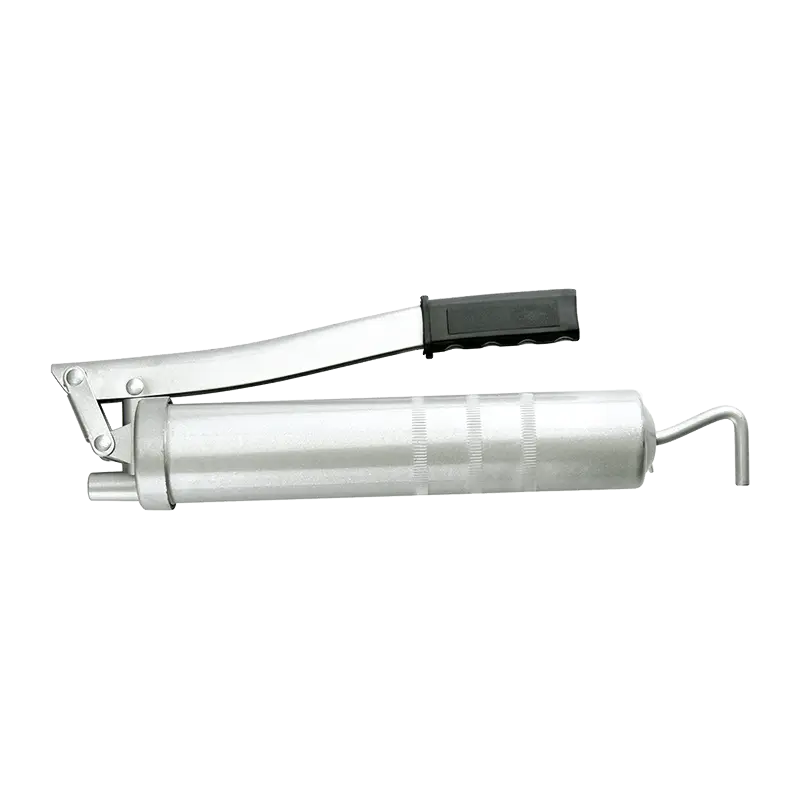
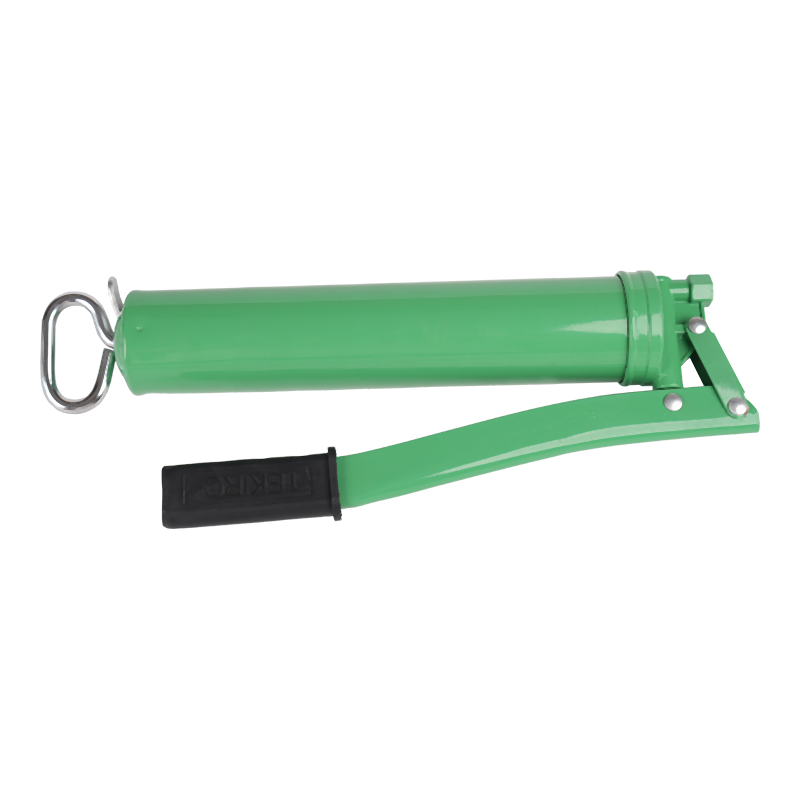
A grease gun is the fundamental tool for applying lubricating grease to the bearings, joints, pins, and lubrication nipples that keep machinery running reliably. From the workshop mechanic servicing a passenger car to the field engineer maintaining a mining excavator, the grease gun is a standard tool that has remained essential to equipment maintenance practice for over a century. What has changed significantly, however, is the breadth of the category: the market now spans basic lever action pistol grip models, classic high pressure grease guns designed for demanding mechanical work, and industrial grade grease guns built for the highest pressure and most arduous continuous use applications. Understanding the differences between these categories is what separates a well specified maintenance operation from one that is either over spending on tool capability it does not need or under specifying tools that cannot handle the actual maintenance demands of the equipment it services.
The direct conclusion for anyone comparing grease gun categories is this: a classic high pressure grease gun is the correct choice for the majority of automotive, agricultural, and general mechanical maintenance tasks where higher pressures are needed to push grease into tight or partially blocked bearings; an industrial grade grease gun is the correct choice when the application involves continuous heavy duty use across multiple machines per session, the highest pressure requirements, and the durability that survives years of daily professional use in a commercial workshop or fleet environment. This article covers both categories in full technical and practical depth alongside the baseline grease gun category from which they developed.
How a Grease Gun Works: The Mechanism Behind Every Type
Every manual grease gun, from the simplest lever action to the most sophisticated industrial grade model, operates on the same fundamental mechanism: a piston moves through the grease filled barrel, generating pressure that forces grease through a delivery tube and coupler into the lubrication nipple on the machine being serviced. The piston is driven either by a hand lever, a pistol grip trigger, or in power assisted versions by compressed air or an electric motor. The check valve at the outlet prevents grease from returning to the barrel between strokes, maintaining pressure at the coupler connection and ensuring that each pumping stroke delivers a net positive displacement of grease into the bearing.
Pressure Generation and Why It Matters
The pressure a grease gun can generate is one of its most operationally significant specifications because many lubrication failures occur not from lack of lubrication but from insufficient pressure to deliver grease to where it is needed inside the bearing. Bearings with tight tolerances, bearings in machines that have been running without adequate lubrication and have developed partial seizure, and grease fittings that are partially blocked by hardened old grease all require higher injection pressures to achieve effective lubrication. A basic lever action grease gun generates pressures of 5,000 to 8,000 psi (approximately 35 to 55 MPa). A classic high pressure grease gun is designed to develop pressures of 10,000 to 15,000 psi (approximately 70 to 100 MPa). An industrial grade grease gun can reach 15,000 psi and above, with premium models capable of sustained delivery at pressures exceeding 20,000 psi (approximately 140 MPa).
Grease Delivery Volume per Stroke
In addition to pressure, the volume of grease delivered per pump stroke determines how efficiently a service session proceeds. Standard grease guns deliver approximately 1 gram of grease per stroke from a standard pump mechanism. Some higher displacement models deliver 1.5 to 2 grams per stroke, reducing the number of strokes required to deliver a specified grease quantity to each lubrication point. For a maintenance schedule that calls for 3 grams of grease per point and involves 40 lubrication points on a single machine, a standard 1 gram per stroke gun requires 120 pumping strokes per complete machine service, while a 2 gram per stroke model requires only 60 strokes. The reduction in operator effort over a full fleet service day is significant.
Classic High Pressure Grease Gun: Design, Performance, and Applications
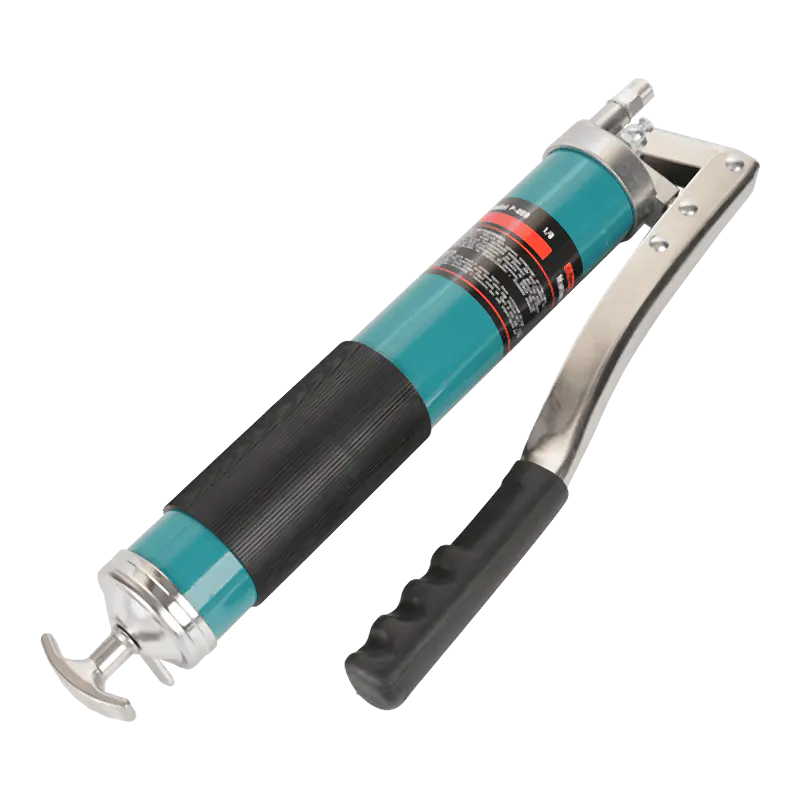
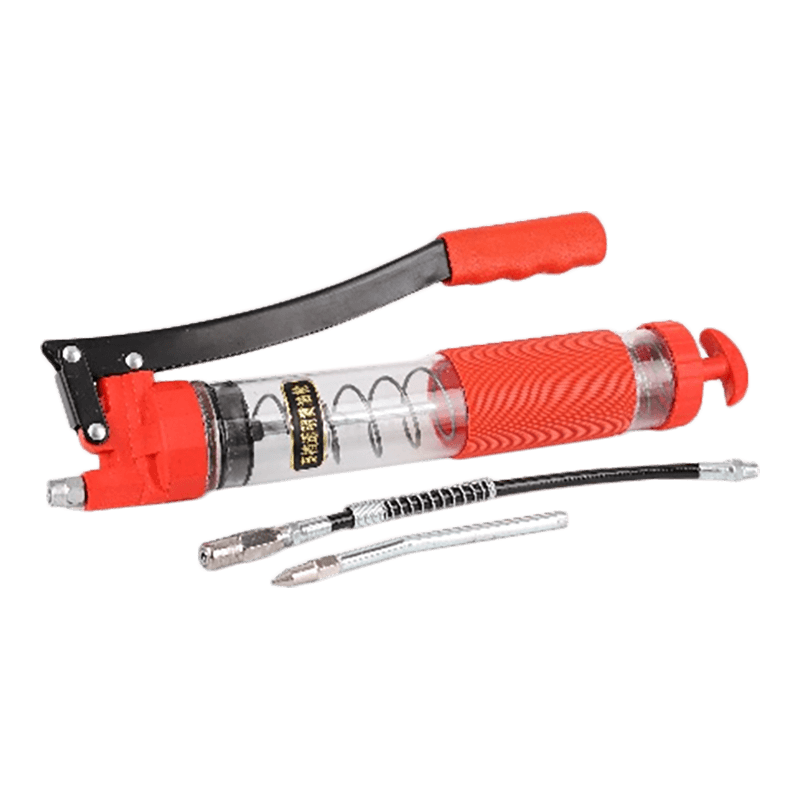
The classic high pressure grease gun represents the middle tier of the manual grease gun category, combining meaningfully higher pressure capability than basic models with a robust but still accessible design and price point. These tools are the choice of professional mechanics, agricultural equipment operators, and service technicians who need reliable high pressure delivery on a daily basis without the investment required for a fully industrial grade instrument.
Construction Features That Enable Higher Pressure
A classic high pressure grease gun achieves its elevated pressure capability through several construction differences from a basic model:
- Hardened steel barrel: The barrel must contain the full delivery pressure without deformation or fatigue failure. Classic high pressure models use heat treated or hardened steel barrels with wall thicknesses calculated for the intended pressure range, compared to the lighter gauge steel or aluminum used in basic models.
- Heavy duty piston and check valve assembly: The piston, seal, and check valve assembly in a high pressure gun must maintain their integrity at the higher working pressures without seal extrusion or check valve leakage. These components are produced from hardened steel and high durometer elastomers rated for the pressure and chemical environment of grease service.
- Leverage optimized handle: Classic high pressure grease guns use a lever handle geometry that provides greater mechanical advantage to the operator, multiplying the hand force applied to the lever into a higher piston force and therefore a higher delivery pressure than a pistol grip trigger mechanism of equivalent size.
- Braided flexible hose: The delivery hose on a classic high pressure model is a braided stainless steel or polymer reinforced hose rated for the full delivery pressure of the gun, typically 15,000 psi or above, with swaged end fittings rather than the push on connections used in lower pressure models.
Best Applications for the Classic High Pressure Grease Gun
The classic high pressure grease gun is the appropriate specification for the following maintenance contexts:
- Automotive and light commercial vehicle servicing: Chassis points, steering tie rod ends, ball joints, and prop shaft universal joints on cars and light vans typically accept grease at the pressures achievable with a classic high pressure model and are well within its capacity.
- Agricultural equipment: Tractors, implements, and harvesting equipment have numerous lubrication points that require regular greasing. The classic high pressure grease gun handles the range of nipple conditions typically encountered on agricultural equipment, including moderately blocked or stiff nipples that a basic tool cannot clear.
- Construction and earthmoving equipment during field service: On site maintenance of construction equipment where a mobile service technician carries tools in a service vehicle benefits from the classic high pressure gun's balance of capability and portability. It handles most service requirements on excavators, loaders, and compactors without requiring a larger industrial tool.
Industrial Grade Grease Gun: Maximum Capability for Professional Workshop Demands
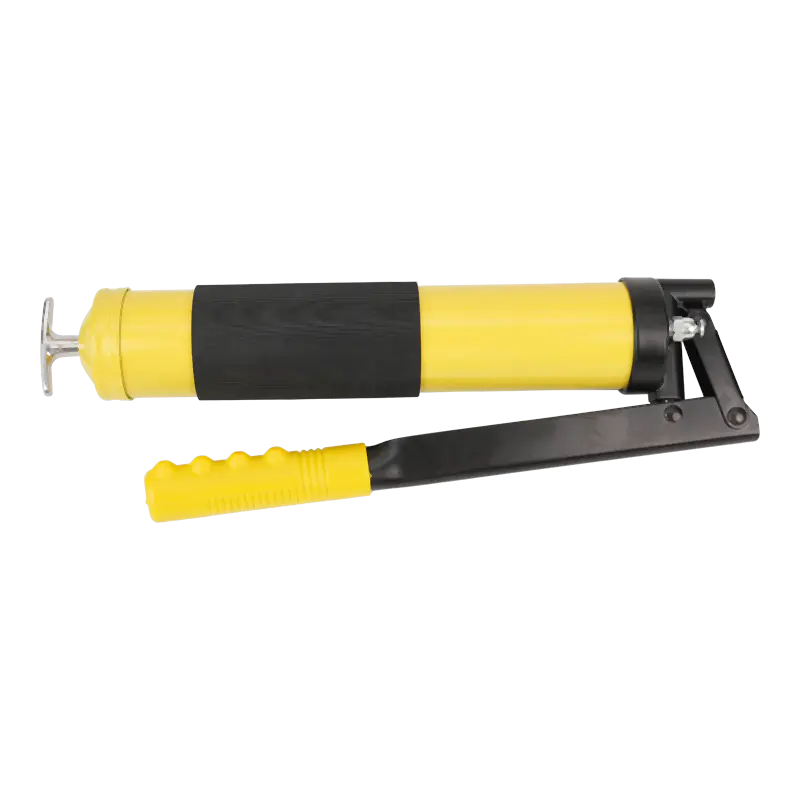
An industrial grade grease gun is engineered from the outset for the most demanding professional maintenance environments: fleet workshops servicing dozens of commercial vehicles per day, mine site maintenance operations, heavy plant dealerships, and any environment where the grease gun is used continuously for multiple hours per day and must deliver reliable high pressure performance across years of service without maintenance issues or premature component failure.
What Distinguishes Industrial Grade from Classic High Pressure
The primary differentiators of an industrial grade grease gun over a classic high pressure model are fatigue life, seal durability, material specification, and maximum pressure ceiling. An industrial grade tool is designed for tens of thousands of pumping cycles over its service life without seal wear, barrel fatigue, or fitting degradation. Its components are manufactured to tighter tolerances, from harder and more wear resistant materials, and are assembled with greater precision than their classic counterparts. The practical result is a tool that maintains its pressure capability and delivery consistency throughout a working day and across years of continuous professional use, whereas a classic model used at the same intensity would show seal wear and pressure degradation within a shorter service period.
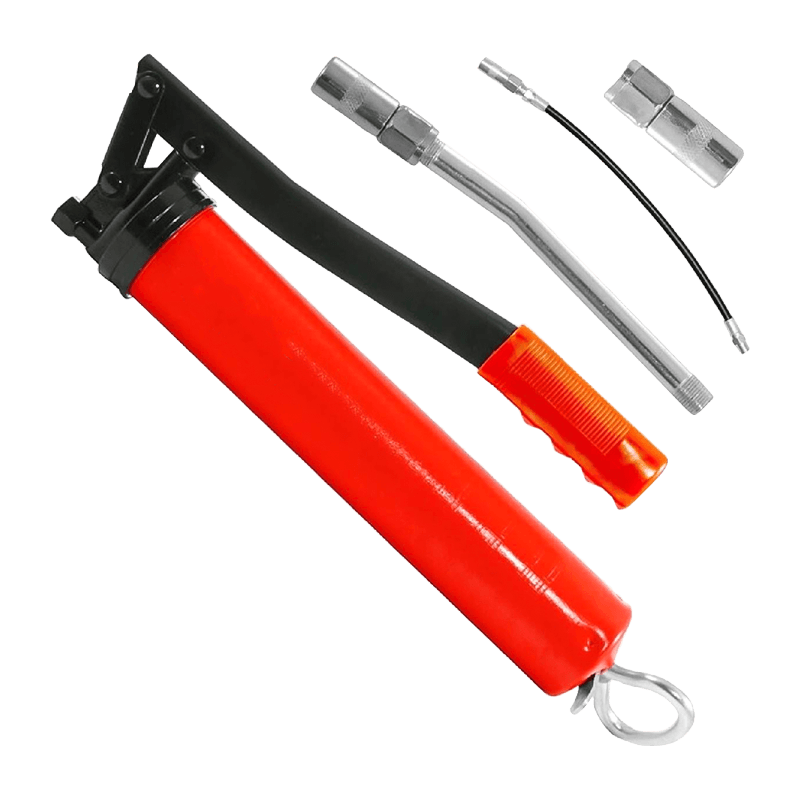
Industrial grade grease guns also typically offer a broader range of accessories and interchangeable components: different nozzle types for specific nipple configurations, extension rods for deep access applications, and filling adapters for bulk grease containers, which are more economical than individual cartridges when a large fleet is being serviced daily.
Comparing Grease Gun Categories: Key Specifications at a Glance
| Specification | Basic Grease Gun | Classic High Pressure Grease Gun | Industrial Grade Grease Gun |
|---|---|---|---|
| Maximum pressure | 5,000 to 8,000 psi (35 to 55 MPa) | 10,000 to 15,000 psi (70 to 100 MPa) | 15,000 to 20,000 psi and above |
| Typical delivery per stroke | Approx. 1 gram | 1 to 1.5 grams | 1.5 to 2 grams |
| Barrel material | Mild steel or aluminum | Hardened or heat treated steel | High grade alloy steel, precision machined |
| Hose type | Flexible polymer, push on fittings | Braided reinforced, swaged end fittings | Heavy duty braided, rated for full pressure |
| Intended duty cycle | Occasional DIY and light use | Regular professional use, moderate volume | Heavy daily use, fleet and plant workshops |
| Best application | Domestic vehicles, accessible nipples | Agriculture, construction field service | Fleet workshops, mining, heavy plant |
Correct Use and Maintenance of Grease Guns
A grease gun, regardless of category, delivers its full value only when used correctly. Incorrect use can result in under lubrication, bearing damage from contamination, or injury from high pressure grease injection through skin. The following practices apply across all three categories:
- Always clean the grease nipple before attaching the coupler. Dirt on the nipple face is forced into the bearing housing when the coupler is attached and grease is injected. Use a clean cloth to wipe the nipple immediately before each application.
- Ensure the coupler is fully seated before pumping. A coupler that is not fully engaged with the nipple will release under pump pressure, spraying grease and delivering no lubrication to the bearing. Apply firm pressure to seat the coupler ball against the nipple before beginning to pump.
- Do not exceed the specified grease quantity per point. More grease is not always better. Over greasing causes seal failure from internal pressure, churning of the grease in the housing that generates heat, and contamination of adjacent components with expelled grease. Follow the equipment manufacturer's specification for grease quantity per point.
- Treat a blocked nipple correctly. If a nipple does not accept grease at normal pump pressure, do not increase force dramatically: this risks bursting the lubrication seal inside the bearing. Instead, try replacing the nipple (they are inexpensive and can become blocked with hardened grease) before applying maximum pressure.
- Purge air from a freshly loaded gun before use. When a new cartridge is loaded, air is often trapped in the barrel ahead of the grease. Pump the gun until air bubbles stop emerging from the coupler before attaching it to a lubrication nipple to ensure grease delivery from the first stroke.
The grease gun is a tool whose value is entirely dependent on correct specification and correct use. A classic high pressure grease gun used in the right applications and maintained correctly will serve a professional mechanic reliably for many years. An industrial grade grease gun represents a higher capital investment that is justified entirely by the frequency and intensity of use in a professional fleet or plant maintenance context. Matching the tool to the genuine demands of the maintenance operation, rather than either over specifying for occasional light use or under specifying for daily heavy plant work, is the practical basis for any informed grease gun purchasing decision.