English
 中文简体
中文简体

What Is a Hand-Operated Grease Gun and How Does It Work?
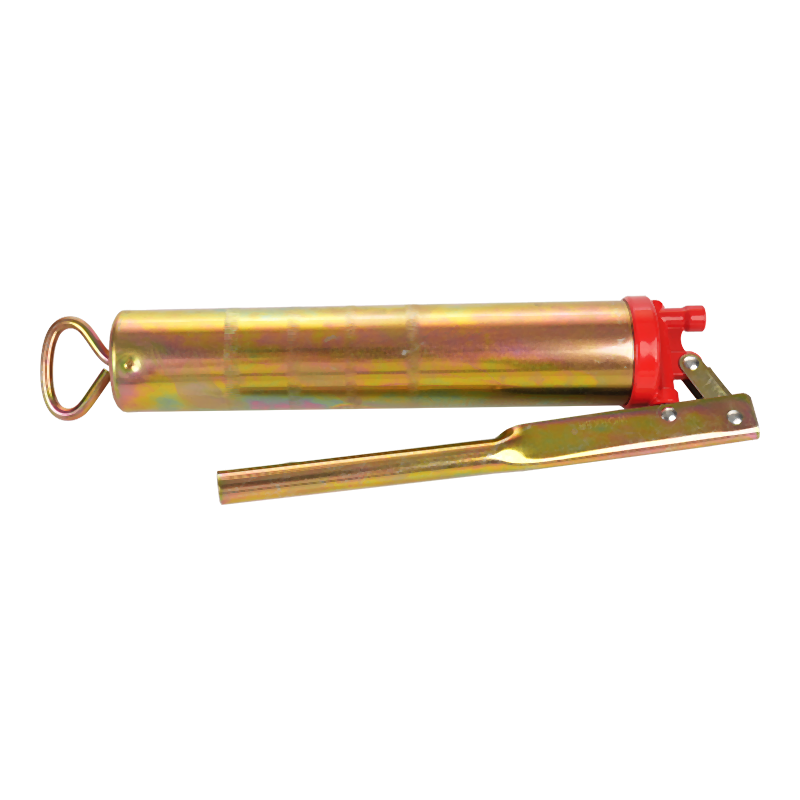
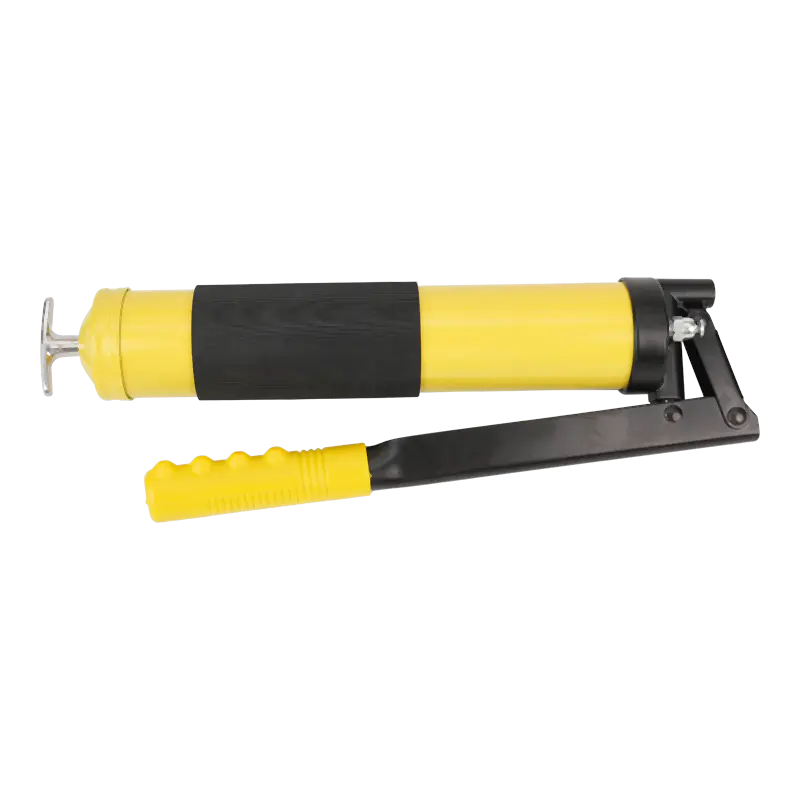
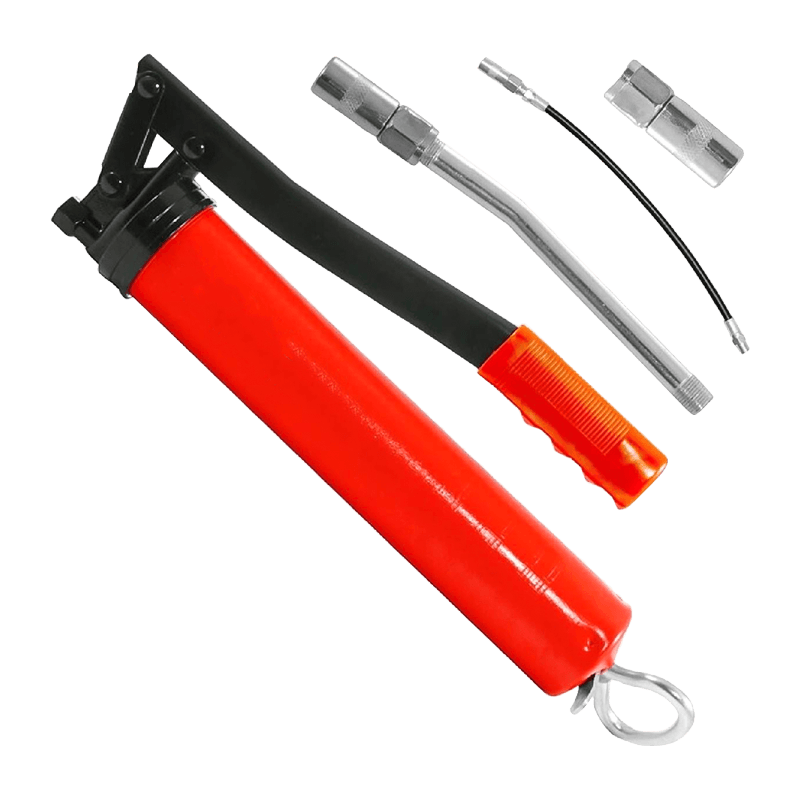
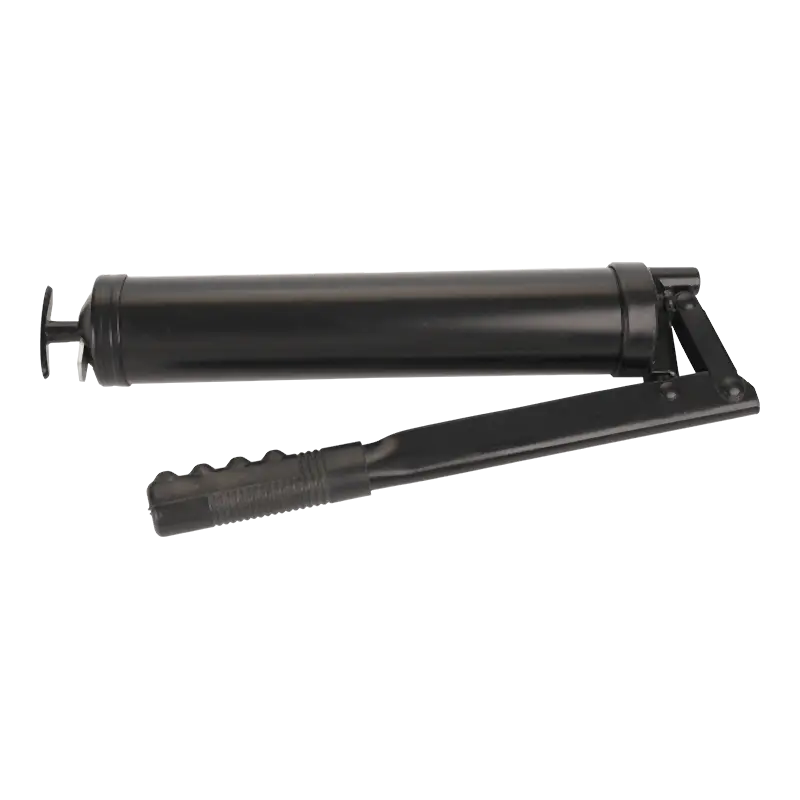
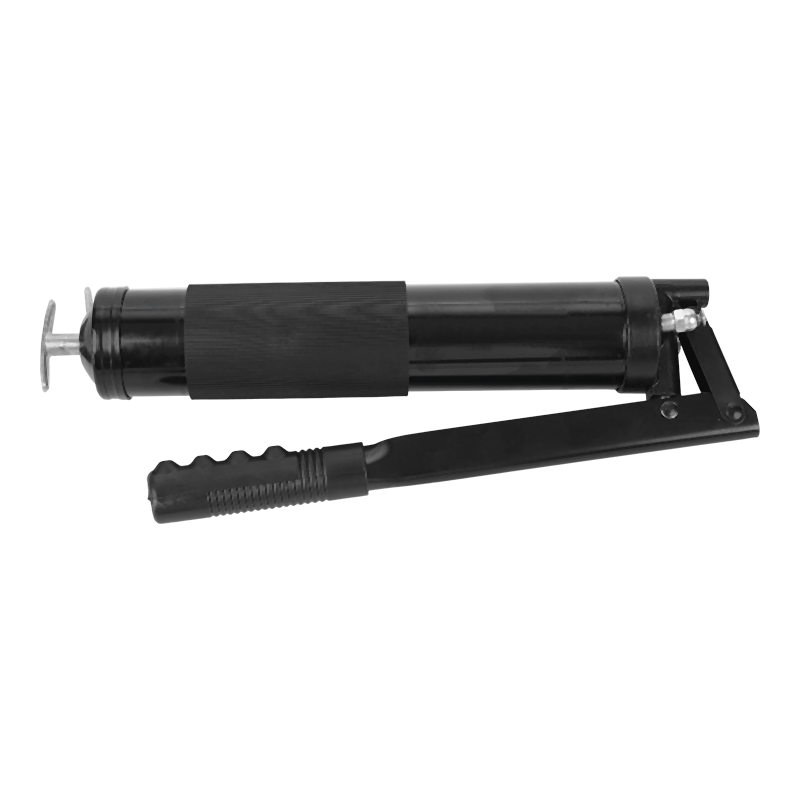
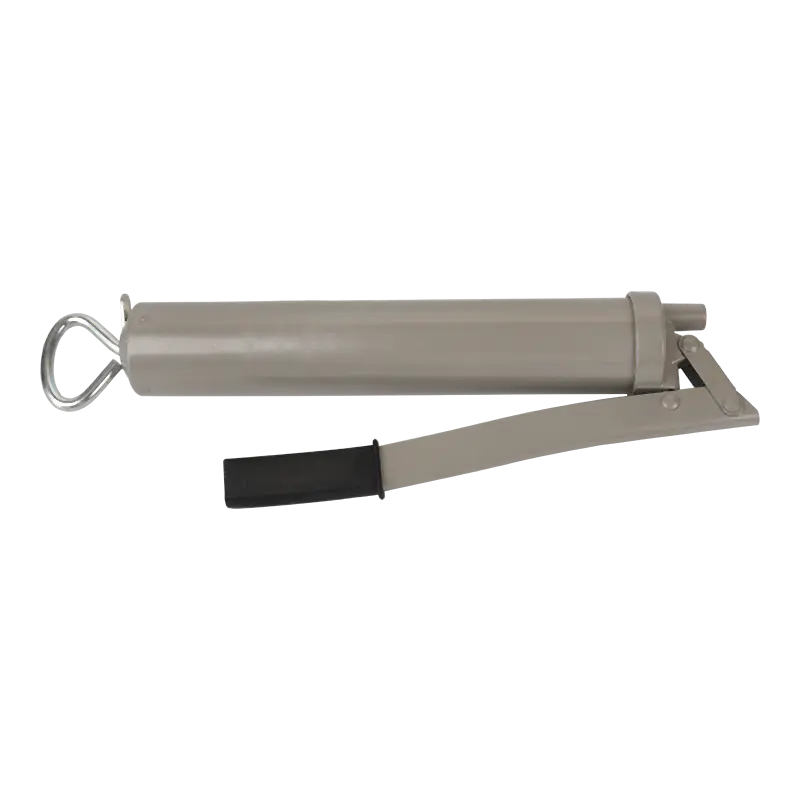
A hand-operated grease gun consists of several key components: a barrel or tube that holds the grease, a plunger rod or piston, a spring mechanism (in some designs), a head assembly with a check valve, a hose or rigid extension, and a coupler that attaches to the grease fitting. When you squeeze the trigger or lever, the internal piston forces grease out of the barrel, through the hose, and into the fitting. The pressure can range from 3,000 to over 15,000 psi (pounds per square inch) depending on the design and how much force you apply.
There are two main subtypes of hand-operated grease guns: lever-action (also called pistol-grip) and push-type (also called “squeeze” or “trombone” style). Lever-action guns have a trigger that you repeatedly squeeze to pump grease. Push-type guns have a handle that you push forward like a syringe; they deliver grease only on the forward stroke. Some high-volume manual guns use a “glide pump” or “two-handed” design for faster delivery. Understanding these differences is essential for selecting the right tool for your workload.
Why Choose a Hand-Operated Grease Gun? The Key Advantages
Despite the availability of air-powered and cordless grease guns, manual models retain several critical advantages that make them the first choice for many applications.
No Power Source Required
The most obvious benefit of a hand-operated grease gun is complete independence from electricity, batteries, or compressed air. You can use it anywhere – in a remote field, on a construction site without power, or during a power outage. There are no battery packs to charge, no air hoses to drag around, and no compressors to maintain. For farmers servicing tractors in a distant pasture or mechanics making quick rounds on heavy equipment, a manual grease gun is always ready.
Precise Control and Feedback
Experienced technicians value the tactile feedback a hand-operated grease gun provides. You can feel the resistance as grease enters the joint. This allows you to stop precisely when the bearing is full, avoiding over-greasing – a common problem with high-pressure pneumatic guns that can blow out seals. With a manual gun, you are in complete control of both the volume and pressure. This is especially important for delicate components like small electric motor bearings or precision linkages.
Reliability and Simplicity
A hand-operated grease gun has very few moving parts. There are no motors, solenoids, or electronic boards to fail. With basic maintenance, a quality manual grease gun can last for decades. If something does break (like a coupler or a seal), replacement parts are inexpensive and widely available. In contrast, a cordless grease gun has expensive batteries that degrade over time, and pneumatic guns require a functional compressor and dry air supply.
Lower Cost of Ownership
Entry-level hand-operated grease guns cost between $15 and $40. Even professional-grade models from brands like Lincoln, Alemite, or Milwaukee (manual series) rarely exceed $80. Compare that to $150 to $300 for a cordless grease gun, plus the cost of batteries and chargers. For someone who greases equipment only occasionally, or for a small shop on a budget, the manual gun is far more economical. There are no ongoing electricity costs, no air compressor maintenance, and no battery replacements.
Lightweight and Portable
A hand-operated grease gun weighs about two to four pounds when filled with grease. You can easily carry it in a tool belt, toss it in a truck bed, or hang it on a hook. Pneumatic guns require trailing air hoses and often weigh more. Cordless guns are heavier due to the battery pack. For climbing on top of heavy machinery or working in tight engine bays, the lightness of a manual gun is a significant advantage.
Types of Hand-Operated Grease Guns: Lever vs. Push Type
Choosing between a lever-action and a push-type (sometimes called “trombone” or “slide”) hand-operated grease gun depends on the nature of your work.
Lever-Action (Pistol Grip) Grease Guns
Lever-action guns are the most common type. They have a trigger-like lever that you squeeze repeatedly. Each squeeze delivers a metered amount of grease, typically about 0.5 to 1 gram per stroke. The lever provides mechanical advantage, so you can generate very high pressure (up to 10,000 psi or more) with moderate hand strength. These guns are ideal for stubborn grease fittings, frozen zerks, or when you need high pressure to push grease through long hoses or cold, thick grease. The main drawback is that you need to repeatedly squeeze the lever, which can cause hand fatigue if you have many fittings to grease.
Push-Type (Squeeze or Trombone) Grease Guns
Push-type guns have a cylindrical handle that you push forward like a syringe. They deliver grease only on the forward stroke. The volume per stroke is larger (often 2 to 5 grams), so they are faster for greasing many fittings. They also require less hand motion and can be operated with one hand while the other holds the coupler. However, they generate lower maximum pressure (typically 3,000 to 5,000 psi) and require more physical pushing force, which can be difficult for users with weak grip or arthritis. Push-type guns are excellent for routine greasing of accessible fittings with clean, soft grease.
Bulk-Fill vs. Cartridge-Load Guns
Most modern hand-operated grease guns are designed to accept standard 14-ounce grease cartridges. You simply remove the barrel cap, insert the cartridge, peel off the foil seal, and screw the cap back on. Cartridge loading is clean and fast. Some guns also have a “bulk fill” option where you can suck grease from a pail or drum by pulling back the plunger. For professional settings with large grease consumption, some manual guns are dedicated bulk guns with a follower plate and suction tube. For most users, cartridge-loading lever-action guns offer the best combination of convenience and performance.
How to Choose the Best Hand-Operated Grease Gun for Your Needs
With dozens of models on the market, consider these factors to make the right choice.
Pressure output: If you work on older equipment with clogged or rusty grease fittings, choose a lever-action gun rated for at least 8,000 psi. Many budget push-type guns cannot unblock a frozen zerk. For general maintenance on well-maintained machinery, a standard 4,000 psi gun is sufficient.
Grease volume per stroke: Lever guns typically deliver 0.5 to 1 gram per stroke; push guns deliver 2 to 5 grams. For high-volume applications like greasing multiple track links on an excavator, a push gun is faster. For precision greasing of small bearings, a low-volume lever gun is better.
Build quality: Look for a steel barrel (some are cast iron or heavy-gauge steel), a robust die-cast head, and a hardened steel plunger rod. Avoid guns with plastic barrels or plastic heads – they will crack under pressure or in cold temperatures. Brands like Lincoln (Lubrigun), Alemite, Plews, and LockNLube are known for durability.
Length of hose or rigid pipe: Most hand-operated grease guns come with a 6- to 12-inch rigid extension or a flexible rubber hose. A flexible hose (usually 12 to 18 inches) is essential for reaching fittings in tight spaces, such as u-joints on a driveshaft or fittings hidden behind suspension components. Rigid extensions are fine for open areas but can be awkward in crowded engine bays.
Coupler quality: The coupler is the part that attaches to the grease fitting. Cheap couplers leak grease, fail to lock on, or are difficult to remove. Consider upgrading to a LockNLube or similar coupler that clamps firmly and seals tightly. A good coupler alone can transform the performance of an otherwise average grease gun.
Bleeder valve: Some manual guns have a small bleed valve (also called a primer) that allows you to release trapped air. Air pockets cause the gun to “skip” or fail to prime. A bleeder valve is a useful feature for fast re-priming, especially if you change grease types frequently.
Step-by-Step Guide: How to Use a Hand-Operated Grease Gun Correctly
Even a simple tool requires proper technique to avoid air locks, grease waste, and equipment damage. Follow these steps for efficient, effective greasing.
Prepare the grease gun: If using a cartridge, remove the barrel cap, pull the plunger rod all the way back, and insert the cartridge. Peel the foil seal from the cartridge’s small end, then screw the barrel cap back on tightly. Tighten the cap just enough to pierce the cartridge’s seal. Then, pump the lever or push the handle a few times until grease comes out of the coupler – this primes the gun and removes air.
Clean the grease fitting: Before attaching the coupler, wipe dirt and old grease from the Zerk fitting. A dirty fitting forces contaminants into the bearing. Use a rag or a small wire brush.
Attach the coupler: Push the coupler straight onto the fitting. You should feel a positive click or snap. For LockNLube style couplers, slide the sleeve forward to lock. For standard couplers, ensure the jaws are fully seated.
Pump grease: For lever guns, squeeze the trigger fully on each stroke. For push guns, push the handle forward smoothly. Watch for old, displaced grease to emerge from the joint. Stop pumping as soon as you see fresh grease or feel increased resistance. Over-greasing can rupture rubber seals.
Remove the coupler: For standard couplers, twist and pull gently while holding the coupler body (not the hose). For LockNLube, slide the collar back to release. Wipe any excess grease from the fitting.
Bleed air if the gun loses prime: If the gun stops delivering grease even though the barrel is full, air has entered the system. Open the bleeder valve (if equipped) and pump a few times until grease flows, then close the valve. Alternatively, loosen the barrel cap one turn, pump until grease appears at the threads, then retighten.
Common Problems and Troubleshooting for Hand-Operated Grease Guns
Even the best hand-operated grease gun can develop issues. Here are the most frequent problems and their solutions.
Problem: The gun won't prime (no grease comes out even though the cartridge is full). This is almost always due to air trapped in the head. Solution: Crack the barrel cap open slightly (a quarter turn), then pump the lever or push the handle several times until grease oozes from the threads. Tighten the cap and continue pumping. If that fails, remove the coupler and pump – grease should eventually emerge. Also check that the cartridge's foil seal was fully pierced.
Problem: Grease leaks from the head or barrel threads. Leaks indicate a worn or damaged seal, or loose connections. Tighten the barrel cap and any hose fittings. If leaking persists, replace the head gasket or the entire head assembly (available as repair kits for popular models).
Problem: The coupler won't stay on the fitting or blows off under pressure. This is typically a worn coupler. The internal jaws wear out or the spring weakens. Replace the coupler – it is a cheap and easy fix. Upgrading to a high-quality coupler like LockNLube solves this permanently.
Problem: The lever or push handle is extremely hard to operate, even with soft grease. First, check if the grease has hardened due to cold weather. Warm the grease or store the gun in a heated area. Second, ensure the gun is not overfilled. Third, check for a blocked hose or fitting – disconnect the hose and try to pump; if the lever is easy, the blockage is downstream. Clean or replace the hose.
Problem: The gun delivers grease only on every other stroke (intermittent). This is a sign of air in the system or a failing check valve inside the head. Bleed air as described above. If the problem persists, the ball check valve may be stuck or corroded. Disassemble the head (consult your manual) and clean the valve with solvent.
Problem: The plunger rod won't stay retracted when loading a new cartridge. Many guns have a locking mechanism that holds the plunger back. If that mechanism is worn, you may need to hold the rod manually while inserting the cartridge. Some users wrap a rubber band or zip tie around the rod and barrel to keep it retracted.
Maintenance Tips for a Long-Lasting Hand-Operated Grease Gun
A little care goes a long way. Keep your manual grease gun in top condition with these simple practices.
After each use, wipe off any external grease to prevent dirt buildup. Store the gun in a clean, dry place, preferably hanging vertically with the coupler pointing down – this prevents grease from settling and air pockets from forming. If you won't use the gun for several months, consider removing the cartridge and covering the open end of the barrel with plastic wrap to keep the grease from drying out. Periodically apply a drop of light oil to the plunger rod and the lever pivot points. Replace the coupler at the first sign of leakage or weak gripping. Inspect the hose for cracks or bulges, especially near the fittings. Every year, disassemble the head and clean the check valve and ball seat with a degreaser.
When to Use a Hand-Operated Grease Gun vs. Pneumatic or Electric
Manual guns are not always the best choice. Understanding the trade-offs helps you decide which tool to grab.
Hand-operated grease guns excel at: Small to medium jobs with fewer than 20 grease fittings. Precision applications where you need to feel the fill. Remote locations without power. Budget-conscious home shops. Working in cold temperatures where air lines might freeze. Greasing equipment with delicate seals that could be damaged by high-pressure power guns.
Pneumatic or cordless guns are better for: High-volume production greasing (e.g., a heavy equipment fleet with 100+ fittings per day). Situations where you need both hands free to hold the coupler. Users with arthritis or weak hand strength. Greasing in very tight spaces where the larger manual gun head won't fit (a cordless gun with a long hose can be placed elsewhere).
Many professionals keep both: a cordless gun for the main greasing route, and a hand-operated gun for backup, quick jobs, and stubborn fittings that need extra pressure.
Top Brands and Models of Hand-Operated Grease Guns
While many generic guns exist, these brands have proven track records for durability and performance.
Lincoln Lubrigun: The classic heavy-duty lever-action gun. Steel barrel, cast iron head, and a reputation for lasting decades. Available in cartridge or bulk-fill versions. Pressure rating of 6,000 psi. Replacement parts are everywhere.
Alemite 555: Another iconic lever gun. Slightly lighter than the Lincoln but equally reliable. The Alemite coupler design is standard in the industry. A good choice for automotive work.
LockNLube Grease Gun: Known primarily for their amazing coupler, LockNLube also makes a complete hand-operated grease gun. Features a unique “claw” coupler that locks positively and a high-pressure head. Their gun is bulkier but nearly indestructible.
Plews 30-040: An affordable lever-action gun that gets the job done for light to medium use. Cast iron head, steel barrel, and a 6-inch rigid extension. Good for home garages and small farms.
Milwaukee M12 Grease Gun (manual series): Milwaukee is famous for power tools, but they also produce a manual grease gun under their “Hand Tools” line. It features a unique dual-lever design for high pressure and a comfortable rubber grip. Pricey for a manual gun but very refined.
Safety Precautions When Using a Hand-Operated Grease Gun
Although manual grease guns are much safer than pneumatic or electric models, they still pose risks. Grease injected under high pressure can penetrate skin and cause a severe injury called grease injection injury. This requires immediate emergency surgery. Never point the coupler at your hand or any body part. Always keep your free hand away from the tip. Wear safety glasses – grease can squirt out if a coupler blows off. Use rags to wipe fittings, but do not use your fingers to feel for leaks while the gun is pressurized. If you feel a sudden sharp pain followed by swelling and redness, seek medical attention immediately – do not wait.
Also be mindful of over-greasing. Too much grease in a sealed bearing can generate heat and blow out the seal, leading to premature failure. Learn the manufacturer’s recommended grease volume for each component. When in doubt, pump until you see fresh grease appear (for open bearings) or until you feel a slight resistance (for sealed units).
Environmental and Disposal Considerations
Grease is a petroleum product and should not be disposed of in trash or drains. Collect used grease wiped from fittings and empty grease cartridges. Most auto parts stores accept used oil and grease for recycling. Empty metal cartridges can be recycled if thoroughly drained; plastic cartridges are often not recyclable. To reduce waste, consider buying bulk grease (5-gallon pails) and using a bulk-fill manual grease gun – this eliminates cartridge waste entirely.
Frequently Asked Questions (FAQ)
What is the maximum pressure a hand-operated grease gun can generate? Lever-action models can produce 6,000 to 10,000 psi with strong hand force. Some heavy-duty designs claim up to 15,000 psi. Push-type guns typically generate 3,000 to 5,000 psi. The actual pressure depends on your strength and the mechanical advantage of the lever.
Can I use a hand-operated grease gun with very thick grease (NLGI #2 or #3)? Yes, but cold thick grease may be very difficult to pump. Warm the grease by storing the gun in a heated area or using a grease warmer. Lever-action guns handle thick grease better than push-type guns. For arctic conditions, choose a low-viscosity NLGI #1 or #0 grease.
How do I fill a hand-operated grease gun without a cartridge? This is called bulk filling. Pull the plunger rod all the way back. Remove the barrel cap. Dip the open end of the barrel into a pail of grease, then slowly push the plunger rod forward to suck grease into the barrel. Alternatively, use a grease pump to fill from a bulk container. Some guns have a suction fitting for attaching a hose to a grease drum.
Why does my grease gun keep getting air bubbles? Air enters if the cartridge is not seated properly, if the barrel cap is loose, or if the grease is too stiff and the plunger pulls a vacuum instead of drawing grease. Always ensure the cartridge’s foil seal is completely pierced and the cap is tight. If using bulk fill, air may be trapped; prime the gun by pumping with the bleeder open.
Can I repair my hand-operated grease gun or should I buy a new one? Most parts (gaskets, check valves, couplers, hoses, and even complete head assemblies) are available as repair kits. For a $30 gun, a $15 repair may not be cost-effective. For a $70 professional gun, repairs are worthwhile. The barrel and plunger rarely fail; the head and coupler are the usual wear items.
What size grease cartridge fits a standard hand-operated grease gun? Standard cartridges hold 14 ounces (400 grams) of grease and have a diameter of about 2.5 inches. Some European guns use 400g or 500g cartridges. Always check your gun’s specifications. Many guns also accept “mini” 3-ounce cartridges for convenience, but full-size 14-ounce is the norm.
Do hand-operated grease guns work with both SAE and metric Zerk fittings? Most modern couplers are designed for the standard Zerk fitting (also called a hydraulic fitting) which has a 0.2-inch (5mm) diameter. Some Japanese or European equipment use smaller metric fittings (4mm). You may need a special coupler adaptor or a second gun with a metric coupler. Check your equipment’s manual.
How often should I replace the hose on my grease gun? Inspect the hose for cracks, bulging, or kinking every few months. Rubber hoses degrade over time, especially if exposed to sunlight, ozone, or chemicals. Replace the hose if it shows any sign of weakness – a burst hose at 6,000 psi is dangerous. Steel braided hoses last longer but are stiffer.
Can I use a hand-operated grease gun for food-grade grease? Yes, but you must dedicate a separate gun for food-grade applications. Never mix food-grade grease with petroleum-based grease. Label the gun clearly. Many manufacturers offer guns with stainless steel internals specifically for food processing plants.
What is the difference between a “pistol grip” and a “lever” grease gun? They are the same. Pistol grip refers to the shape of the handle and trigger assembly. Some lever guns have a different orientation (straight lever), but most consumer guns are pistol grip design.
Why does my grease gun leak from the head after sitting for months? The internal seals dry out. Try pumping a few strokes – sometimes the grease re-lubricates the seals and stops the leak. If not, replace the head gasket. To prevent this, store the gun with a full cartridge so the seals remain in contact with grease.
Can left-handed people use a standard hand-operated grease gun comfortably? Yes, most lever guns are ambidextrous. The trigger is centered. However, the bleeder valve and fill cap are usually on one side, but they don't interfere with operation. Left-handed users have no issues.
Is there a hand-operated grease gun that can generate higher pressure than pneumatic guns? Yes. Many manual lever guns can exceed the pressure of standard pneumatic guns (which are often regulated to 6,000 psi). A manual gun can reach 10,000+ psi if you apply full force. This is useful for breaking loose a frozen fitting. However, a pneumatic gun delivers consistent high pressure without fatigue.
What should I do if the grease gun’s plunger rod becomes bent? A bent rod usually means the gun was dropped or forced. Straightening is difficult; the rod is hardened steel. Replace the rod or buy a new gun. To prevent bending, never use the plunger rod as a handle or lever.
Can I attach a flex hose to any hand-operated grease gun? Most guns have standard 1/8-inch NPT threads on the head. You can remove the rigid extension and screw on a flexible hose of your chosen length (commonly 12, 18, or 24 inches). Ensure the hose is rated for at least the gun’s maximum pressure. Many users prefer a 18-inch flex hose for general work.
How do I dispose of an old, broken hand-operated grease gun? Drain all grease from the gun. Remove any metal parts – the steel barrel and head can be recycled as scrap metal. The plastic handle (if any) and rubber hose go to general waste. Some recycling centers accept small appliances. Never throw a grease-filled gun in the trash.
Are there hand-operated grease guns designed for high-volume delivery (e.g., for track pins on bulldozers)? Yes. “Hi-Lo” or “two-speed” manual guns exist. They have a selector that allows low-volume, high-pressure mode for stubborn fittings and high-volume, low-pressure mode for quickly filling large cavities. These are expensive but invaluable for heavy equipment mechanics.
What is the typical lifespan of a hand-operated grease gun with professional use? A quality lever-action gun used daily in a truck shop may last 5 to 10 years before the head wears out. With occasional home use, it can last a lifetime. The most common failure is the coupler, which is easily replaced.
Final recommendation: For anyone who maintains vehicles, tractors, or industrial equipment, a quality hand-operated grease gun is an essential, low-cost tool that will never let you down. Choose a lever-action model from a reputable brand, upgrade the coupler, and learn proper priming and bleeding techniques. You will enjoy reliable, precise lubrication for years to come.