English
 中文简体
中文简体

What Is a Hand-Operated Grease Pump?
A hand-operated grease pump is a mechanical device designed to deliver precise amounts of lubricant—grease—to machinery components. Unlike powered systems that require electricity or compressed air, manual grease pumps are powered entirely by human effort, typically through a lever, handle, or foot pedal. They are used across a wide range of industries, including automotive maintenance, industrial machinery, construction equipment, agricultural machinery, and more.
Manual grease pumps come in various configurations, from small handheld grease guns to larger bucket or drum pumps that can hold several kilograms of grease. The core function remains the same: to draw grease from a reservoir and force it under high pressure through a hose and coupler into the lubrication point.
Key Benefits of Using a Hand-Operated Grease Pump
Despite the availability of powered alternatives, manual grease pumps offer several distinct advantages that make them the preferred choice in many situations.
Portability and Independence
One of the most significant advantages of a hand-operated grease pump is its complete independence from external power sources. Whether you are working in a remote field, on a construction site without electricity, or on equipment that is currently powered down, a manual pump is always ready to use. This portability makes it an essential tool for field repairs, mobile maintenance, and emergency servicing.
Precision and Control
Manual pumps allow the operator to deliver specific, measured amounts of grease, preventing costly over-lubrication and ensuring adequate supply. The tactile feedback from the lever or handle lets you feel the resistance and stop precisely when the bearing is full—a level of control that is difficult to achieve with powered pumps.
Cost-Effectiveness
Manual grease pumps represent a lower initial investment compared to automated or pneumatic systems and have minimal ongoing operational costs. There are no electricity bills, no batteries to replace, and no compressed air systems to maintain. With a lifespan of 8-12 years and minimal maintenance requirements, they offer exceptional value for money.
Simplicity and Reliability
With fewer moving parts than powered pumps, manual grease pumps are less prone to mechanical failure and are exceptionally easy to operate and maintain. They can handle a wide range of grease viscosities and are built to withstand harsh workshop environments.
Safety in Hazardous Areas
In environments where electricity or sparks pose a risk—such as mines, chemical plants, or areas with flammable vapors—manual pumps offer a safe alternative to electric or battery-powered equipment.
Types of Hand-Operated Grease Pumps
Hand-operated grease pumps are available in several configurations, each designed for specific applications and grease volumes.
Lever-Type Grease Pumps
The lever-type grease pump is the most common and widely used manual grease pump. It features a lever handle that is pumped up and down to dispense grease. A typical lever pump can supply around 1.28 grams of grease per pump, making it suitable for a wide range of applications. Lever pumps are robust, easy to operate, and particularly suitable for use in workshops and on construction sites.
Pistol-Grip Grease Pumps
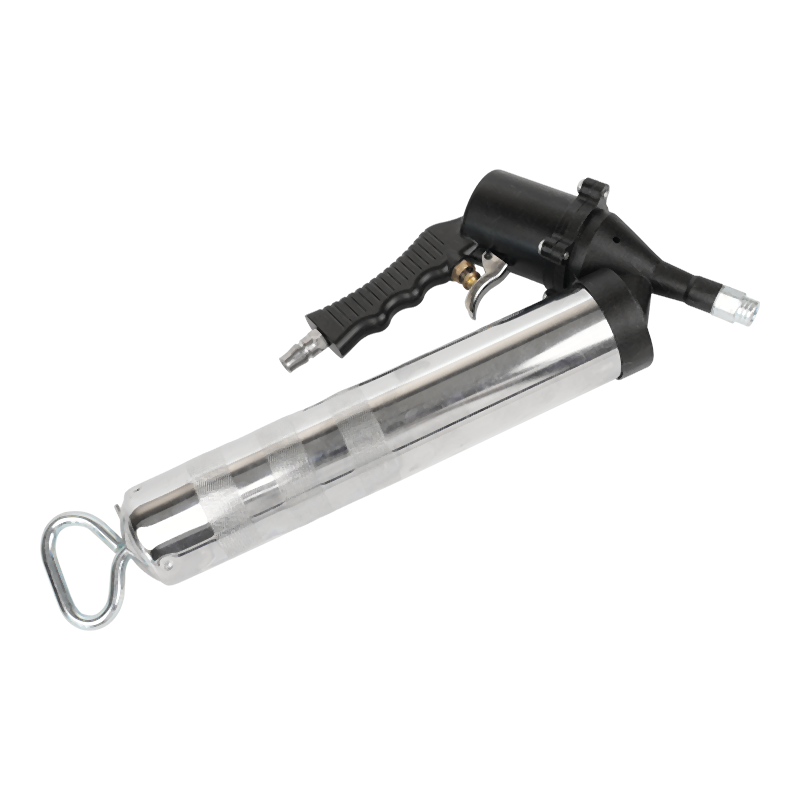
The pistol-grip type is a variation of the lever design that allows for one-handed pumping. This is very common for quick, one-handed greasing tasks. It provides approximately 0.86 grams per pump, offering slightly less volume per stroke but greater convenience and maneuverability. Hand push pumps are ideal for pinpoint lubrication of smaller units or tools, operating via axial pressure.
Bucket-Type Grease Pumps
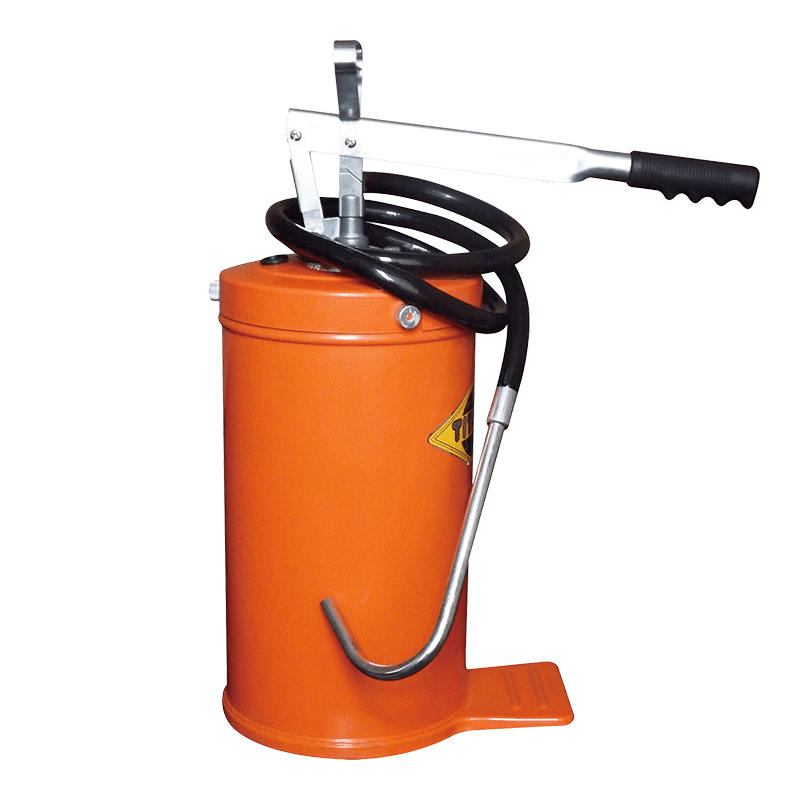
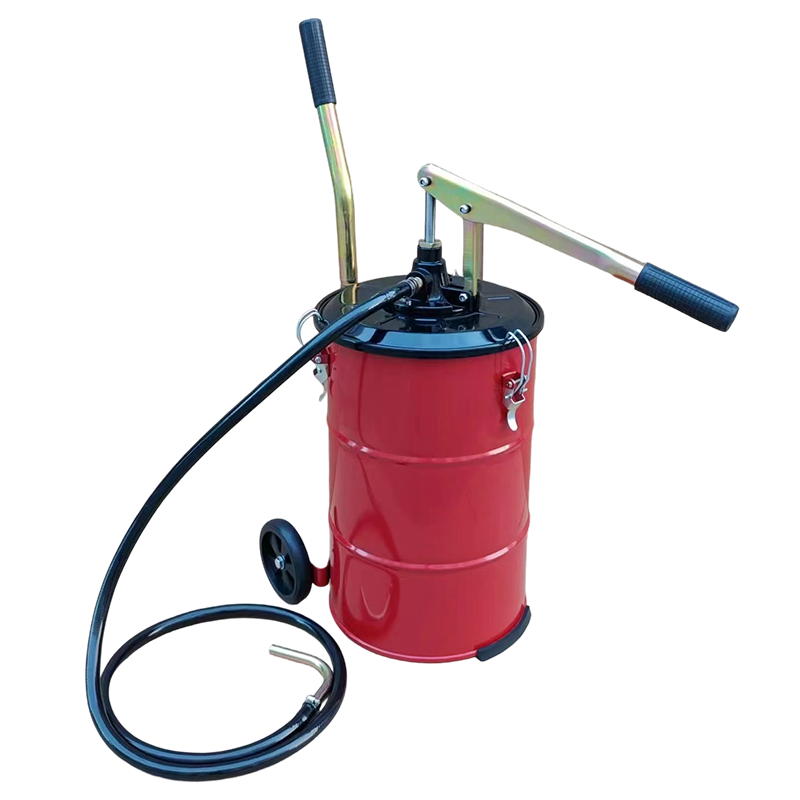
Bucket-type pumps are larger units that sit on top of a grease bucket or pail. They are designed for high-volume greasing and are commonly used in heavy-duty machinery settings. These pumps feature a spring-loaded follower plate that maintains constant pressure on the grease, ensuring consistent flow. They are available in various capacities, from 3kg to 20kg or more. Some bucket pumps offer variable handle settings that allow the user to switch between high volume and high pressure.
Drum-Type Grease Pumps
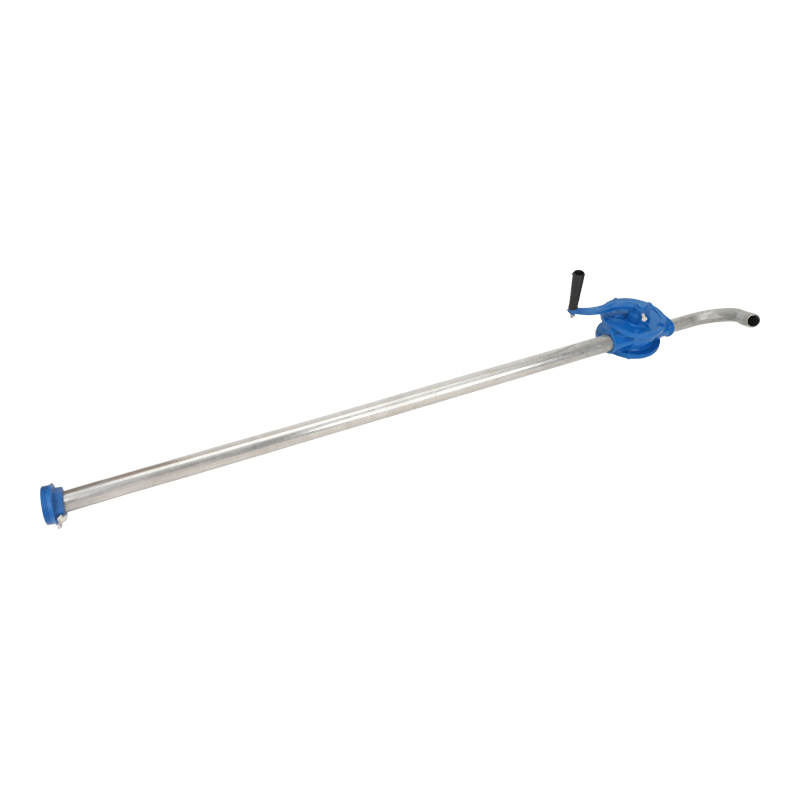
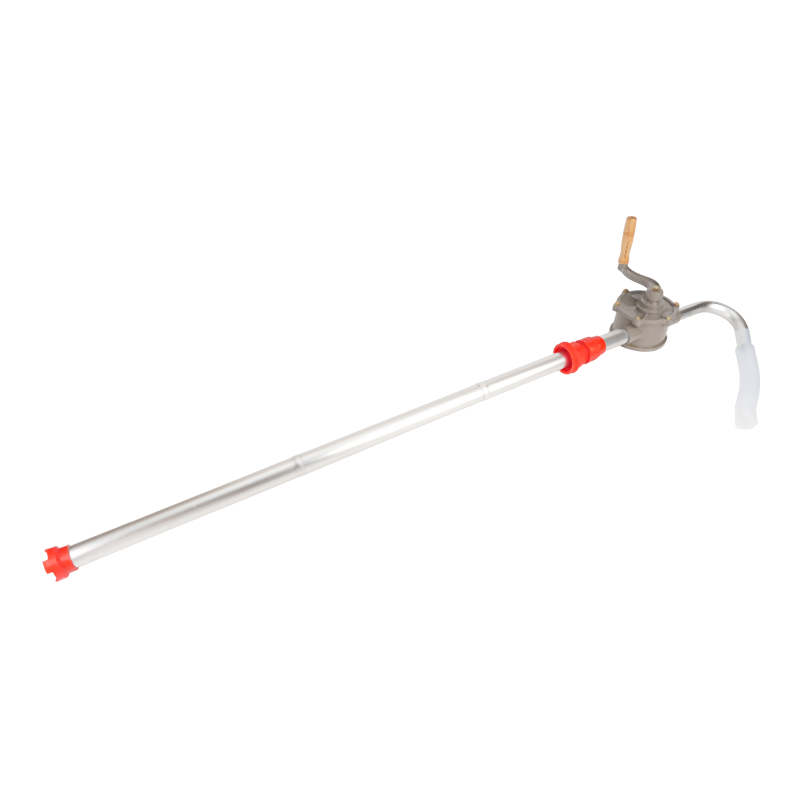
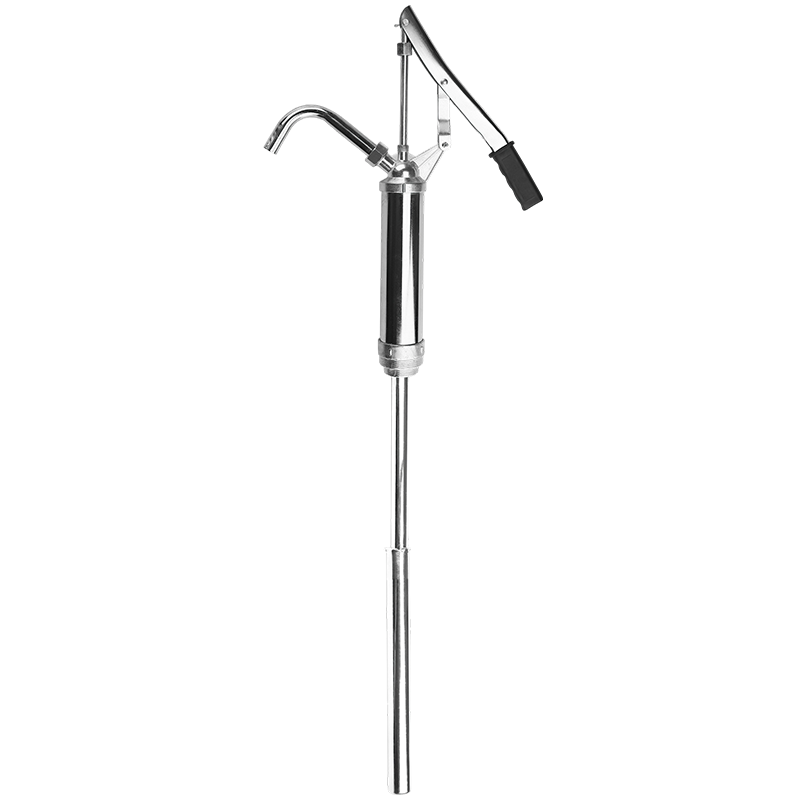
Drum pumps are designed to mount through the bung hole of a standard grease drum or container. They use an internal piston to push grease through the pump. Lever-handle drum pumps transfer grease into and out of drums and containers using this internal piston mechanism. These are ideal for transferring grease from bulk storage to application points.
Foot-Operated Grease Pumps
Foot-operated grease drum pumps are portable, hands-free pumps that dispense grease to different machines and equipment. Their integrated foot pedal helps reduce fatigue, allowing the hands to be free for the application of grease where needed. The pedal mechanism pressurizes the chamber, forcing grease out of the discharge hose.
Multi-Point and Adjustable Output Pumps
Some bucket pumps can be equipped with multi-point grease dispensers that allow operators to deliver grease to multiple lubrication points simultaneously. Others have adjustable output settings, allowing operators to customize grease delivery according to specific requirements.
How Does a Hand-Operated Grease Pump Work?
Understanding the working principle of a hand-operated grease pump helps in its effective use and maintenance. The operation of a typical lever-type pump involves two main strokes:
Suction Stroke: Pulling the operating lever draws the piston back, creating a vacuum that pulls grease from the reservoir (bucket or can) into the pump chamber. A spring-loaded follower plate on the top surface helps push grease into the suction part.
Discharge Stroke: Pushing the lever forces the piston forward. This action pressurizes the grease in the chamber, pushing it through a check valve and out of the pump outlet, into the lubrication line. Each stroke delivers a predetermined quantity of grease.
In some designs, a small gear driven by the lever handle drives a rack for reciprocating plunger action. The pump's ability to generate high pressure—often up to 10,000 PSI or more—comes from the mechanical advantage provided by the lever ratio.
Applications of Hand-Operated Grease Pumps
The versatility of hand-operated grease pumps makes them indispensable across numerous industries and applications.
Automotive Maintenance: Lubricating chassis components, suspension parts, wheel bearings, and other grease points on cars, trucks, and heavy vehicles.
Industrial Machinery: Feeding grease to bearings and other moving parts of machines such as calendaring machines, mixing machines, rolling mills, bending machines, furnaces, and batch mixers. They are also used in progressive lubrication systems for machine tools.
Construction Equipment: Lubricating excavators, earth-moving equipment, and other heavy machinery on job sites.
Agricultural Machinery: Maintaining tractors, harvesters, and other farm equipment. Field equipment maintenance during harvest can increase productivity by up to 15%.
Mining: Remote location servicing where electricity is unavailable or unsafe.
Manufacturing: Equipment maintenance that can reduce downtime by up to 27%.
Fleet Maintenance: Servicing vehicles requiring NLGI #2 grease.
How to Choose the Right Hand-Operated Grease Pump
Selecting the appropriate hand-operated grease pump for your needs involves considering several key factors.
Grease Type and Viscosity: Always match the grease type (NLGI grade, base oil) to the equipment manufacturer's specifications. Manual pumps can handle a range of viscosities, but heavier greases (NLGI #2) require more effort and may benefit from a pump with a higher mechanical advantage.
Volume Requirements: Consider how much grease you need to dispense. For occasional use with a few lubrication points, a hand-held grease gun may suffice. For regular maintenance of multiple machines, a bucket or drum pump with a larger reservoir is more efficient.
Pressure Requirements: Different applications require different pressures. Premium manual pumps can generate 6,000-10,000 PSI (400-700 bar), sufficient for most high-pressure applications. Check your equipment's requirements and choose a pump that can meet or exceed them.
Portability Needs: If you need to move the pump between locations, consider a lightweight bucket pump or a compact hand-held unit. For stationary applications, a larger drum pump may be more suitable.
Container Compatibility: Ensure the pump is compatible with your grease container. Pumps are available for various container sizes, including 5-gallon pails, 12kg, 20kg, and larger drums.
Build Quality and Durability: Look for pumps made from robust materials such as cast iron or steel with precision-machined components. Features like a spring-loaded follower plate ensure consistent grease flow and complete evacuation of the container.
Ease of Use: Consider the handle length and ergonomics. A pump with a longer handle is easier to operate. For applications requiring one-handed operation, a pistol-grip design may be preferable.
Maintenance Best Practices for Hand-Operated Grease Pumps
Proper maintenance is essential to maximize the performance and lifespan of your hand-operated grease pump. With minimal care, these pumps can last 8-12 years.
Keep It Clean: Contamination is a leading cause of bearing failure and pump damage. Regularly clean the grease pump to remove any debris or dirt that may have accumulated. Ensure the inside of the grease pump is clean, as contaminants can clog the outlet and affect the grease dispensing rate. If dust or foreign particles enter the grease, it will result in physical damage to the pump parts.
Lubricate Moving Parts: Like any other pump, a hand-operated grease pump requires lubrication of its mechanical components. Apply 2-3 drops of light oil to the pump mechanism monthly to ensure smooth operation.
Inspect Seals and O-Rings: Check O-rings and seals quarterly for signs of wear. Replace any damaged components promptly to prevent leaks and loss of pressure.
Prime the Pump: Before initial use or after changing containers, ensure the pump is properly primed (filled with grease) to eliminate air pockets, which can prevent the pump from generating sufficient pressure.
Proper Storage: Store the pump in a clean, dry place between 4-32°C (40-90°F) to avoid degradation of the grease and components. Never place the pumping system, especially the suction pipe, on the floor to avoid damage and contamination.
Clean the Follower Plate: Clean the follower plate after every container change to prevent old grease buildup and ensure proper sealing.
Troubleshooting Common Issues
Even with proper maintenance, issues can occasionally arise with a hand-operated grease pump. Here are common problems and their solutions.
Pump Delivers No Grease: The container may be empty—fill or replace the grease pail. The follower plate may be set incorrectly—check its position and direction. Air may be trapped in the system—use the air vent to remove air.
Insufficient Flow: Check the suction part for blockages. The grease may be too thick for the pump—ensure you are using the recommended NLGI grade.
Grease Leaks from Gland: Seals may be worn—inspect and replace as necessary.
Pump Mechanism is Stiff or Hard to Operate: Moving parts may need lubrication—apply light oil to the mechanism. The grease may have hardened due to cold temperatures—move the pump to a warmer environment.
Hand-Operated vs. Pneumatic vs. Electric Grease Pumps
Understanding the differences between manual, pneumatic, and electric grease pumps helps in making the right choice.
Hand-Operated Pumps: Best for occasional use, low-budget applications, or hazardous areas where electricity is unsafe. They are portable, cost-effective, and require no external power. However, they can be time-consuming for large-scale operations with many lubrication points.
Pneumatic (Air-Powered) Pumps: Powered by compressed air, these are considered more reliable and durable for proficient lubrication. They are preferred in professional settings where consistent, high-volume lubrication is necessary. They require a compressed air source.
Electric/Battery Pumps: Provide a high level of automation and control, ideal for large facilities with multiple lubrication points. Battery pumps are faster and less tiring but require charging. Electric pumps are more expensive but reduce human error.
Frequently Asked Questions (FAQ)
How much grease can I pump per minute manually? With a quality manual pump, expect 300-600 grams per minute depending on grease viscosity and temperature. This equals approximately 10-15 strokes per minute at optimal efficiency.
Can manual pumps handle high-pressure applications? Yes, premium manual pumps can generate 6,000-10,000 PSI (400-700 bar), sufficient for most high-pressure applications. Some models reach up to 12,000 PSI.
How do I choose between a lever-type and a pistol-grip pump? Lever-type pumps deliver more grease per stroke (about 1.28g) and are ideal for high-volume applications. Pistol-grip pumps allow one-handed operation and are more convenient for tight spaces, though they deliver slightly less per stroke (about 0.86g).
What size grease container does a bucket pump fit? Bucket pumps are available for various container sizes, including 5-gallon pails (35 lb), 12kg, 20kg, and larger drums. Check the pump specifications for compatibility.
How often should I clean my manual grease pump? Clean the pump after each use to prevent grease buildup and contamination. Perform a more thorough inspection and cleaning of seals and O-rings quarterly.
Can I use a manual grease pump with any type of grease? Most manual pumps are compatible with NLGI #0 to #2 greases. Always check the pump's specifications and match the grease type to the equipment manufacturer's recommendations. Some pumps are not suitable for calcium soap-type greases.
What is the typical lifespan of a hand-operated grease pump? With proper maintenance, a quality manual grease pump can last 8-12 years.
Can I convert a manual pump to pneumatic? No, manual and pneumatic pumps use completely different mechanisms. You need to buy the appropriate type for your needs.
Why does my pump make noise? Some noise is normal during operation. Unusual or excessive noise may indicate worn components or lack of lubrication—inspect and lubricate moving parts.
What should I do if the pump loses prime? If air enters the system, the pump may lose prime. Use the air vent to remove air pockets. For foot-operated pumps, press the foot pedal lever for 1-2 minutes until grease starts flowing.
Final recommendation: A hand-operated grease pump is a fundamental and indispensable tool in any robust maintenance program. Its simplicity, reliability, and independence from power sources make it the perfect choice for workshops, construction sites, farms, and remote locations. By selecting the right type for your application and following proper maintenance practices, you can ensure years of trouble-free service and keep your machinery running smoothly. Whether you need a compact pistol-grip unit for quick jobs or a heavy-duty bucket pump for high-volume greasing, there is a manual grease pump designed to meet your needs.